

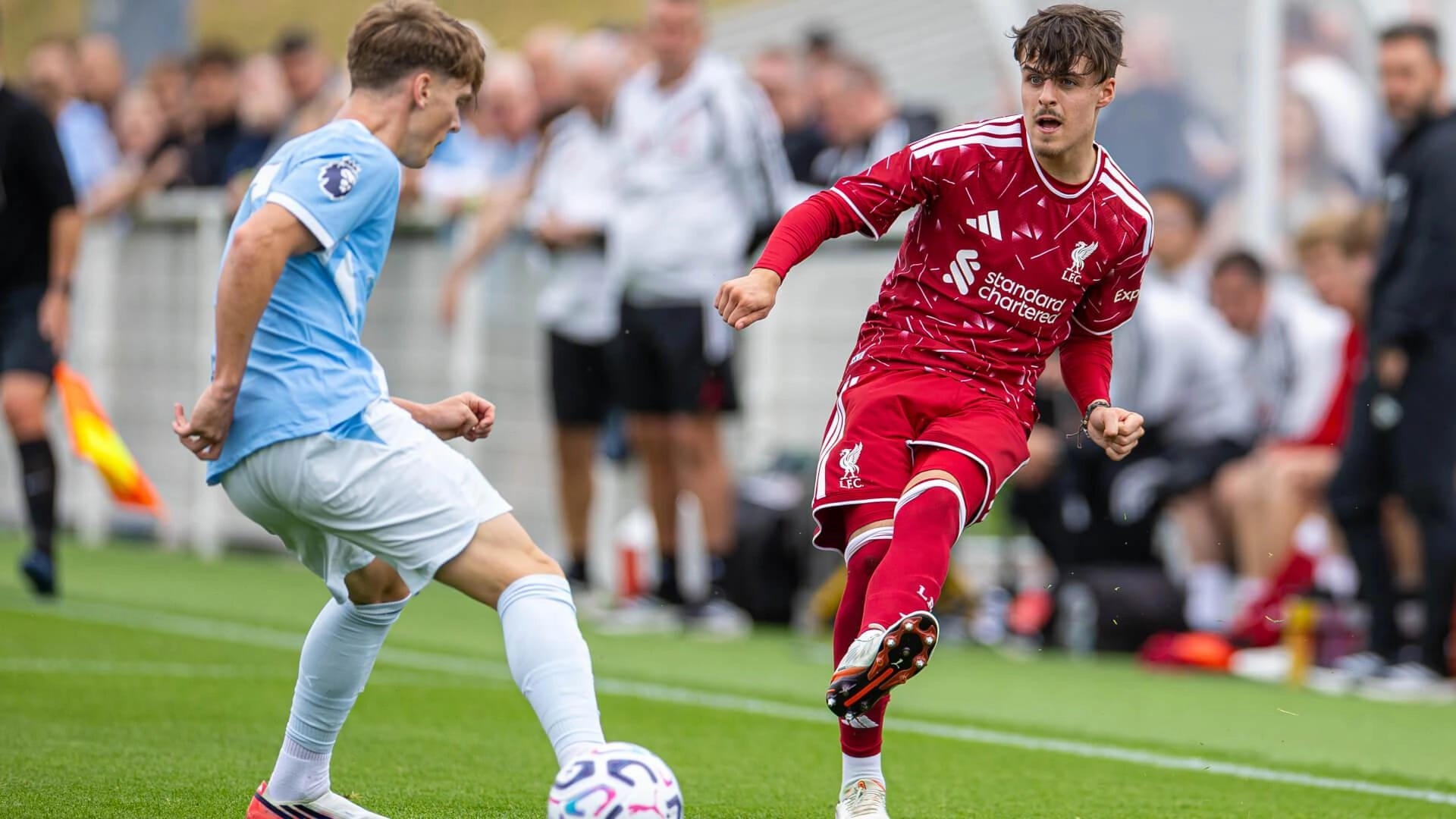
On Saturday morning, the young Reds kickstarted their fifteenth U18 Premier League campaign on Manchester City’s enormous 80-acre Etihad Campus, narrowly losing out by two-goals-to-one at the home of the back-to-back champions. Head coach Simon Wiles’s maiden campaign had delivered a 16-point increase on the previous season and a staggering goals per game average of 2.7 (70 goals in 26), so expectations were high from an entertainment perspective heading into this one.
Sixteen‑year‑old Joshua Abe could, in a different strand of this story, have been lining up in the hosts’ sky blue, and City’s marquee scholar - Liverpool’s leading summer target - Xavier Parker might have been preparing for his own first competitive minutes in red. That was the imagined trajectory for both clubs earlier in the window, each convinced they were closing in on the calibre of transformative youth‑level coup that defines academy cycles and future first‑team planning. Instead, those ambitions reached genuinely advanced stages before ultimately breaking away in opposite directions, leaving Abe to play 65 minutes for the visitors while Parker trained on one of the countless pitches nearby with City’s U21s.
From a clinicality perspective, there really were levels to this game. The Reds, as ever, consistently worked the ball into dangerous areas with pace and urgency, creating a number of decent opportunities, but ultimately lacked that ruthless edge in part due to the absence of last season’s top-scorer Joshua Sonni-Lambie who is now ineligible for the level. Even striker Vincent Joseph - now set to sign a scholarship deal at Arsenal with the Gunners winning the race ahead of Manchester United and Bayern Munich - scored with three of his four total shots in his two U18 PL matches.
City centre-forward Teddie Lamb netted 25 goals in 22 U18 appearances last time around, claiming the golden boot by a landslide. Lamb remains, quite simply, a joke at this age level so it wasn’t exactly a great surprise to see the 17-year-old Londoner bag with his first half-chance of the game. With the Premier League 2 kicking off later this week, this may end up being Lamb’s only U18 cameo of the entire season. Likely, this also applies to Abe.
Most certainly, this was a far more competitive affair than the 3–0 in Kirkby back in March, when City’s England youth‑international wingers Riegan Heskey - now signed for Bundesliga side FC Köln in an £8m move - and Ryan McAidoo, whom Enzo Maresca has already confirmed will be integrated into their first‑team plans this season, put us to the sword with a level of pace and incision we simply couldn’t live with that afternoon. Unfortunately though, it served as too monumental of a task to replicate that fantastic 3-2 away win at this venue last October.

Team: M. Wright, Huth (Owen, 89), Williams, Conde, Clarke, Murray-Holme, Abe (Garin, 65), Phillips, Inglethorpe, Hickman (Eden, 70), Yeguo.
Unused subs: Hilditch, Moran, Majekodunmi, Coxon.
Goal: Inglethorpe (88)
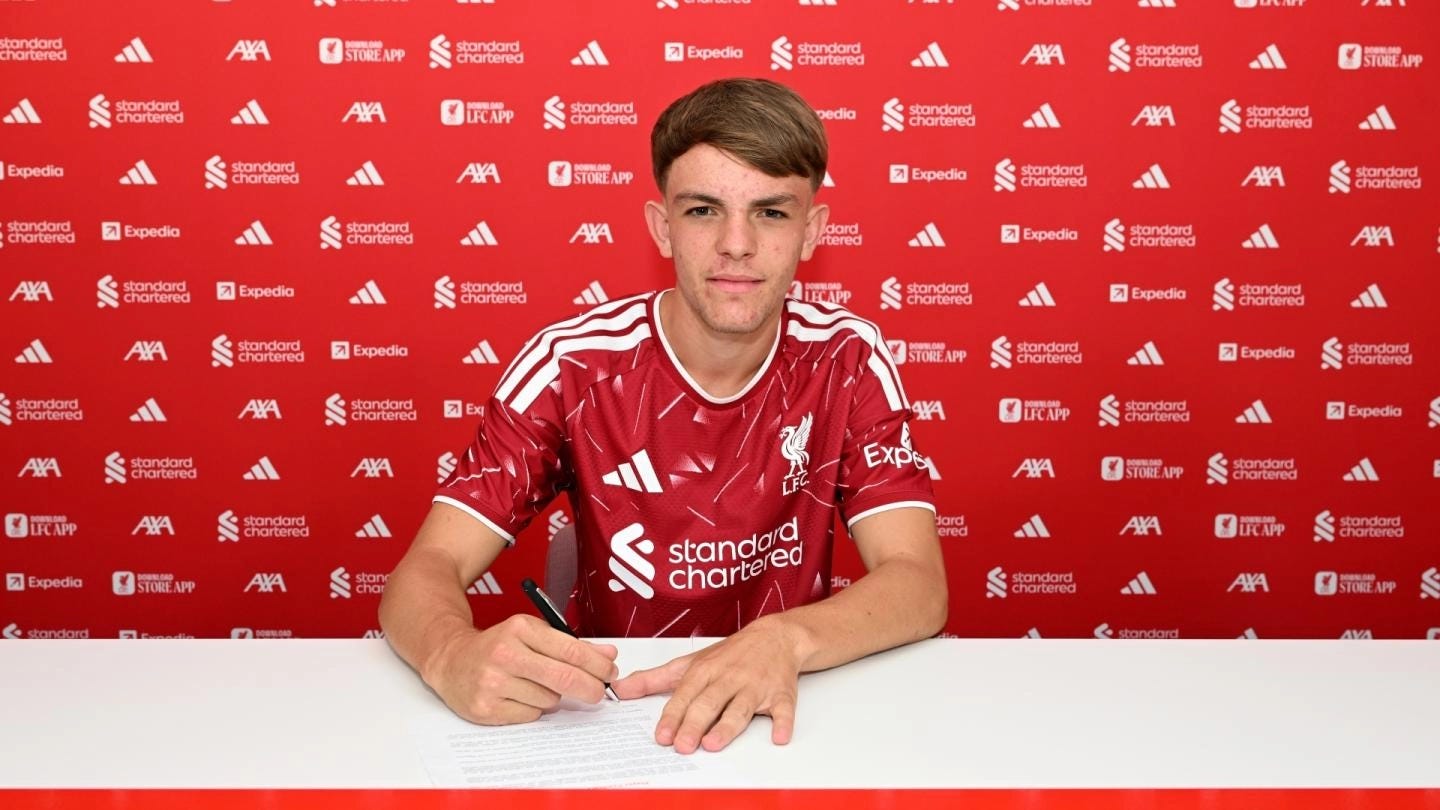
Just two days after signing his first professional contract, centre‑back/left-back Lucas Clarke started this one at the home of his former club, the same place he left as a pre‑scholar when he joined the Reds in January 2025. The composed defender started 23 of the 26 league fixtures last time around as well as featuring several times in the UEFA Youth League and FA Youth Cup. When Wiles can call on the full cavalry, he will have competition from Shadrach Ekuigbo (first-year) Dara Jikiemi (first-year) Harvey Owen (second-year), Joseph Dixon (first-year) and Japhect Garan (first-year) but Clarke is more than capable of holding his own in this respect.
Patience was the order of the day for the new scholarship intake group, with only three of the thirteen (Charlie Phillips, CM, Charlie Huth, RB and Joshua Abe, RW) starting on the opening day and merely one more new face (Isaiah Garin, LB) emerging from the bench. Despite shining as bright as any in the academy throughout pre-season, 16-year-old Zak Coxon, who bagged a hat-trick in the final warm-up outing at the AXA, was an unused substitute in this one. James Hilditch (🏴GK) and Daniel Majekodumni (🏴CM) were named in competitive LFC U18 matches for the first-time but also failed to record a debut. Other exciting names whose returns we await include the non-Abe stars of the scholarship group - midfielder Erik Farkas, central defender Shadrach Ekuigbo and Wales U17 forward Max Hawkins - who aren’t too far away from being in squad contention.
The club, it seems, will eternally be mired in a central-defensive injury crisis at every level, with it not particularly serving as a surprise that Wiles was forced to name three full-backs in his back-four. Lenix Conde battled admirably in an entirely new role but as was the case with his right-back colleague DJ Esdaille in the second half of last season in his attempt, there is only so much that they can do in an unnatural position. It is likely that a debut for summer centre-back addition Dara Jikiemi - brought in from Celtic, captain of his age group for club and country (Scotland) - is still a few weeks away. When that time comes, expect dedicated coverage on this newsletter to some of his early displays. All signs point towards a fantastic signing with a tribunal fee to be settled at a later date.
Last year’s history-maker Luca Eden, our U18s’ youngest ever debutant and scorer at 14 years and 319 days, is likely to receive a slight increase in minutes in the wake of his 611 in the second half of the 25/26 season however, as a pre-scholar, those inside the academy will keep the brakes on to some extent. Even in a 20-minute cameo from the bench, the England U16 captain managed to shift the dynamic in LFC’s favour, winning the penalty for Inglethorpe’s goal through some clever play.
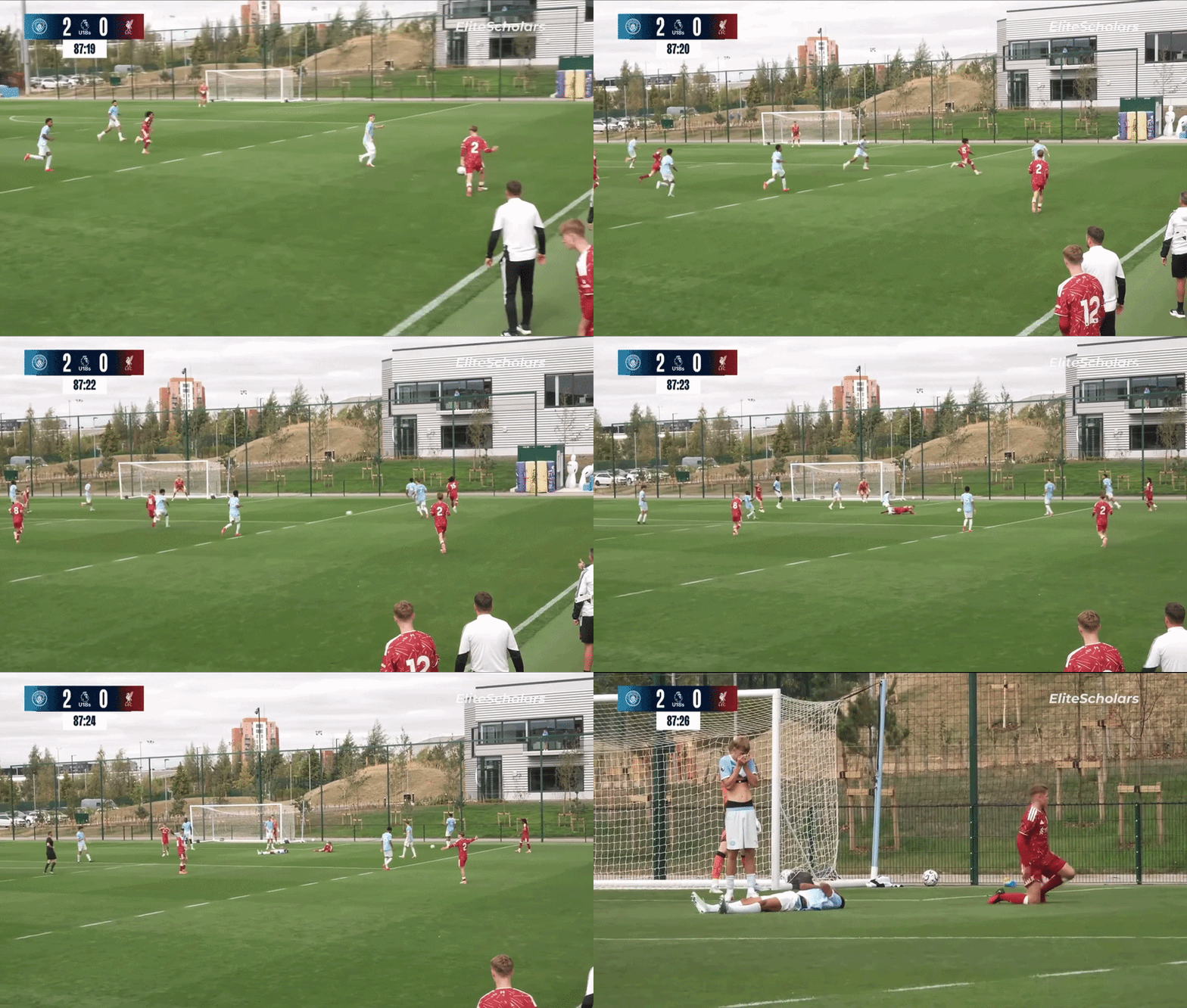
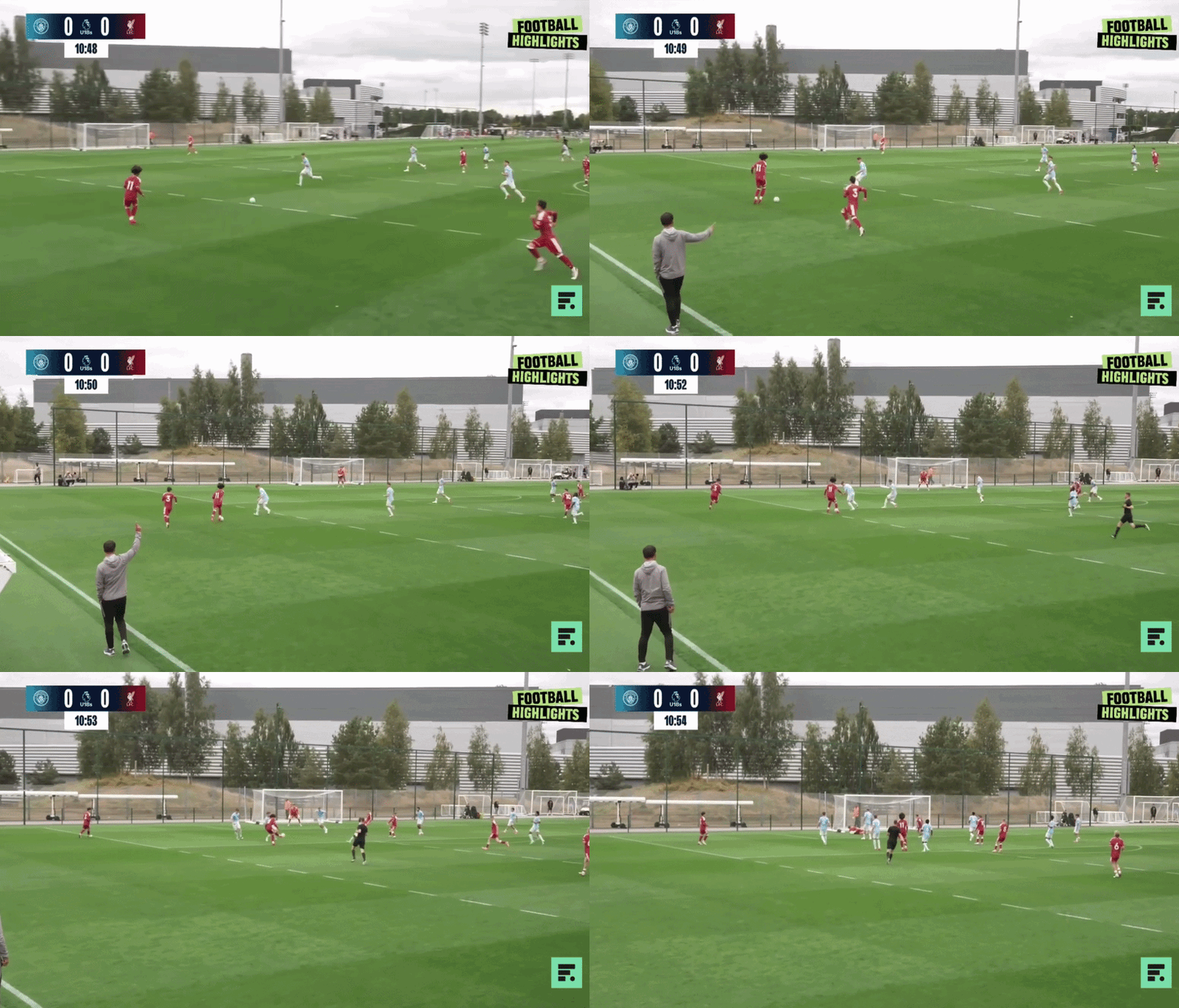
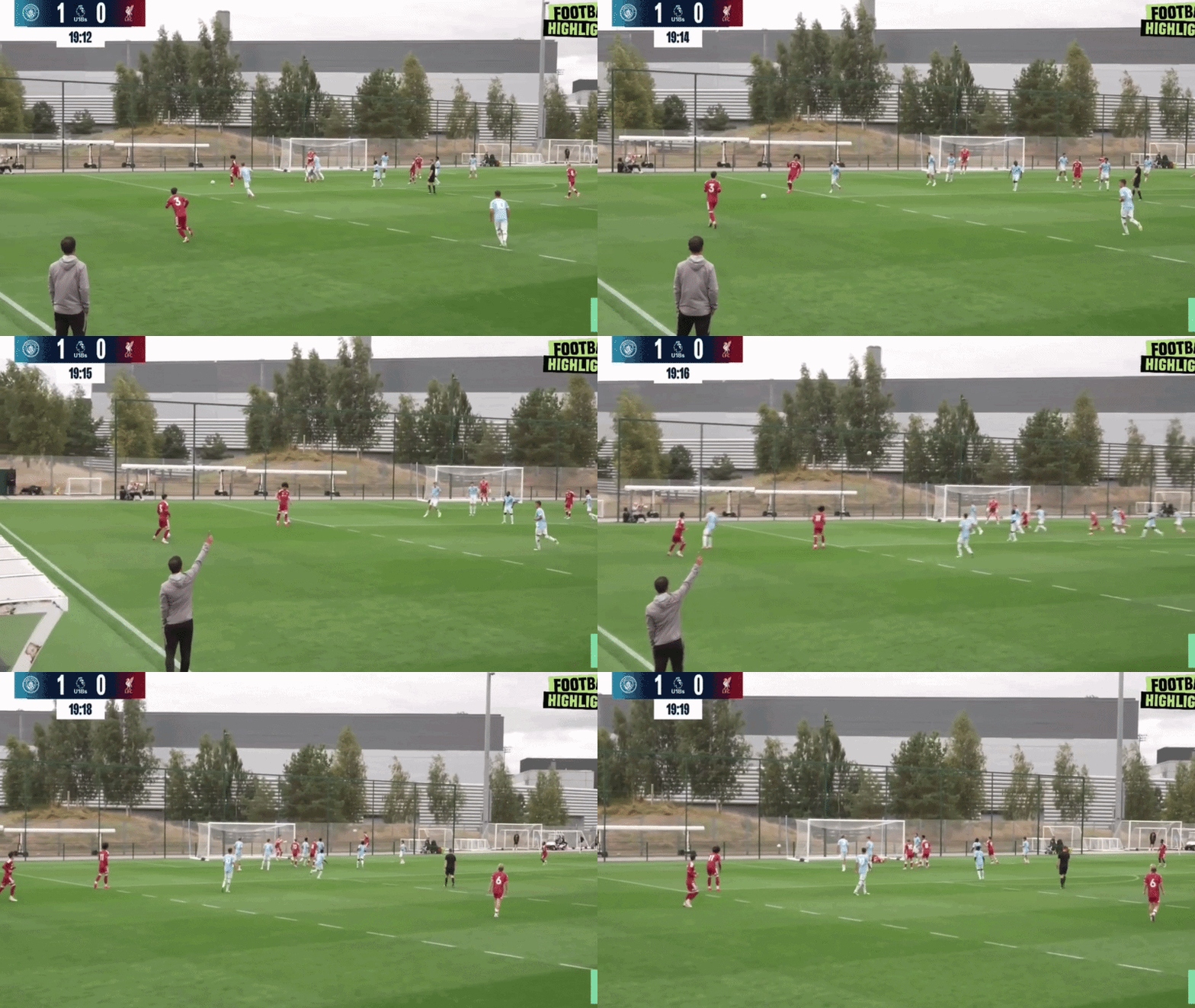
Cameron Williams looks like the closest academy‑level preview of what Kerkez should provide under Iraola with that aggressive starting position, the willingness to sprint beyond the play, and the confidence to deliver early. Williams’ movement was sharp: constantly stepping high, constantly offering the extra lane, constantly giving his winger a simple release. AJ Yeguo, typically a number ten it must be stressed, should’ve used him more. When your full‑back is repeatedly arriving in space with that kind of timing, you feed him.
Last season’s injuries stalled his progress somewhat, but the core traits are clear as day. He’s combative, he defends with real awareness, and he doesn’t switch off. That first 40‑yard decoy run is exactly the sort of action coaches obsess over, not only because it displays the great level of pace, but because it shows understanding and attacking intent. He knew he wasn’t getting the ball; he made the run anyway to distort the back line and open the inside channel. That’s buy‑in.
Evidently it mirrors what Iraola demands from his full‑backs. Kerkez spent last year learning how to play in a system where the left‑back is basically a pressure valve and a chaos engine. Under Iraola, he’s asked to sprint into space early, to arrive high before the winger receives, and to defend huge areas aggressively. When it works, Bournemouth’s left side became a conveyor belt of transitions: Kerkez pinning the opposition wide player, then exploding forward the moment the ball flips. Williams’ habits - the proactive positioning, the willingness to run without reward, the assertive delivery - are the same behaviours Iraola was drilling into Kerkez for two years at Bournemouth.
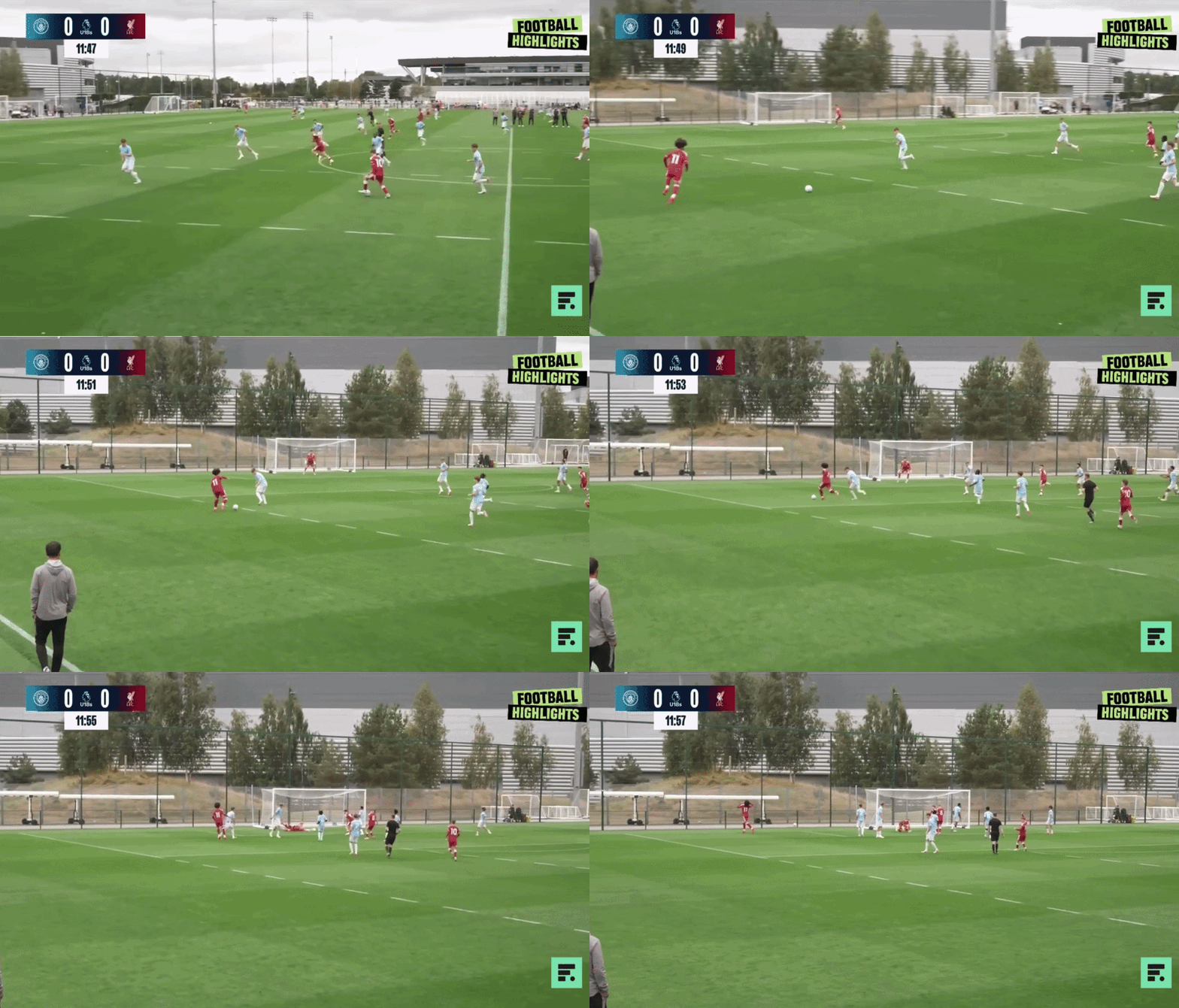
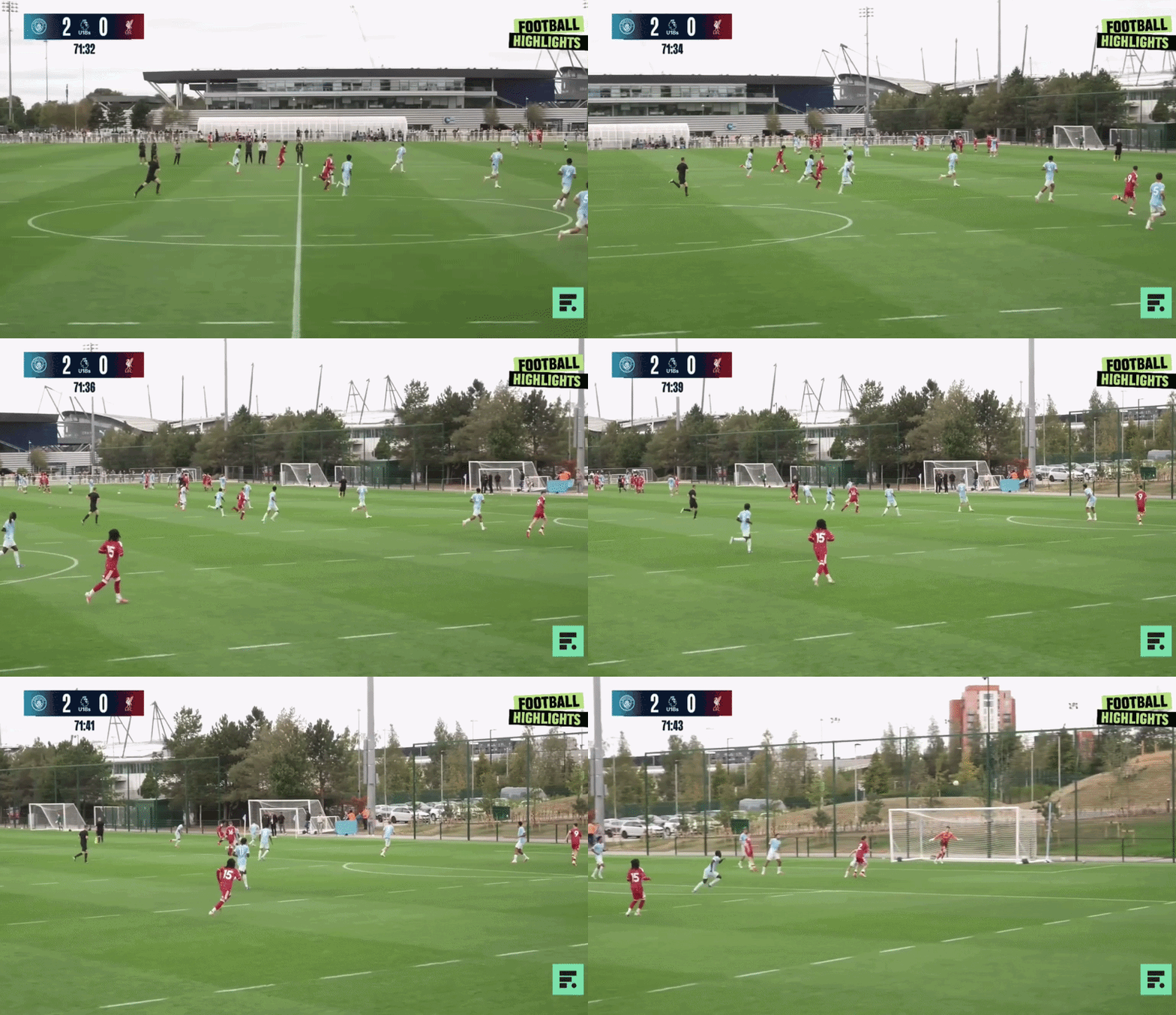
AJ Yeguo, in the unfamiliar role, as ever showed a great willingness to carry the ball with intensity. There was a real liveliness to him out wide, but it wasn’t the usual chaos, it was slightly more controlled, more intentional. His first touch almost always faced the defender, which immediately puts pressure on the full‑back. That’s the core of his profile: he plays on the front foot, he wants to confront you, and he wants to make you defend backwards. It gives him that restless energy that modern wide players need especially if the Iraola game model is to be mimicked by these academy sides.
Stylistically, he’s a rhythm player. Once he gets the ball on the half‑turn, everything speeds up, the touches tighten, the stride length opens and he starts attacking spaces rather than individuals. Naturally he’s not a pure traditional chalk‑on‑boots winger; he likes drifting into that inside pocket early, almost baiting the defender to step in so he can slip past on the outside. Defenders commit to the wrong shoulder, and he’s gone. When he had Williams overlapping, he looked dangerous. The full‑back outside him gave him permission to slow the defender down, manipulate the duel, then explode. Without that support, he can drift into cul‑de‑sacs because he still defaults to the “I’ll beat three myself” solution. That’s the next step: learning when to combine, when to release, when to use the runner as a decoy rather than a bailout.
But I think that the raw tools are good. He’s got acceleration, balance, aggression, and that little bit of unpredictability that makes defenders uncomfortable. If he sharpens the decision‑making and becomes more selective about when he drives versus when he links, he turns into a greater wide threat who can force full‑backs to defend the whole channel, not just the touchline.
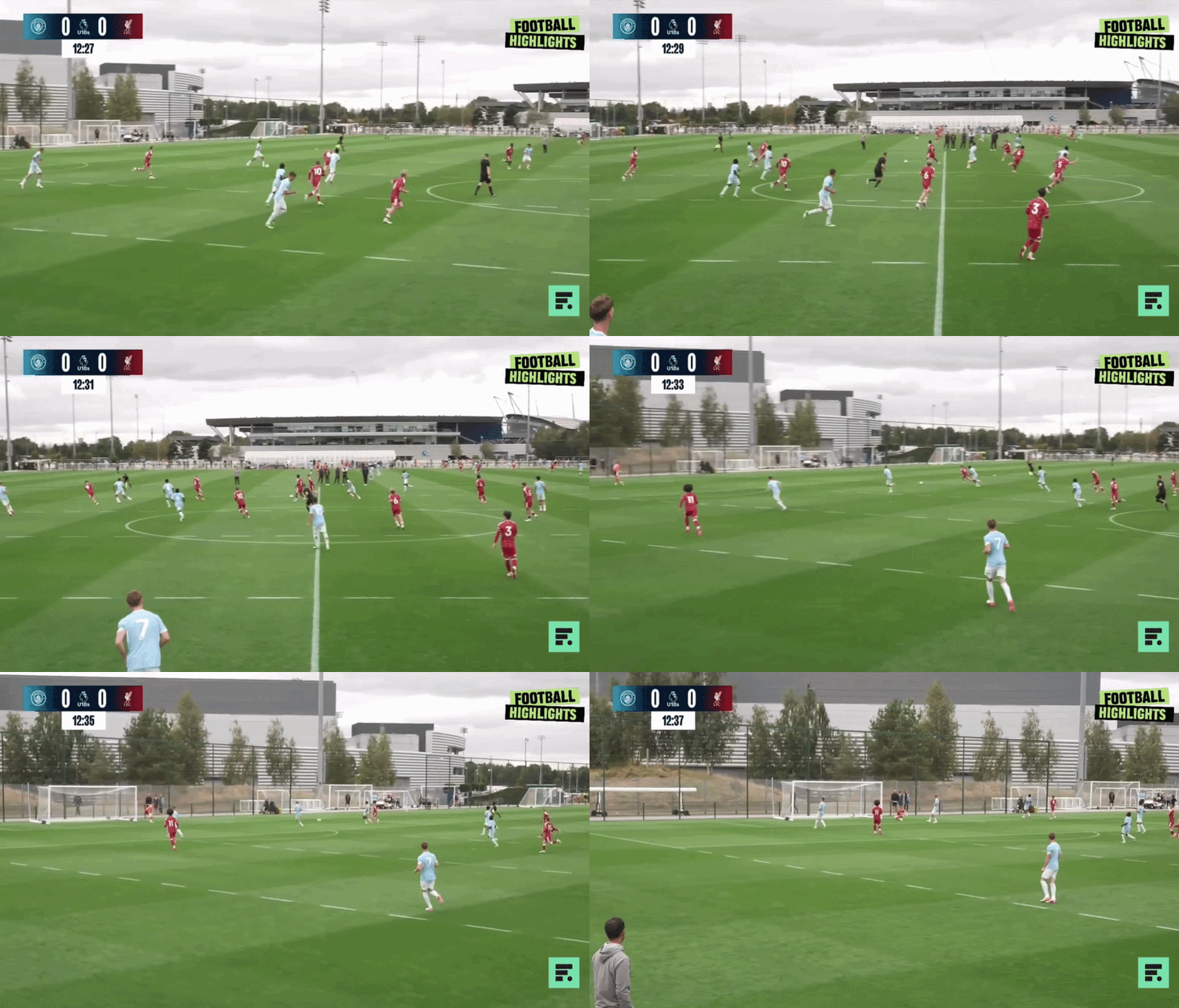
The team’s intent to play fast, direct transitions was clear from the start. Everything was built around getting the ball forward early and forcing the game to move. Huth slotted straight into that rhythm on his U18 debut, reading things quickly, stepping in with a couple of sharp interceptions, and then punching that ball down the channel for Inglethorpe to chase. Exactly the kind of immediate, front‑foot release coaches Simon Wiles and Anthony Ryan were looking for.
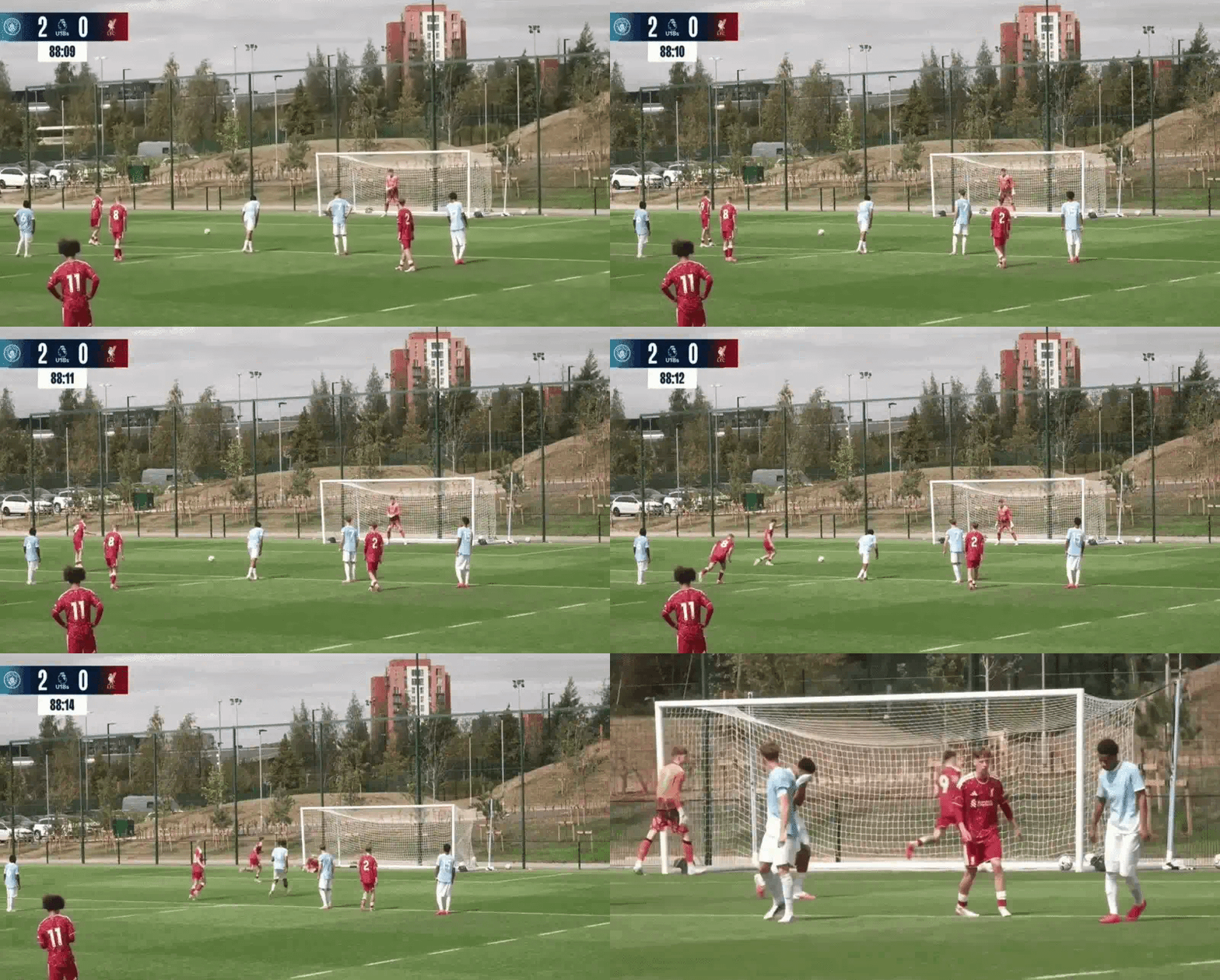
For a competitive return from a 200-day absence, following a shocking ankle-crushing challenge in January’s 7-1 home win over Burnley, Inglethorpe did well on the whole though was inevitably rusty in some moments, rushing at chances. He’s usually far cooler in and around the box. Still he picked up where he left off in January (five assists in three games before his surgery) with another contribution from the spot, shown below. 11 G/A in his last 15 appearances. Not bad.
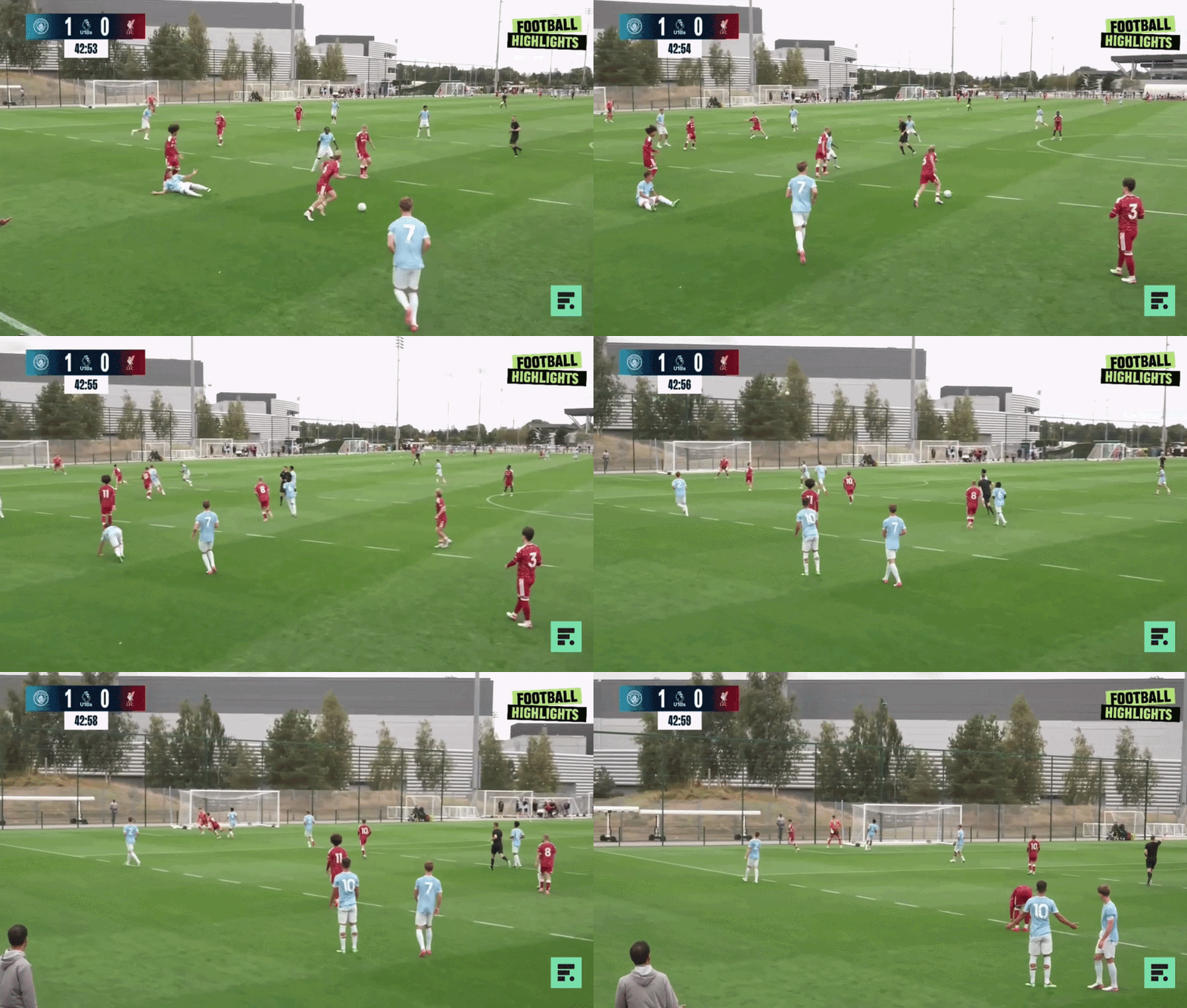
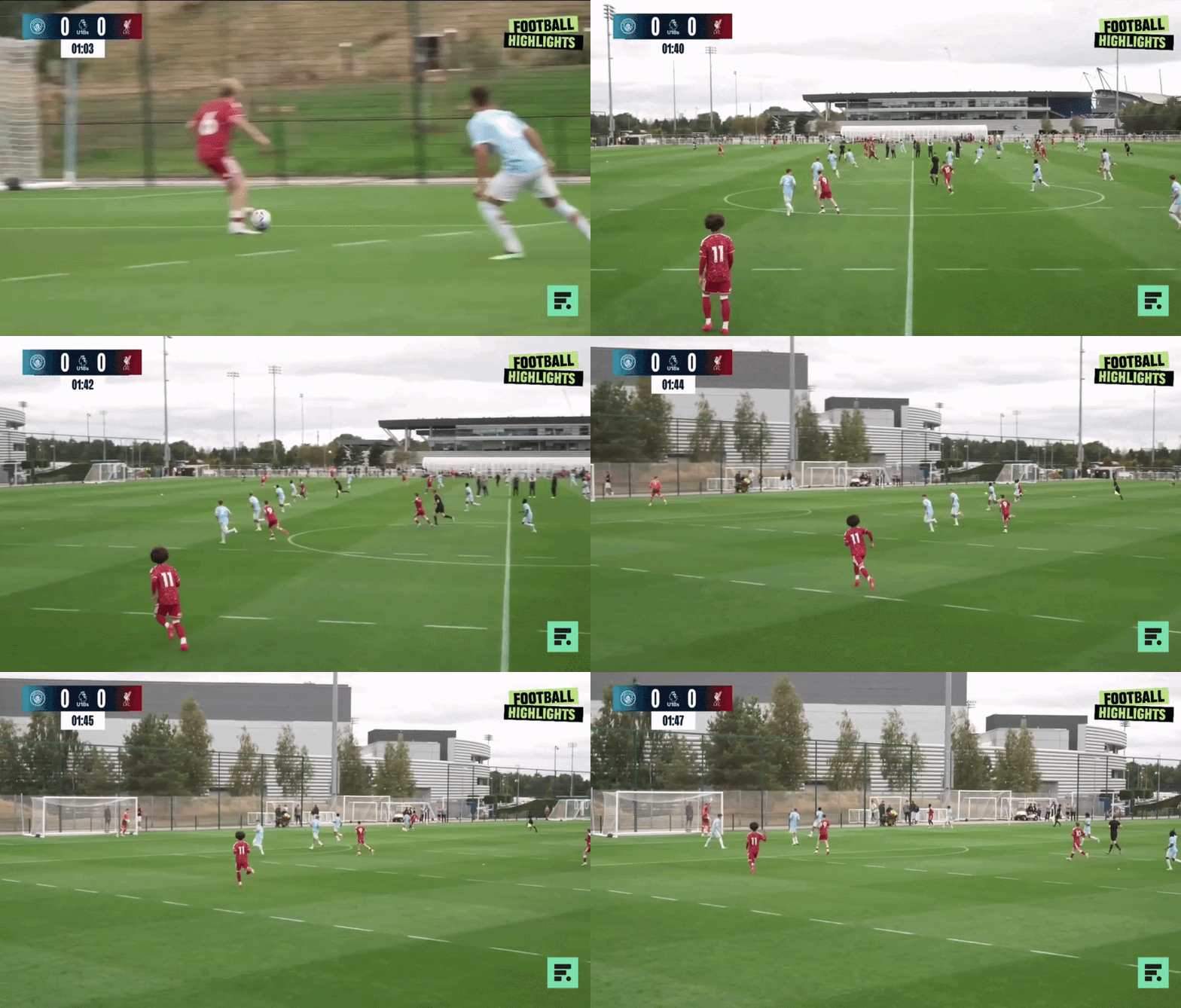
Murray‑Holme’s passing was sharp and impressive again on Saturday. He plays with a clean, steady rhythm: takes the ball early, sets his feet quickly, and moves it with a kind of quiet confidence. Very much a player who understands where the next advantage is and delivers the ball with the right weight. You could see it in the way we built our attacks. Whenever the game needed someone to steady the tempo, he was the one dropping in, taking responsibility, and stitching things together. What makes his range stand out is how naturally he shifts between different types of passes. Short combinations to pull pressure around. Little disguised balls into pockets. Then, when the pitch opens, he’s comfortable hitting the wider switches that stretch the game. It’s all done without fuss. Saturday was another example: he kept us moving, kept everything connected, and maintained the necessary tempo.
🇬🇲Sheriff Bah
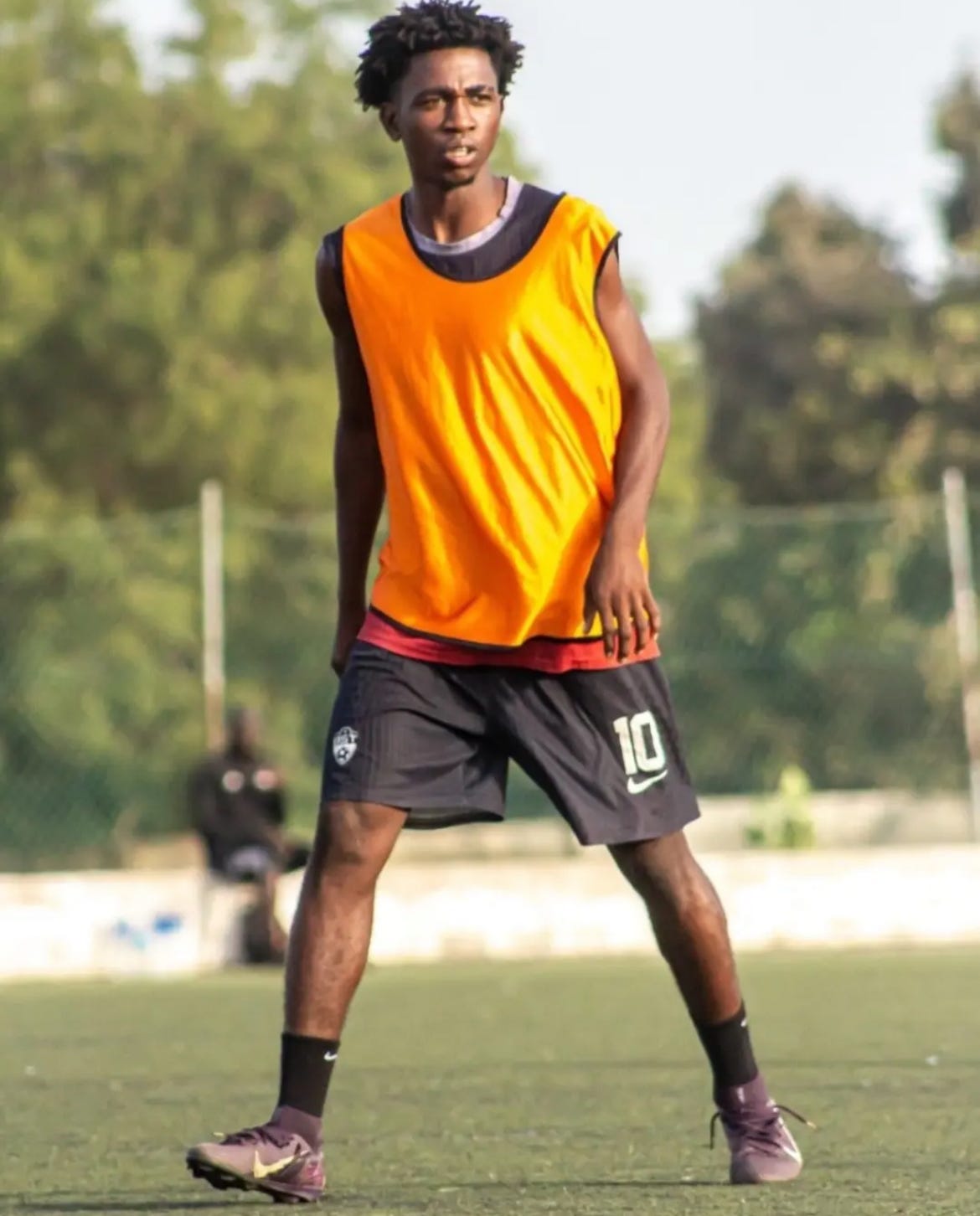
Liverpool have taken on a 17-year-old Gambian trialist for the next few weeks, his name being Sheriff Bah - an attacking midfielder currently plying his trade at BST Galaxy in home nation, an academy which our club officials visited back in spring for a close up look. The end result? Enormous admiration for the aforementioned Sheriff Bah as well as, reportedly, their central midfield player Musa Bajaha who could also potentially be making the move over from West Africa.

BST Galaxy is a Gambian football club built deliberately as a development‑focused project rather than a traditional community team, and its entire identity comes from the idea that young Gambian players need a structured pathway rather than relying on luck or informal scouting. The club was created by Abubacarr “Steve” Trawally after he returned home from his professional career abroad, and the intention behind it was simple: Gambian football has always had raw talent, but it has never had enough organised coaching, competitive structure or long‑term planning to consistently turn that talent into professional players. BST Galaxy’s academy is the centre of the project, running regular training cycles, youth competitions, and a scouting network that feeds into the senior team, and the club has already moved a notable number of players into professional environments, which is rare in a country where most clubs operate on shoestring budgets and informal systems.
Trawally himself is central to understanding why BST Galaxy exists at all. He is a Gambian international forward born in Serekunda in 1994, and he spent almost a decade playing professionally across China, Saudi Arabia, the UAE, Sweden, Iran and Estonia, becoming one of the most widely travelled Gambian players of his generation. His breakout came in China, where he scored seventeen goals in twenty‑six matches during Yanbian’s1 2015 promotion season and later produced double‑digit numbers in the Chinese Super League, which gave him firsthand experience of how professional environments actually function, the coaching detail, the physical preparation, the tactical education, and the day‑to‑day discipline required to survive. When he came back to The Gambia, he realised that none of those structures existed for young players at home, and BST Galaxy is essentially his attempt to build a miniature version of the professional world he lived in, so Gambian kids don’t have to rely on chance to be noticed.
The club sits inside a football culture that is incredibly intense at grassroots level but historically under‑resourced, and that contrast shapes everything. Gambian kids grow up playing on sand pitches, school yards and improvised community fields where the game is fast, physical and instinctive, and where technical skill is shaped by repetition rather than formal coaching. The talent pool is huge, people who have watched regional/national tournaments or competitions suggest just how many gifted players emerge every year but the pathway has always been fragile. Most young players depend on being spotted in one tournament, or by a visiting scout, or through a single standout performance, and that randomness has held the country back. BST Galaxy is part of a new wave of clubs trying to replace that randomness with structure: consistent training, tactical education, physical conditioning, and visibility through digital platforms and organised competitions.
The wider region is shifting too, especially with the arrival of Real Betis Academy Gambia in Banjul, which introduced European‑style methodology, monthly evaluations, and proper technical frameworks that forced local clubs to rethink their standards. Gambian football is slowly moving from raw, instinctive talent to organised development, and BST Galaxy is one of the few clubs that has embraced that transition rather than resisted it. They treat their youth players like professionals long before they become professionals, they run award nights and recognition events to build culture, and they create environments where discipline, consistency and tactical understanding are valued as much as natural ability.
For young Gambian players, the pathway remains demanding, because the dream is Europe but the reality is surviving in competitive environments where discipline matters more than flair. Musa Barrow’s rise from local football to Serie A is the example most kids study, because it shows that talent alone isn’t enough as you need the habits, the mentality and the structure to adapt. BST Galaxy’s academy tries to prepare players for that reality, not by promising Europe, but by giving them the tools that make Europe possible.

Bah, based off limited available footage, looks like a young attacking midfielder who already understands how to run a game. Local West African scouts indicate that he is a high‑touch, high‑control type: tight dribbling, sharp body orientation, and a calmness in possession that lets him manipulate pressure rather than react to it. Even at 17, he plays with a kind of natural composure: receives cleanly, scans early, and immediately links actions together. His creativity isn’t just about flair; it’s about consistently finding solutions in crowded zones, slipping passes through tight channels, and keeping attacks moving with quick, purposeful touches.
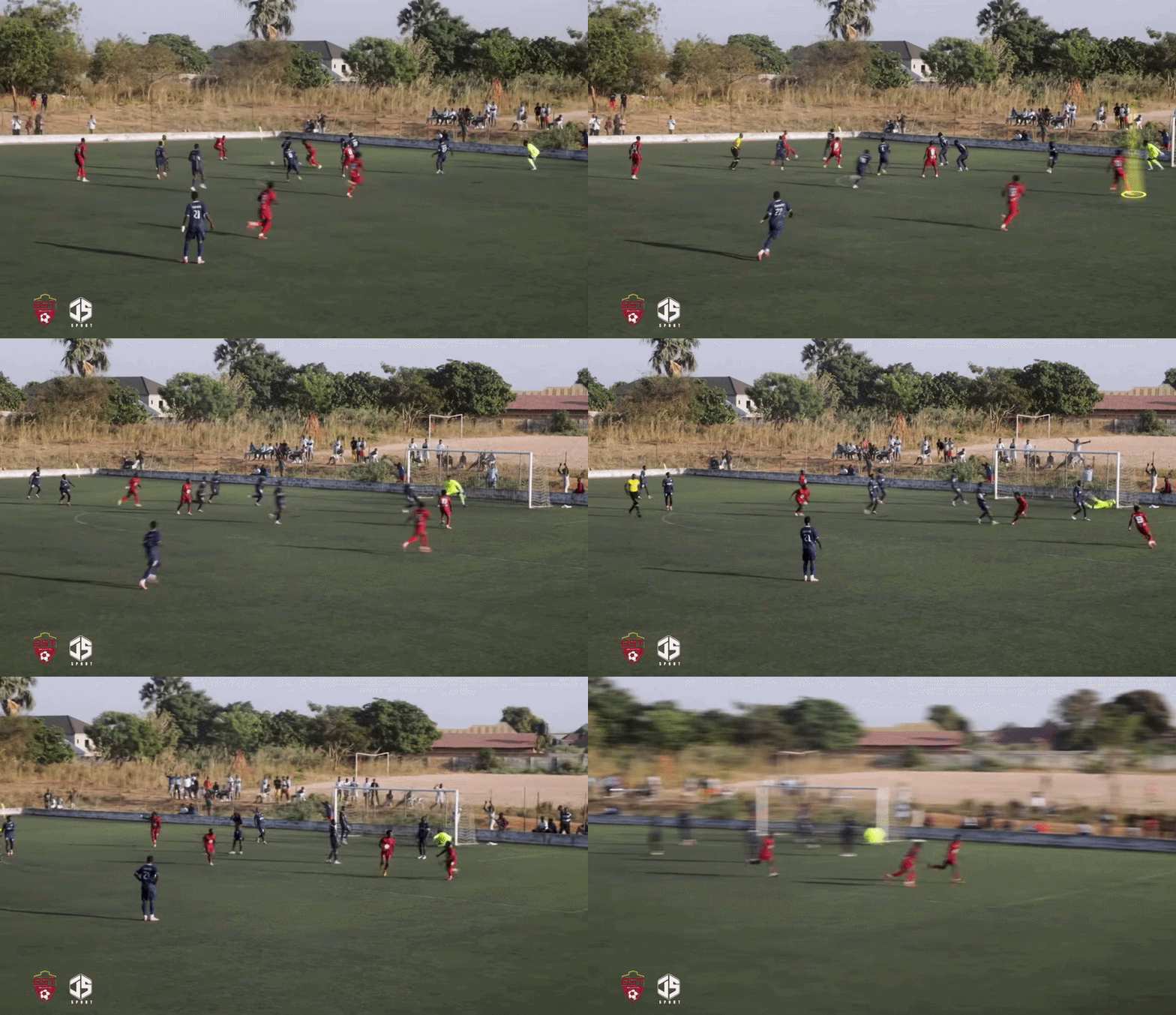
Despite being smaller, he uses that low centre of gravity as a weapon. He glides past challenges, rolls defenders, and stays balanced even when opponents try to crowd him out. That ability to dribble under pressure is what allows him to progress play so reliably. He doesn’t need space created for him, he creates it himself. Add in his vision and timing in the final third, and you get a midfielder who can both carry attacks forward and finish them.

There’s also genuine goal threat in his game. He strikes the ball cleanly, picks smart moments to arrive in dangerous areas, and has that little snap in his finishing that suggests he’ll only become more decisive as he matures. It’s no surprise European clubs have started paying attention; he’s showing the blend of technical security, creativity, and end product that tends to travel well. A confident, inventive attacking midfielder with real quality on the ball and the personality to influence games. One to watch.
Of course, Bah would not be able to officially join the club until the summer of 2027, should Liverpool pursue a deal after the trial period.
If you enjoy my work, please consider a paid subscription to receive a whole host more analytical and in-depth articles including detailed player profiles/deep dives at both first team and academy level. Alternatively, you could buy me a coffee. Thanks for reading.
Chinese side now in the third tier.