

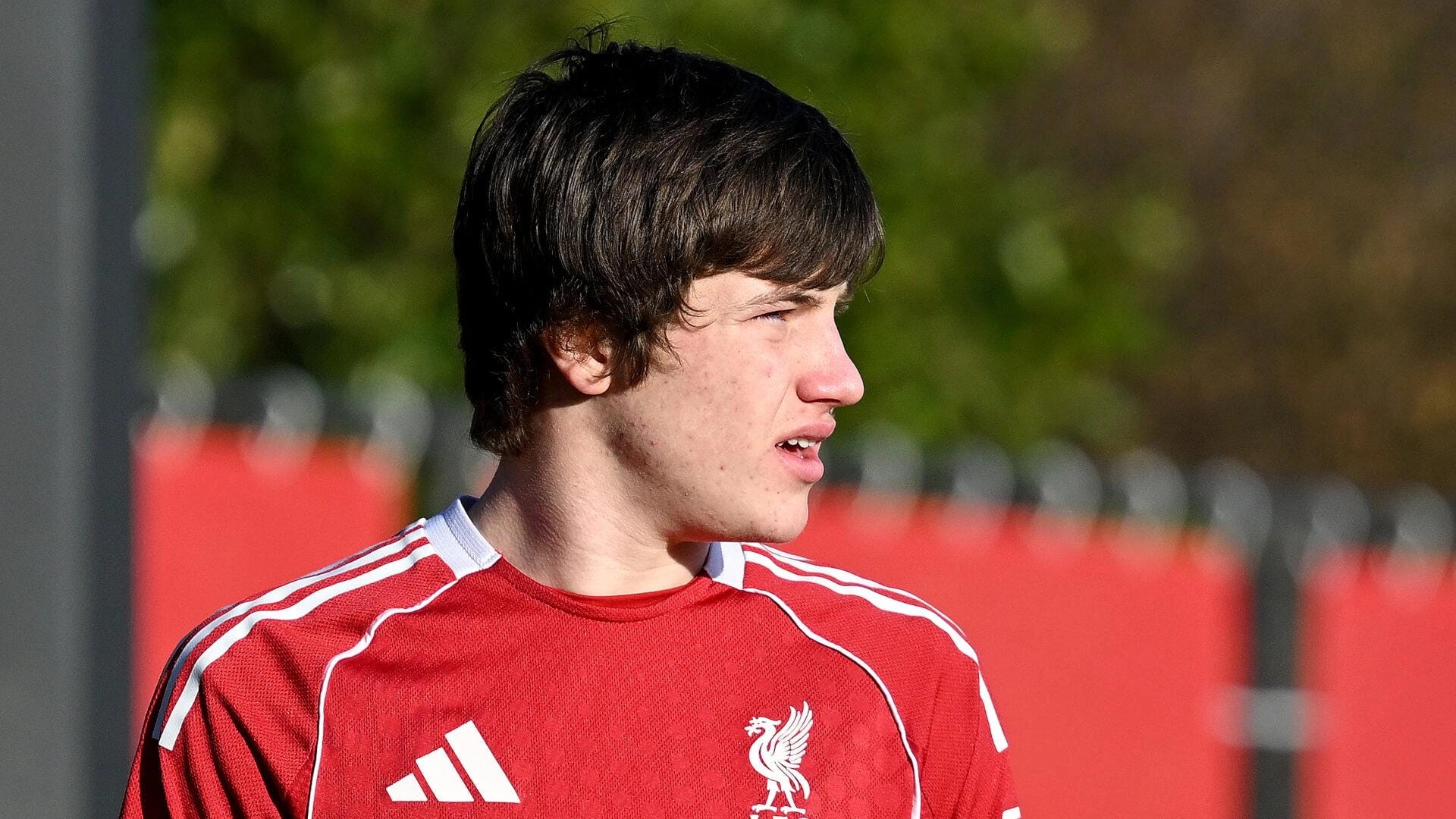
On Saturday afternoon, just over 24 hours prior to the senior Reds falling to another defeat at Old Trafford, Virgil van Dijk was in attendance at The Academy for the U18s’ final home fixture of the season - a 2–1 loss at the hands of Middlesbrough. With the young Reds firmly submerged in mid-table at this level, head coach Simon Wiles opted for experimentation as goalkeeper Matthew Wright1 (17) - brought in last summer as an extra body on the training ground - was handed his competitive debut from the off as was U16 left-winger Isaac Konde, while pre-scholars Zak Coxon2 (RW) and Charlie Huth (RB) also received their first U18 minutes. Scouse midfielder Oliver O’Connor, filling in at right-back for the 12th time this campaign, was on target to half the deficit in injury time however the afternoon was unfortunately overshadowed by a nasty head injury to central defender Prince Cisse.
LFC: M. Wright; O’Connor, Cisse (Ayman 18′, Lee Forrester 64′), Clarke, Owen; Murray-Holme, Upton; Hickman, Konde (Huth 70′), Farkas; Bradshaw (Coxon 75′)
Above all, once more, two immense technicians stood out in the middle of the park: no.10 Erik Farkas (16) and deeper midfielder Haydn Murray-Holme (17). I have, alongside many Substack notes, already wrote several pieces on the former and his incredibly unique path: arriving from the Szeged region of Hungary to the North West of England as a 10-year-old boy due to his father’s business ventures, before being scouted by Liverpool on a local park. Farkas is simply brilliant. It would be a grand shame if he turns down a scholarship contract in the summer and lands at a rival club. But I have never really given Murray-Holme, arguably our U18’s second-most consistent performer over the course of the season behind only top scorer Joshua Sonni-Lambie, a dedicated post. So after witnessing yet another aesthetically pleasing display of technical elegance and composure, the time is now in that regard.
Murray‑Holme has been high on Liverpool’s radar for a long time, but last season was the moment he truly stepped out of the shadows. Ten goals and thirty - yes, thirty -assists with the ‘16s was an outrageous return for the all-action midfielder. It’s no surprise, then, that the 17‑year‑old was quickly being spoken about as the standout from last summer’s exceptionally bright scholarship intake. Born on the Wirral, he is now into his tenth season at the club, having first joined Liverpool at the age of six in a pre‑academy capacity. In every sense, has grown up in red and comes from a Liverpool-supporting family.
This summer marked the next natural step in his journey. Murray‑Holme made his competitive U18 debut on the opening day of the season, coming off the bench in the 5–1 win at Stoke to replace fellow Scouser Ellis Hickman for the final ten minutes. It was a small moment on paper, but a significant one for a player who had spent the previous year running the show at U16 level. Among the 2008-born group, he is widely regarded - both internally and externally - as the top talent, and the excitement from all in the club about him is very real. His development last season was steady and deliberate. He started every match in LFC’s U17 Premier League Cup campaign, a competition designed to give both current and future first‑year scholars a taste of the physicality, speed and tactical detail required at U18/U21 levels. Then, in April, he travelled to the Netherlands for the prestigious U17 N.E.C. Nijmegen Cup, a tournament that attracts elite academies from across Europe and South America. Over two intense days, Murray‑Holme played almost every midfield role imaginable: as a No.10, on both sides of a central‑midfield pairing, and even as the deepest midfielder. Operating slightly deeper meant his defensive involvement was high: he averaged 19 duels attempted, 2.5 interceptions and just under six recoveries per 90.
None of that will come as a surprise to anyone who has watched him closely. For all the talk about his creativity, Murray‑Holme is a fiercely competitive midfielder who presses with real intent and throws himself into duels. His tenacity isn’t the reckless, flying‑into‑tackles kind; it’s the constant pressure, the second and third efforts, the refusal to let a lost cause stay lost. Coaches love that side of him almost as much as the technical quality.
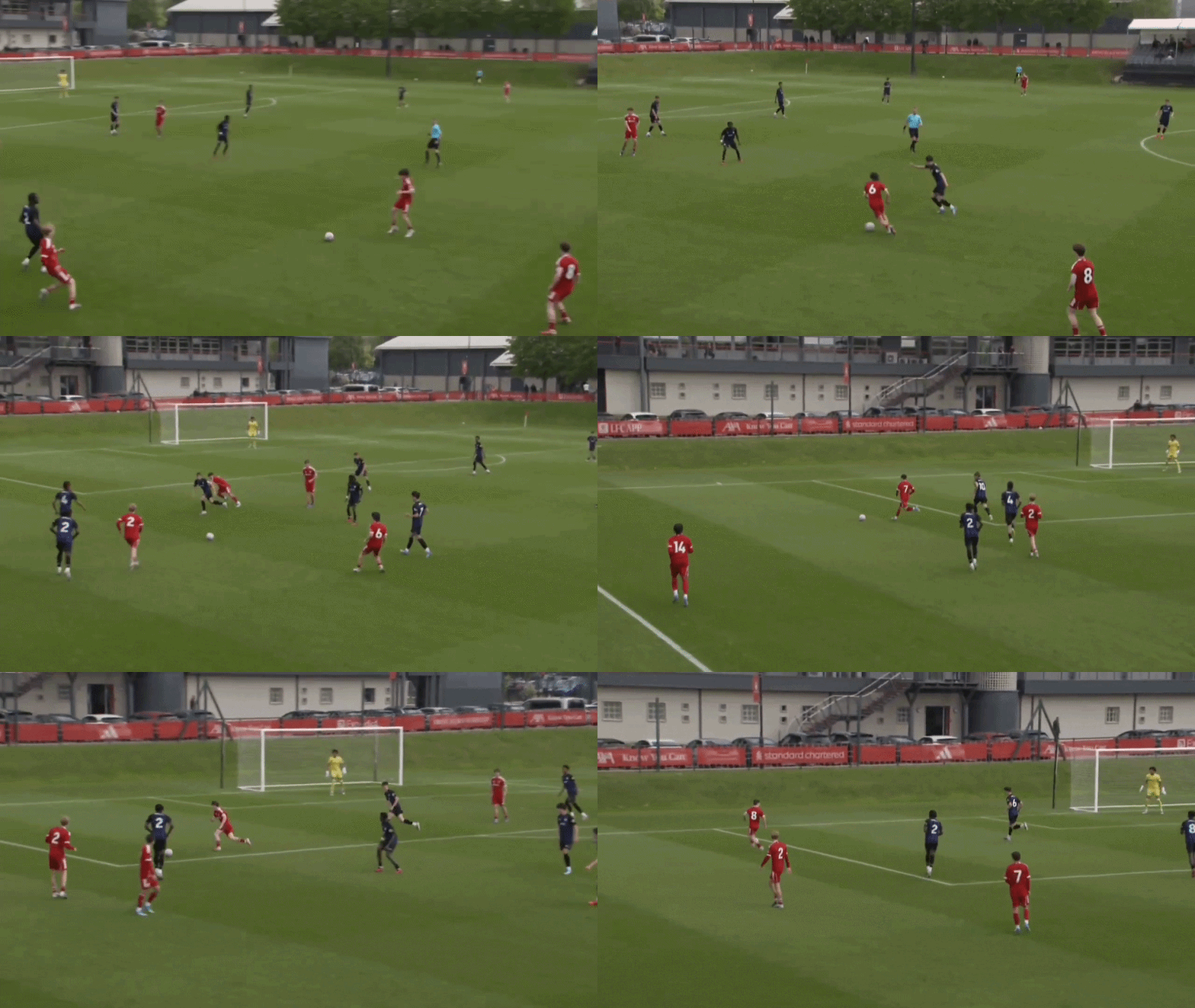
But it’s on the ball where he truly separates himself. Murray‑Holme is sharp, agile and wonderfully alive in the final third. Everything he does has purpose: incisive without being frantic, instinctive without being careless. He scans constantly, sees pictures early, and his passing is consistently well‑weighted whether he’s threading a ball through a tight channel or switching play from deep. Even when receiving with his back to goal, he’s comfortable, using quick touches, disguised movements and little moments of invention to wriggle out of pressure.
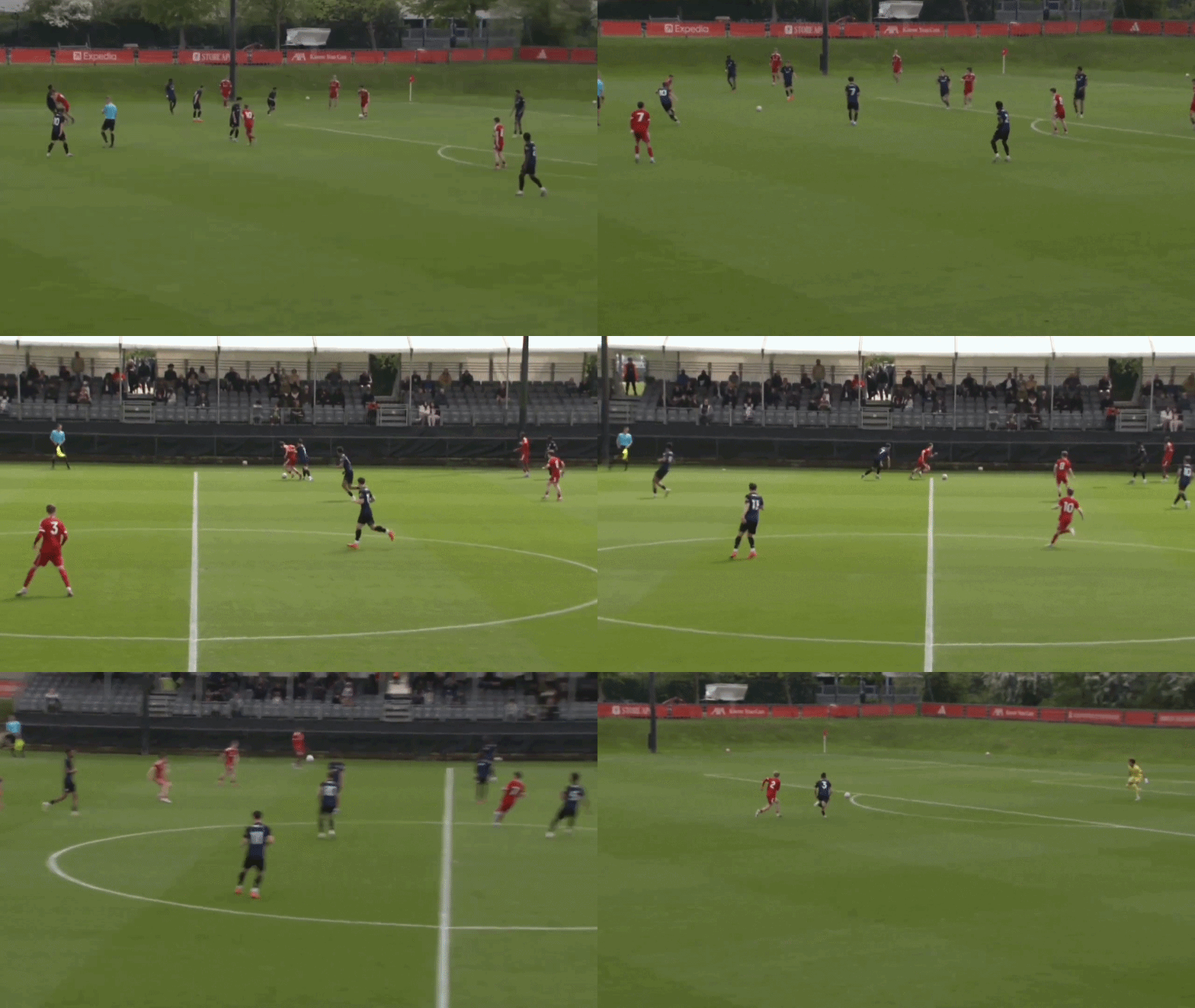
He’ll drop deep too, spotting angles and little pockets that his midfield peers at this level simply don’t see, using them to release a forward in transition or isolate wingers Forrester or Bradshaw 1v1 with FBs. His range of passing is excellent, but it’s the way he moves that really catches the eye: the subtle feints, the shifts of balance, the tight control that lets him glide past opponents in short, elegant bursts. That blend of craft, intelligence and bite is exactly why many at Kirkby think he’s got a real chance of kicking on in the years ahead.
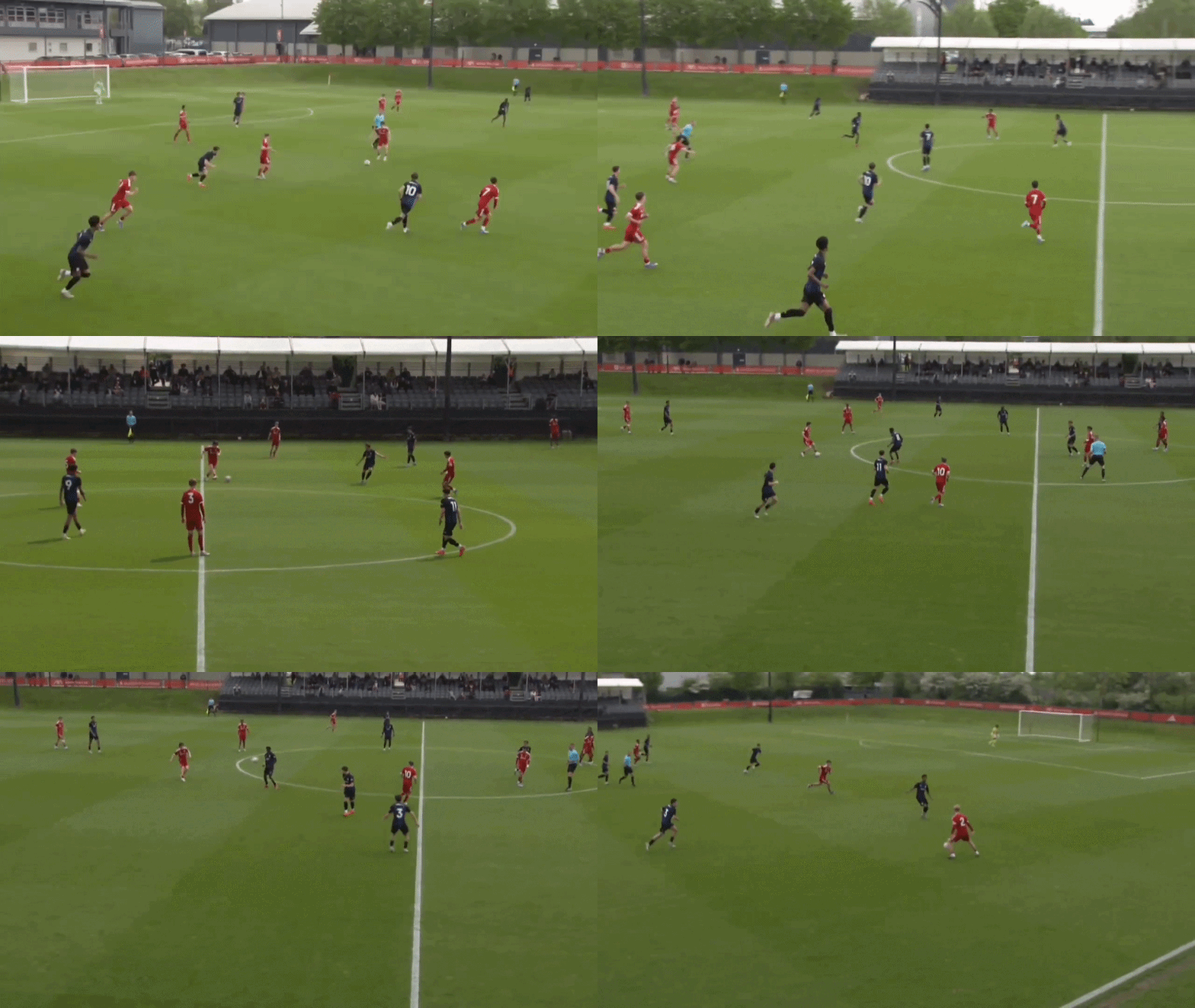
The passing stands out because of how naturally and quickly HMH plays forward. He doesn’t need space to open up before he commits to it instead he plays into tight areas with confidence, and he does it repeatedly. When the ball comes to him, he already knows where the next gap is going to appear, and he plays into it with enough pace that the move gains momentum straight away. Our U18s attacks often jump a phase when he’s involved because he doesn’t waste touches or wait for the game to settle.
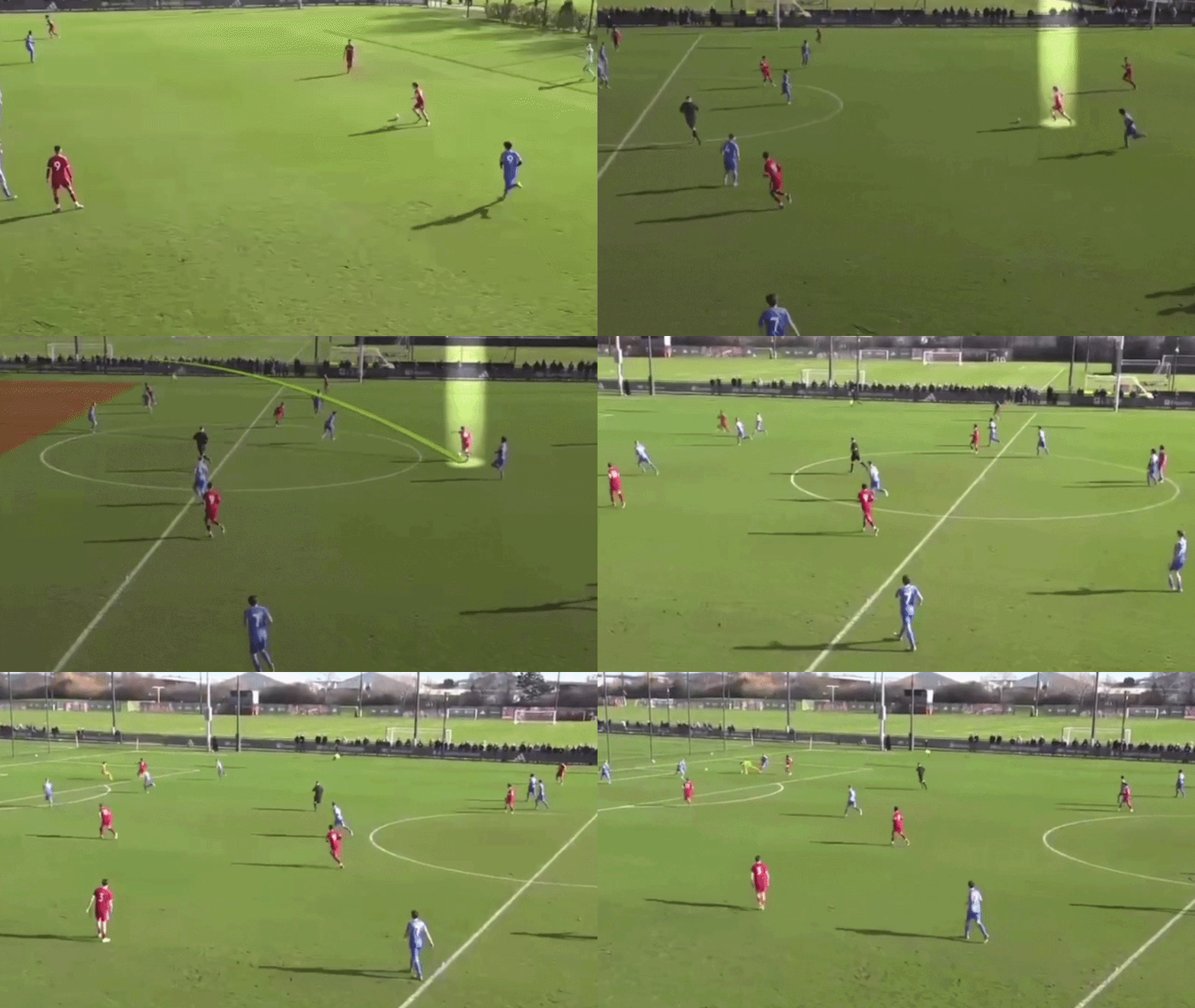
His disguised passing is a big part of why he’s so effective. He’ll shape up in a way that suggests he’s going to play into a safe area, then send the ball through a completely different lane. It catches midfielders leaning the wrong way and opens up space for the player receiving between the lines. These most definitely aren’t ‘Hollywood’ passes - otherwise known as ‘hero ball’ - they’re quick, sharp, and timed well enough that the opposition can’t adjust. This is where, stylistically, the Vitinha comparisons fit. Murray‑Holme has that same ability to shift the ball half a yard, change the angle slightly, and suddenly a vertical lane appears. It’s not about big movements or showy disguises; it’s about small adjustments that create just enough room to play forward. The ball arrives quickly, usually into feet, and usually in a way that lets the receiver continue the attack without needing to reset.
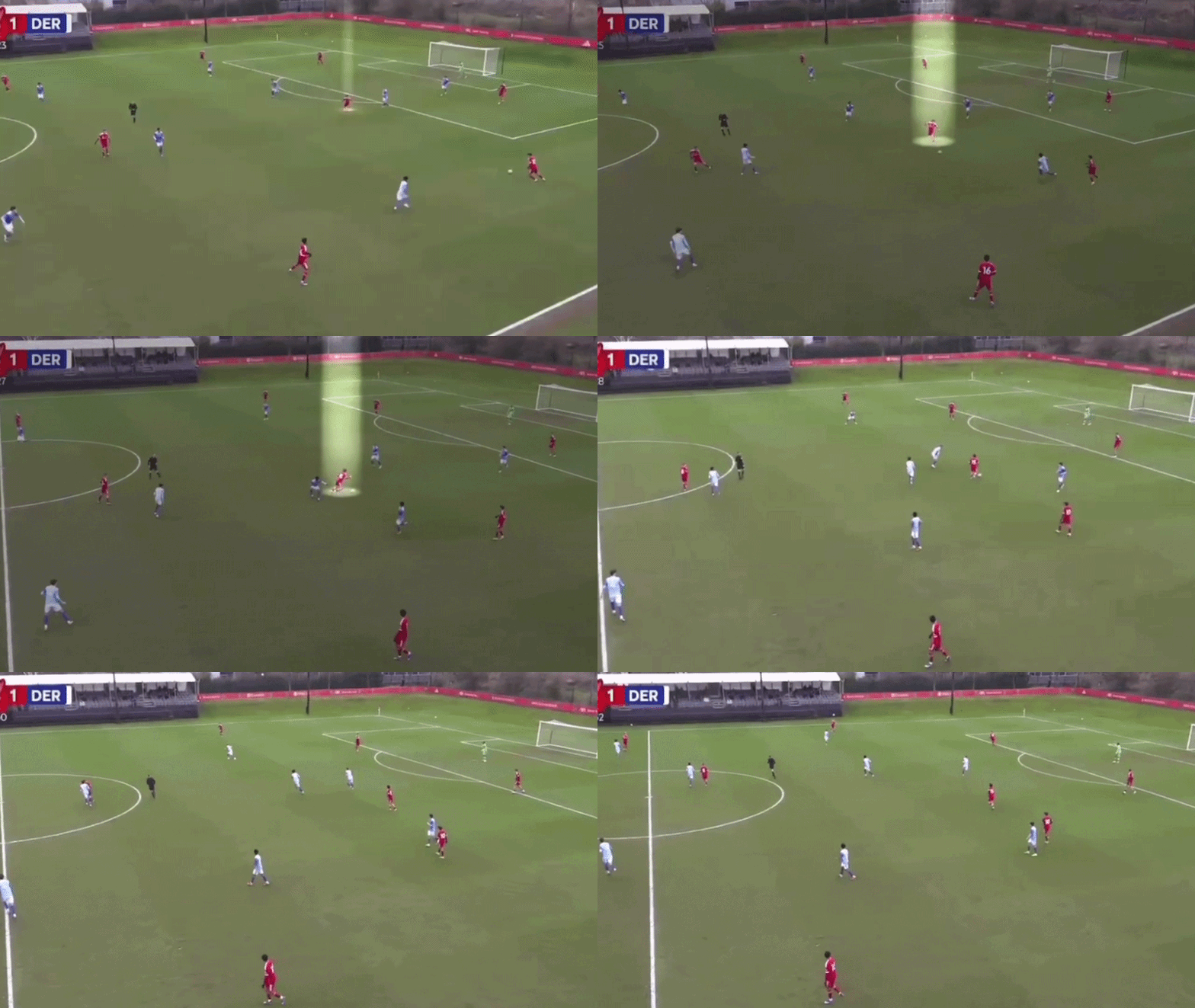
HMH is also patient. He doesn’t fire vertical passes for the sake of it. He waits for the moment when the opposition’s spacing loosens - a midfielder stepping too high, a defender holding a poor angle - and that’s when he threads the ball that takes players out of the game. It gives his passing a steady, controlled feel rather than a frantic one. He knows when the pass is on and when it isn’t.
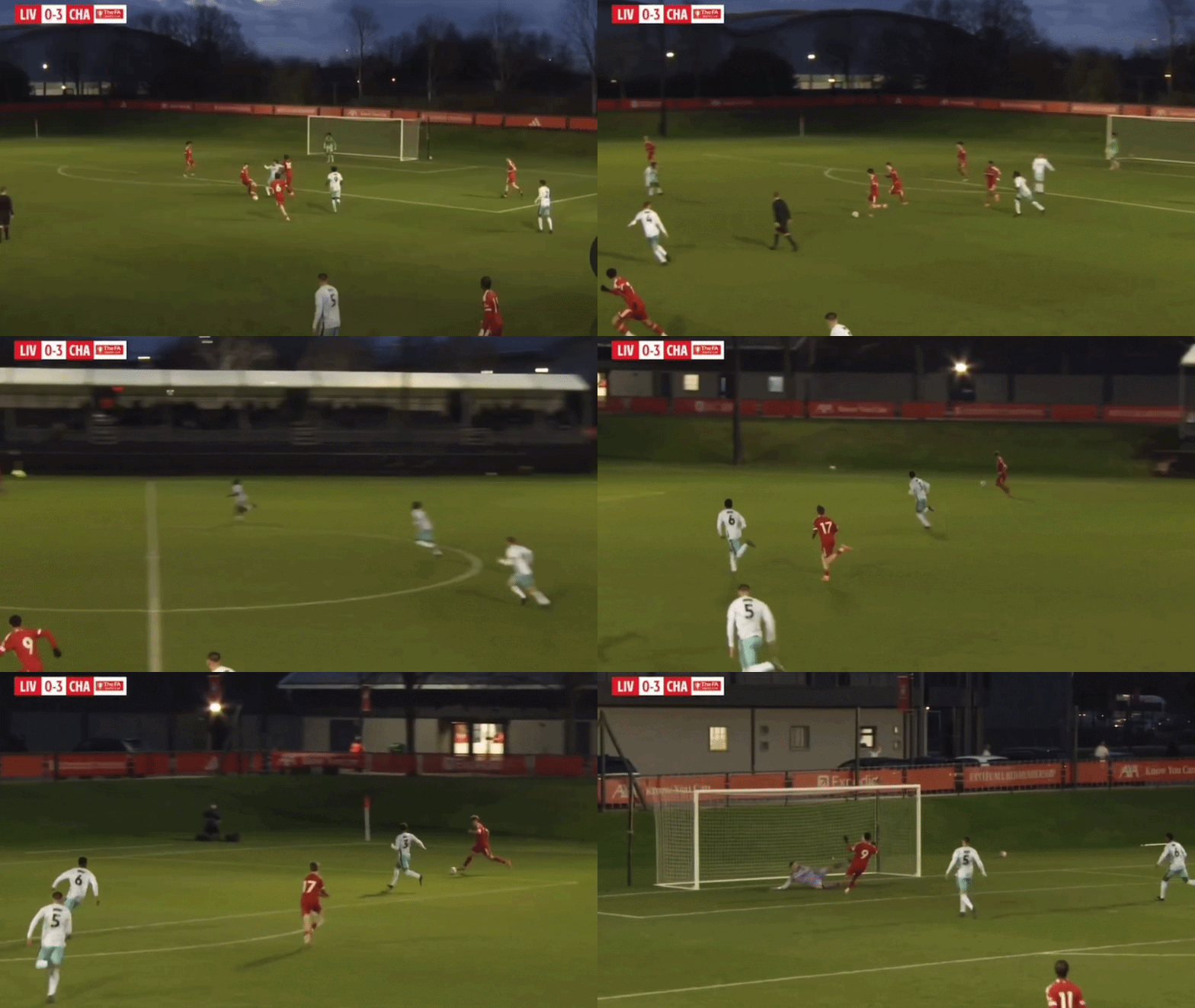
Across a match, these actions add up. He moves LFC into dangerous areas without needing long dribbles or big switches. He plays through the middle of teams, not around them, and that forces the opposition to constantly adjust their shape. It’s a style built on timing, weight, and awareness rather than flash. The Vitinha comparison isn’t about likeness in every part of their game but rather about the way both players use small technical details to open up vertical routes that most midfielders their age don’t see or don’t trust themselves to play. Murray‑Holme has that same instinct to break lines early and with conviction, and it’s a big part of what makes him stand out.
Over the course of the season, Murray-Holme featured in each and every one of the U18 PL fixtures, recording 1,573 minutes which makes him the fifth most used played for the Reds this season behind: Lucas Clarke (CB), La’more Forrester (LW), Josh Sonni-Lambie (ST) and Joe Upton (DM). He scored once - at home to Blackburn in September - and assisted five goals in the league. As well as that, HMH made three appearances in the UEFA Youth League campaign in which LFC were eliminated in the first knockout round, and started in the FA Youth Cup Third Round exit to Charlton Athletic.
If you enjoy my work, please consider a paid subscription to receive a whole host more analytical and in-depth articles including detailed player profiles/deep dives at both first team and academy level. Alternatively, you could buy me a coffee. Thanks for reading.
Wright had most recently been playing for Moorside Rangers - an amateur grassroots side in Manchester. A brilliant story!
Coxon was particularly impressive in his 16-minute cameo. Hee should have had an assist to his name, thanks to a brilliant cross that Lee Forrester somehow headed well over the bar despite being unmarked in the middle of the box.