

Over the next two months, the eyes of the football world will be firmly fixed on North America as the largest instalment of a World Cup in history delivers 104 matches across the United States, Canada and Mexico. For a very different reason, that part of the planet will become particularly significant to Liverpool barely a week after the tournament’s grand conclusion in New Jersey, when we get our first three glimpses of Andoni Iraola’s Reds during the scheduled pre‑season fixtures in the States: Sunderland (July 25, Nashville), Wrexham (July 29, New York) and Leeds United (August 2, Chicago). Of course, the 12-day USA tour in 2024 had provided a trifecta of encouraging first impressions on an Arne Slot Liverpool side with three convincing victories over Real Betis, Arsenal and Manchester United setting the tone for that year’s crusade to the league title.
With that being a European Championships and Copa America year, a considerable chunk of the travelling squad were either those on the fringes - remember Fábio Carvalho and Sepp van den Berg’s displays before Brentford splashed over £50m on them?- or U21 talents. If I told you that 17 of the 28 were made up by: Stefan Bajčetić, Luke Chambers, Marcelo Pitaluga, Ben Doak, Nat Phillips, James McConnell, Harvey Blair, Trey Nyoni, Tyler Morton, Harvey Davies, Luca Stephenson, Kaide Gordon, Lewis Koumas, Amara Nallo, Owen Beck and Viteslav Jaros, you’d immediately grasp the scale of the absences. Generally tending to field as close to his strongest XI as possible, Arne would bring a raft of youngsters (sometimes uncompetitive debutants) on in the final half an hour, with the particularly impressive Nyoni often receiving slightly more.
Second time around for Slot, there was sizeable academy involvement most prominently in the first ‘90 of that Athletic Club double header taking place a week before the season opener against Iraola’s Bournemouth. Trey Nyoni, Rio Ngumoha and Luca Stephenson - one of the brightest performers across the last two pre-seasons, who is now close to finalising a £1m move to Bolton Wanderers - had all featured in the matches out in Asia while young goalkeepers Ármin Pécsi and Kornel Miściur also travelled as part of the 29-man squad. Pécsi - a lifelong Liverpool supporter recently named Hungarian goalkeeper of the year - would then receive his uncompetitive debut in that aforementioned Anfield match as did midfielders Tommy Pilling and Michael Laffey as well as defender Wellity Lucky. Only a couple of hours later, in the second game, the icing on the cake for a whirlwind week for 17-year-old Will Wright came as he replaced Florian Wirtz in front of 60,000 just two days after putting pen to paper on a £400,000 deal from League Two outfit Salford City.
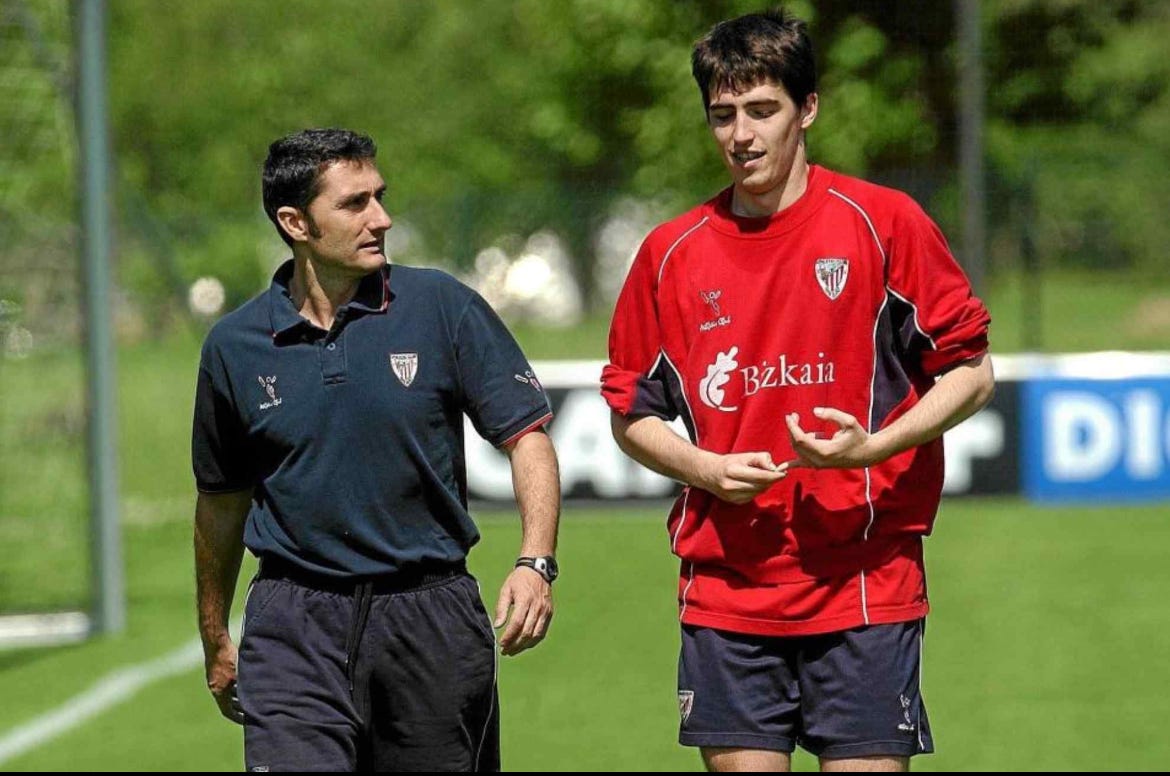
Iraola is very clear about one thing: copying other coaches’ training sessions is pointless. In his words, modern football gives you access to everything:“We can see training from Guardiola… we have Guardiola’s exercises from 2007–2008 in Barcelona.” But he immediately undercuts the idea that this is useful. You can copy the drill, but you can’t copy the context. You don’t know why Guardiola chose that exercise, what problem he was solving, what opponent he was preparing for, or what his squad needed that week. Iraola’s point is simple: training isn’t a menu where you pick the exercises you like. It only works when it’s built for your team’s reality.
That’s why he pushes his staff to rebuild their training library every season. “Every time you start a year with a team, look at our exercise library… start doing it because every year the circumstances are different.” He doesn’t believe in recycling last year’s plan just because it worked once. New players, new opponents, new weaknesses, new strengths, all of it demands new solutions. What worked for one squad won’t automatically work for the next. What worked in La Liga won’t necessarily work in the Premier League. And what worked in September might be useless by March. The core of his philosophy is adaptability. Training isn’t about prestige drills or copying the “right” coaches; it’s about designing sessions that solve the specific problems your team has right now. That’s why he dismisses the idea of leaning on a famous coach’s old exercises: “They are not my players; they are not my opponents. You do not have the same needs.” For Iraola, the job is to understand your own team deeply enough to build training around them, not around someone else’s blueprint.
His training ideas come from a very Basque, very practical school of coaching. He isn’t a theorist who wants to run “pretty” sessions; he wants training that directly produces the behaviours he needs on matchday. His teams at Rayo Vallecano and Bournemouth were known for extreme running, aggressive pressing and constant verticality, and that comes straight from the way he structures his work week. His sessions are built around intensity, repetition and clarity: players know exactly what the triggers are, what the next action should be, and how quickly they’re expected to execute it. As he’s put it himself, “Intensity is non‑negotiable.”
One of the most recognisable features of Iraola’s training is how much he uses the flanks. At Vallecano, wide play wasn’t just a tactical choice — it was drilled relentlessly. Full‑backs were trained to behave almost like wing‑backs, constantly overlapping while the wingers moved inside. This wasn’t improvisation; it was the product of repeated patterns in training, where the wide overloads and the timing of the runs were rehearsed until they became automatic. The midfielders were coached to drop into the back line whenever a full‑back pushed high, creating a temporary back three, another behaviour that came directly from structured training work. Iraola has explained this principle before: ‘We want to attack with many players, but we must always be prepared to defend with many players.’
Him and his team also build, in training, pressing habits through what coaches call “hybrid” structures. Iraola’s teams don’t press in a single fixed shape; they press according to cues. That means training sessions are full of scenario‑based drills: centre‑backs receiving under pressure, full‑backs being trapped on the touchline, midfielders being forced to play backwards. The goal is always the same: force a rushed decision, win the ball high, and attack before the opponent can reset. This is why his teams often look chaotic to the opponent but organised to themselves: the chaos is rehearsed. Another interesting detail is that Iraola is not dogmatic about playing out from the back. Unlike coaches who insist on short build‑up no matter the risk, he trains his goalkeepers and defenders to recognise when to go long and flip the pitch. That’s a deliberate part of his training design: players are encouraged to make direct, targeted long passes when under pressure, rather than forcing a risky short option. The important thing is to progress, how you they do it depends on the situation.
Clearly, his own background has shaped his training. He came through the Basque coaching tradition; detail‑heavy, physically demanding, and obsessed with collective organisation. In interviews, he’s spoken about how that environment shaped him as a player and now as a coach, and you can see it in how his teams behave: compact, aggressive, and always working in units rather than as individuals. Simply, run together, press together, suffer together.
As we know, pre‑season is the only period in the year where sides can apply true physiological overload since it’s the one stretch of time not disrupted by the match–recovery–match cycle. In this window, coaches like Iraola can push players through double sessions, accumulate 25–35 km of weekly high‑speed work, and expose them to repeated high‑intensity efforts with incomplete recovery, the exact stimulus required to drive the adaptations that underpin elite performance. This is when players build the aerobic base that comes from mitochondrial growth and increased capillary density; the lactate‑threshold shift that lets them sustain pressing for 90 minutes; and the repeat‑sprint ability that only improves when you can stack 20–40 sprints per session without worrying about a match two days later. It’s also the only period where you can safely load the hard braking, cutting and eccentric‑strength work that toughens up tendons and connective tissue which massively lowers soft‑tissue injury risk later in the season.
Crucially, physical and tactical work can be integrated at full intensity: pressing triggers, rest‑defence structures, counter‑press reactions and recovery runs can be trained under fatigue, which is the only way they realistically transfer to real matches. Once the season starts, as we found out in the bleakest way possible in 25/26, none of this is possible: you can maintain fitness, but you cannot build it. That’s why teams who get pre‑season right don’t just look fitter; they look more stable, more resilient, and more capable of sustaining their game model from August to May.
“In pre-season, results are not so important. I prefer that there are good sensations. I prefer that players start to feel what we want from them, and they improve physically so they can do what we are demanding from them and this is the main focus. It’s true that the beginning of the season is not so far, so you have to start also competing and trying to be a tough team to beat. But right now, the most important thing is that the players get the idea and they get ready for the first game.” - Andoni Iraola speaking to the Bournemouth Echo in July 2023
Despite results quite clearly being secondary in pre-season, on-pitch standards during these friendlies remain exceptionally high for Iraola. Following a 4-1 defeat to Manchester United in last season’s US Summer Series, in which their only goal was courtesy of Mathijs de Ligt turning into his own net, he was scathing in his post-match media and admitted that some of his squad were ‘not at the level required.’ “When three, four, five players are not at their best, we struggle, everyone looks worse. We have some players who are in a great place at this moment in pre-season, others are not at the level required.”
What academy staff inside Bournemouth laud about Andoni is how quickly he made the academy feel like part of his world. Alan Connell - the club’s U21/Development Squad head coach - shared the story about his first day back after summer, where he gathered his players for the usual opening chat, looked up, and saw Iraola quietly slip into the room. No announcement, no performance. He just listened. When Connell finished, Iraola stepped forward, wished the group a great season, and told them he’d be around, that he’d regularly visit, and that the pathway to the first team was open for anyone who showed the right work ethic, development and attitude, and he meant it.
When he wasn’t buried in first‑team prep, Iraola would turn up at academy matches; he was even spotted in the stands for a Professional Development League game against Sheffield United, just watching like any other observer then taking time to speak to local media afterwards despite being there purely as a spectator. He followed the U21s closely enough to talk about them with real detail, not surface‑level praise. Asked by the Daily Echo about their season, he said: “I think Alan [Connell] has been adapting because I think they’ve been very, very good, especially first half of the season… They are now introducing new players, even younger ones, and they can be still competitive. I think they are doing a good job.” It wasn’t a manager pretending to care about youth because it looks good, it was someone who genuinely paid attention, understood the work being done and made sure the academy felt connected to the first team rather than orbiting around it.
Over the course of his three years at the club, the following competitive debuts were handed out to academy talent: James Hill (21), Dominic Sadi (18), Daniel Adu-Adjei (18), Max Kinsey (19), Zain Silcott-Duberry (18), Ben Winterburn (19), Remy Rees-Dottin (18) while a further 11 tasted first-team action in pre-season friendlies. In the aftermath of a 3-0 friendly win over Everton in the US, in July of last year, the then- Bournemouth boss told NBC: "For us, substitutions are key. We want to play with a high rhythm so the other team also feels the legs, especially in pre-season and the ones coming from the bench, even if they think they are not playing many minutes, they are the ones making the difference."
In his opening club interview, Iraola highlighted the importance of the academy talents and returning loanees in the upcoming pre-season where eight senior players (Alisson Becker, Alexander Isak, Virgil van Dijk, Ryan Gravenberch, Wataru Endo, Cody Gakpo, Florian Wirtz and Alexis Mac Allister) will be starring in the World Cup:
“I want to get ready. Also with the World Cup being there, we will have a chance to work with especially with some of the young players, because a lot of senior players are out and arriving later because of the World Cup.
I think it gives us the chance to know better the players from the Academy, some of the players that have been on loan, they will be important for the first part of pre-season, the American tour. I think it works very well for us, it gives us a lot of information before we take really decisions, before we start the season.” - Andoni Iraola
With that in mind, I felt it would be a practical idea to highlight some exciting names in our youth ranks who could (a) realistically feature across the pond against reasonably strong level opposition and (b) convince Iraola and his staff that they’re worth more than a mere throwaway pre-season cameo. The criteria for this short list is simple, zero prior (competitive) first-team involvement. That rules out a fair few: Kieran Morrison, Rio Ngumoha, Trey Nyoni, Jayden Danns, Lewis Koumas, Stefan Bajčetić, Amara Nallo, Wellity Lucky, James McConnell, Calum Scanlon, Luke Chambers, Owen Beck and Isaac Mabaya.
Joshua Abe
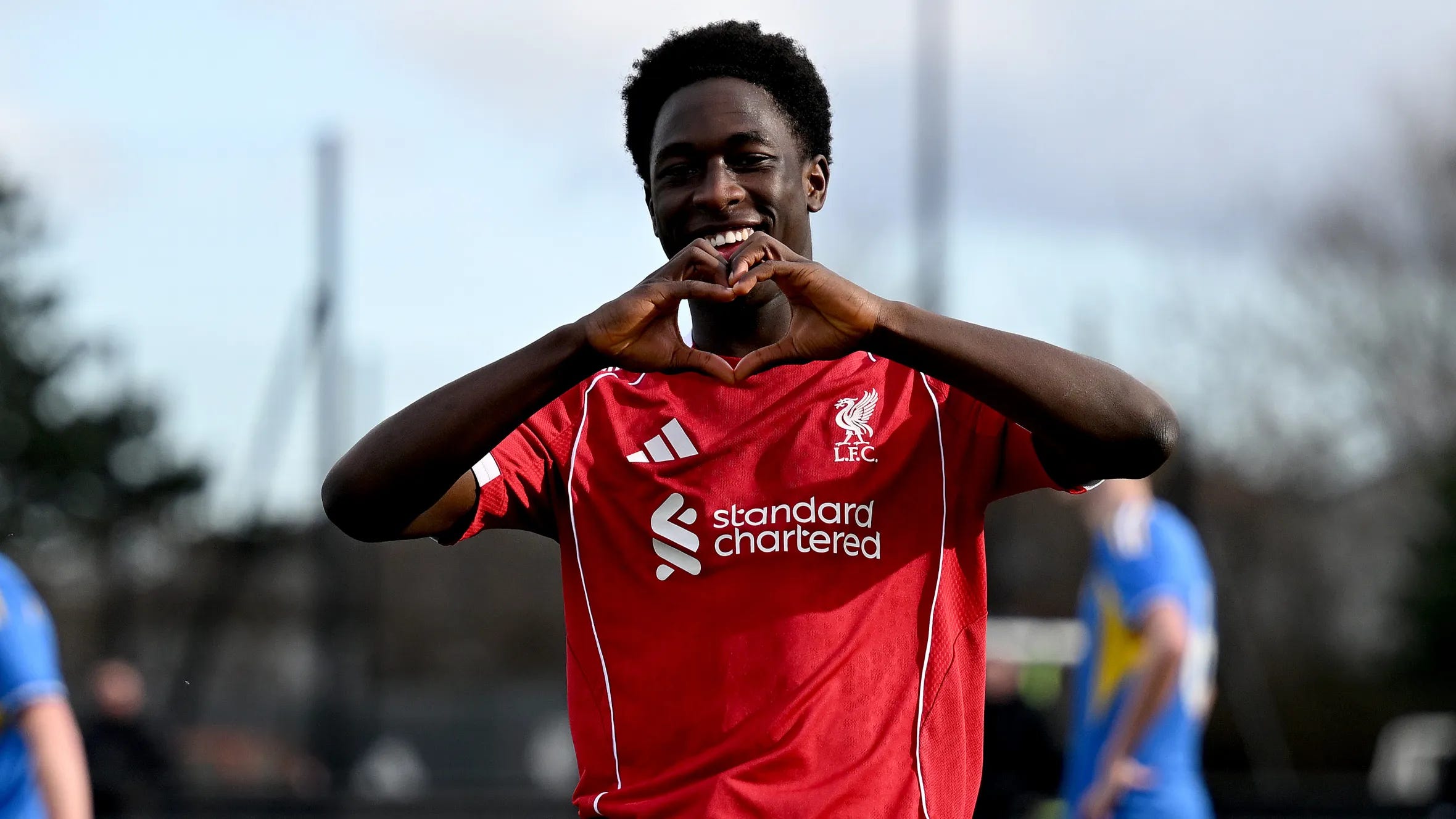
Despite the very legitimate internal fears that one of the country’s top attacking talents would see the next stages of his development play out across the M62 - with The Athletic’s James Pearce confirming that Manchester City had indeed offered a wage IN EXCESS of £50,000 p/w - the 15-year-old England youth international has been tied down to a scholarship contract which will automatically roll into a professional contract on his 17th birthday in July 2027. I’ll tell you for free, he won’t be being paid 50 THOUSAND GREAT BRITISH POUNDS A WEEK, or anywhere in that vicinity.
In all seriousness, the tremendous work of many individuals involved, in convincing Abe that his pathway to greatness is most clear and realistic here as opposed to virtually every other European giant interested, should be lauded. With Liverpool’s desire to retain their most gifted pre-scholar in some time so large, the efforts went far beyond the academy staff with FSG’s Technical Director Julian Ward leading the talks with Abe, his family and the not-so-beloved agency spearheaded by Tyler Alexander-Arnold. Reliable reports indicate that Abe will, as expected, step up to the U21s next season after a remarkable 8 goals and 3 assists in 10 U18 Premier League appearances, and it hasn’t gone unnoticed by many that, during his contract-signing media work, he held up a shirt with the first-team number ‘40’ on it, hinting at senior involvement, most likely in early-round domestic cup action.
“Liverpool have already mapped out the next phase of his development, which could lead to him being included on the senior squad’s pre-season tour to the United States in July given that many players will have been at the World Cup. He is also likely to be promoted to the club’s under-21 side.” - Paul Joyce, The Times
Abe had went into the late‑February youth international break on a high, fresh off a hat‑trick against Leeds and eleven goal contributions in his first ten U18 games. The England U16 trip to Antalya, Turkey - a three‑match Development Tournament against Spain, Denmark and France in the Manavgat district - was meant to be another step forward, a proper test of where he stood in a group where he’s viewed as one of the standout talents. Instead, it became memorable for the wrong reasons. In the final match of the six‑day stretch, Abe went in for a routine challenge, landed awkwardly, and immediately signalled to the bench. He later described it as a season‑ending leg‑bone injury, the kind that stops everything on the spot. His Instagram line: “Tough one to take having my season cut short” summed it up. Bone injuries aren’t common at youth level, but they’re not rare either; growth plates and developing bones are simply more vulnerable to impact and overuse than adult bodies.
There was, at that point, genuine fear that Abe, who became the club’s youngest ever debutant in the UEFA Youth League at 15 years, 6 months, and 17 days old had already have pulled on the shirt for the final time. Previously, his ‘fast-tracking’ had included U21 pre-season involvement at the age of just 14 and, by netting the winning goal away at Manchester City in a mid-October league fixture, becoming LFC’s youngest ever competitive U18 goalscorer, at 15 years, three months and one day.
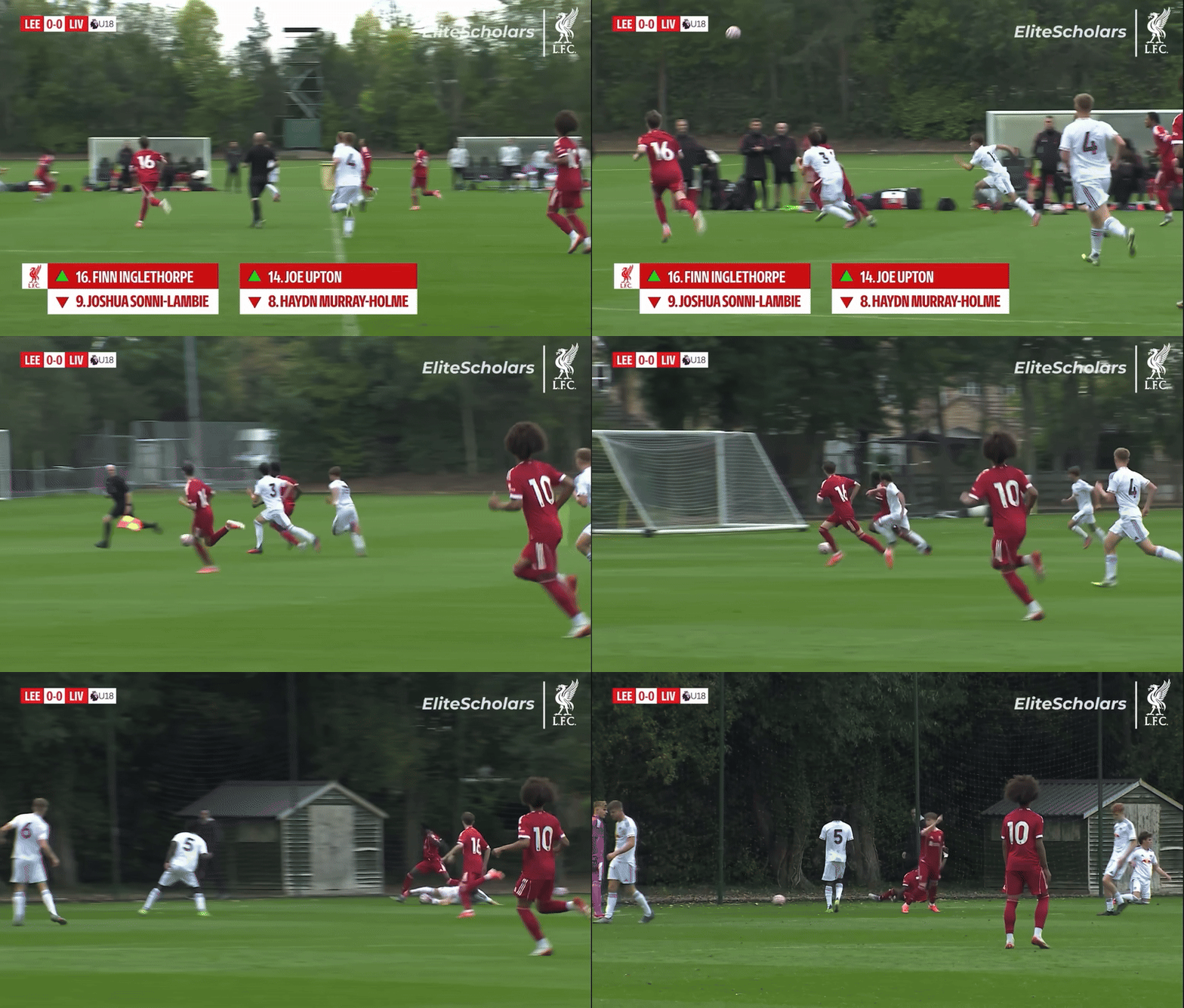
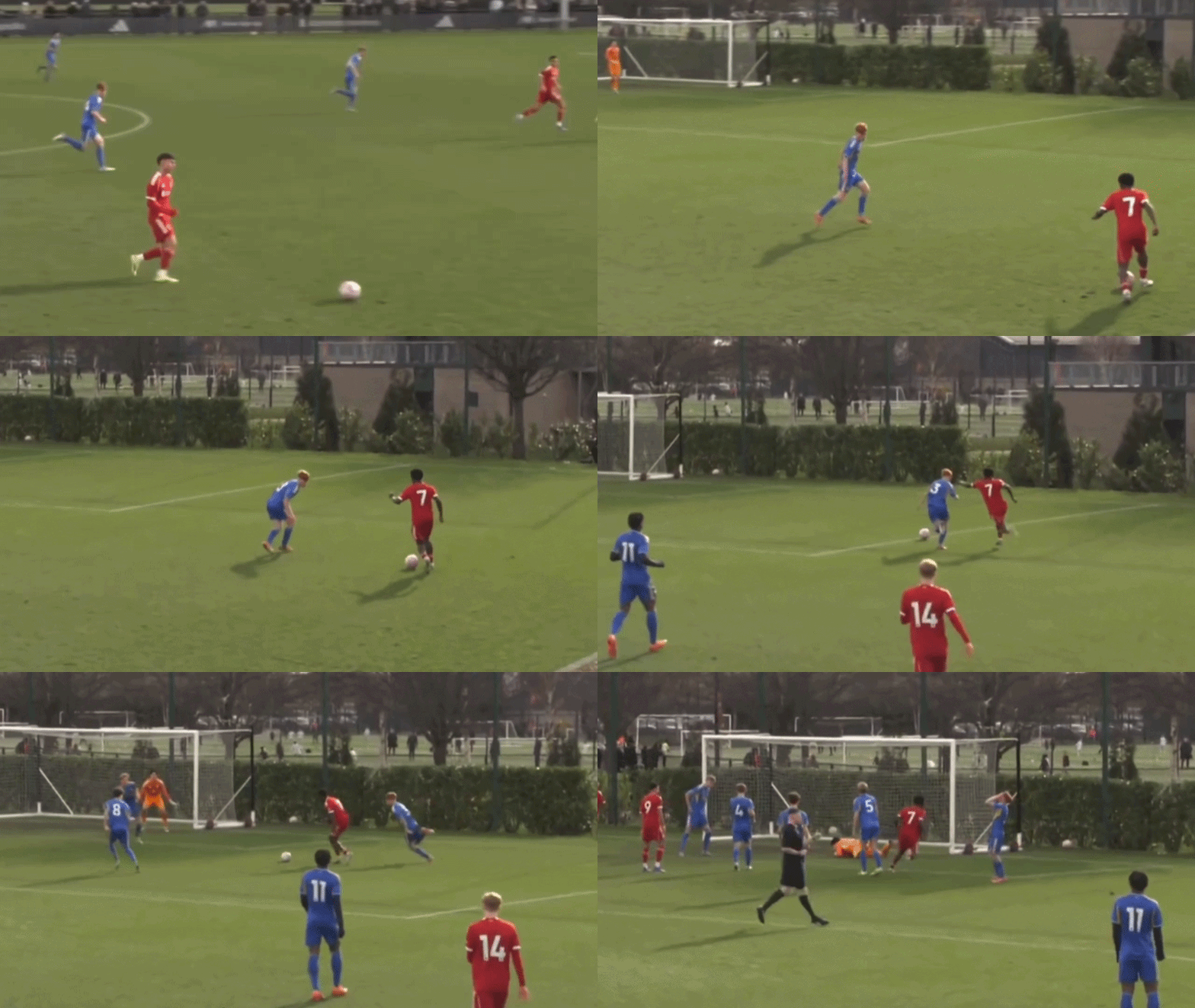
If you look at what Iraola demands from his wide forwards, it’s not hard to see why Abe would appeal to him. Iraola’s entire system is built on forwards who stretch the pitch, run aggressively, and constantly threaten the space behind a back line and Abe does that almost by default. He has that agent‑of‑chaos quality - the winger who never stops moving, who keeps forcing defenders to turn, who lives off the gaps that appear when a back four is even slightly disorganised. In a team that wants to play vertically and at pace, that’s gold. But the real reason Iraola would love him goes deeper than straight‑line speed or raw disruption. A lot of young forwards who rely on chaos stall once they hit U21 level, because the game tightens up. Opponents sit in compact blocks, the space disappears, and the players who only know how to run in behind suddenly have nothing to run into. Abe isn’t that type. There’s more detail to his game, and that’s where he starts to look like an Iraola player.
Off the ball, he works like someone who understands the value of pressing rather than someone who’s just been told to do it. He closes down with intent, not just effort, pressing on triggers, angles his runs properly, and forces defenders into rushed touches because he never switches off. His scanning is constant; he’s always checking where the next pass might go, always ready to jump a lane or pounce on a loose touch. For a winger, that level of defensive awareness is rare as it’s not just energy, it’s intelligence layered on top of intensity. That combination is exactly what Iraola builds his attack around. He wants forwards who don’t just run, but run with purpose. He wants players who can create turnovers high up the pitch and turn them into immediate chances. Abe already does that. You can see it in sequences where his press forces a mistake, the ball breaks loose, and within seconds it’s a goal. That’s the blueprint of Iraola’s football: win it high, attack fast, punish disorganisation. So when you put it all together - the chaos, the vertical threat, the pressing IQ, the work rate, the ability to unsettle an entire defensive line on his own - Abe looks like the kind of young forward Iraola would see and think: “I can work with you.”
*It is not possible for Abe to usurp Jerome Sinclair (16 years, 6 days) as LFC’s youngest ever competitive debutant, though, should he be involved in the early stages of the Carabao Cup, he would ‘overtake’ Rio Ngumoha (16 years, 135 days) and find himself in second place in this metric.*
Ifeanyi Ndukwe
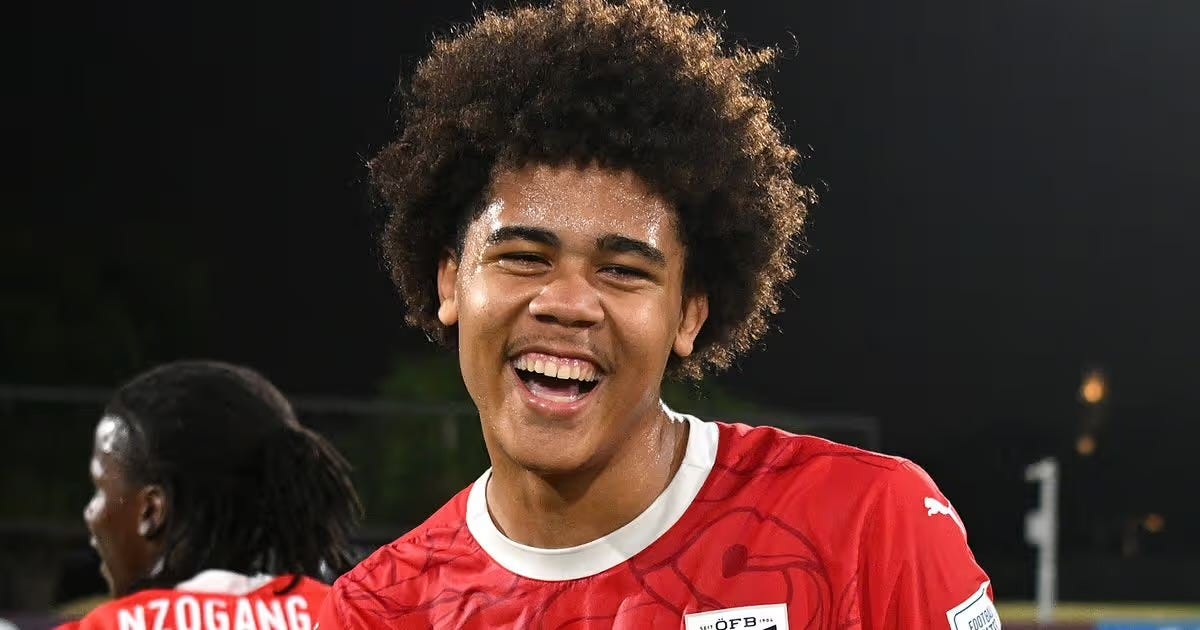
Last month, the soon-to-be-Red paid an emotional farewell to his home-city of Vienna, as on the final matchday of the Austrian Bundesliga season, Ndukwe made his final appearance in Austria Wien purple, which he has wore since the age of seven, and in the process became the fourth-youngest central defender to debut in the league. Almost immediately after, the 6’5 man-mountain, born to a Nigerian father and Russian mother in Austria, who only turned 18 in March, would link up with the Austria U21 squad for their end of season camp.
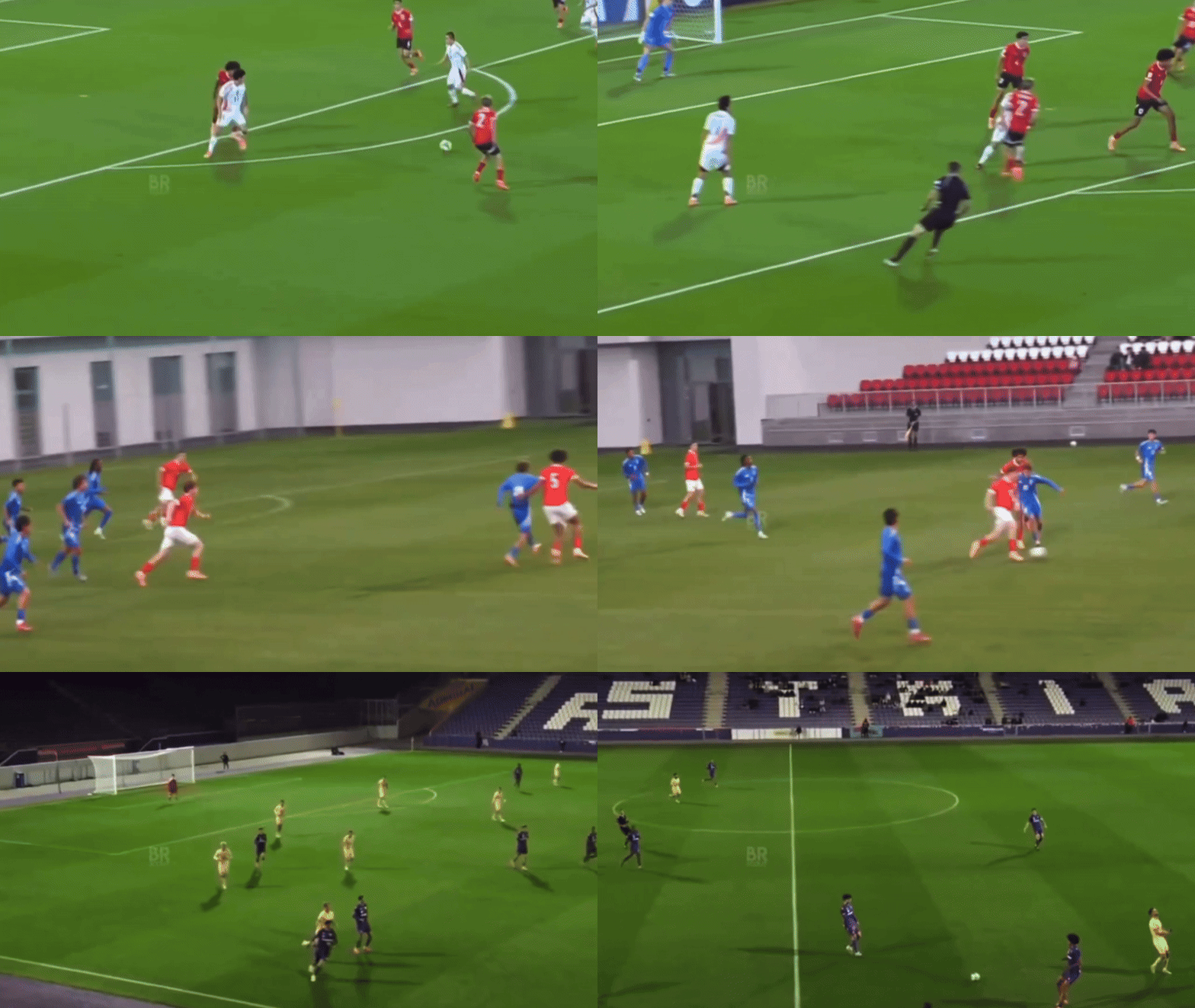
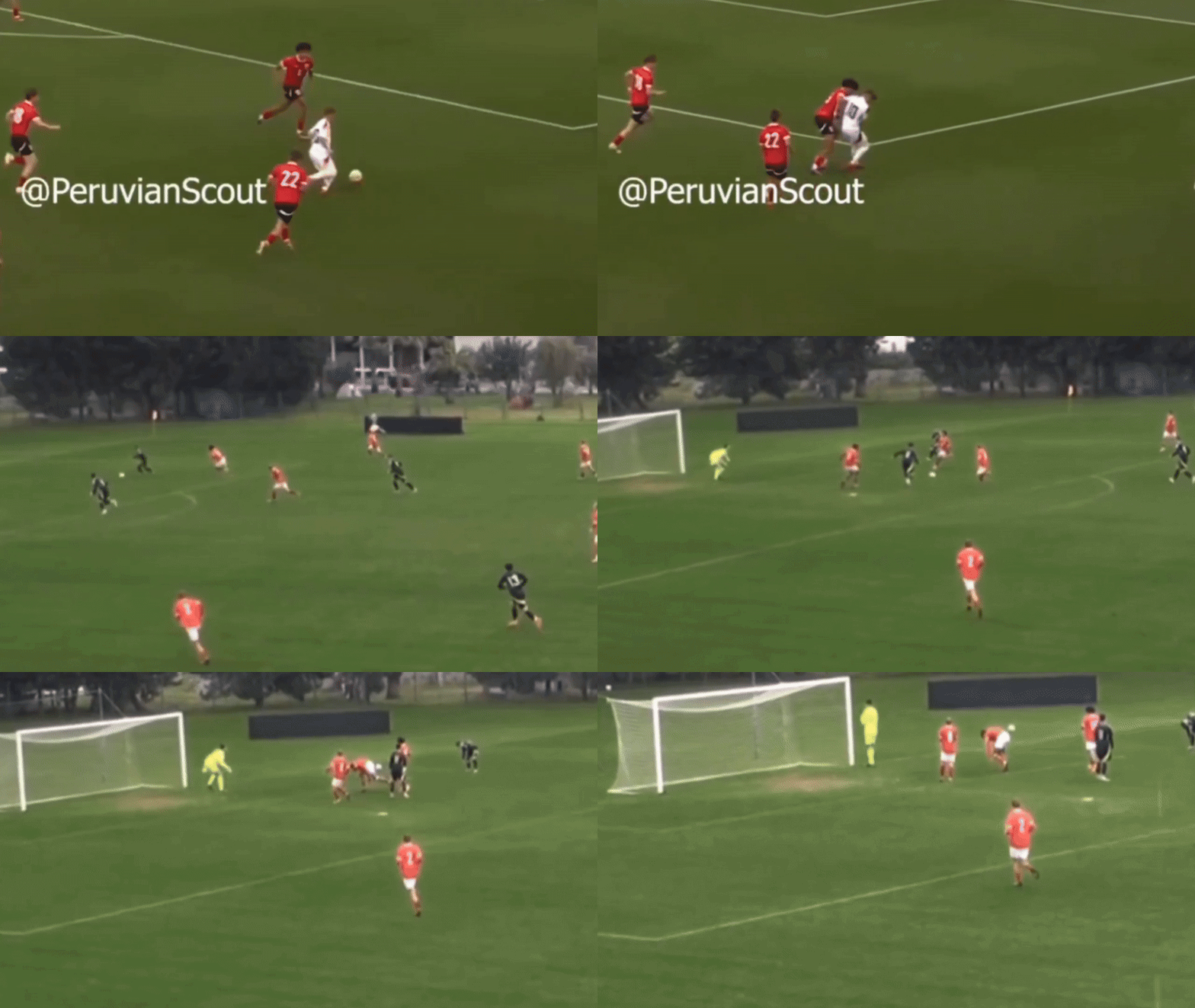
Ifeanyi’s transfer made complete sense once you look at the full picture: the timing, the profile, the data and the way he exploded onto the radar at the U17 World Cup. Liverpool had been tracking him for months but that tournament is where he essentially confirmed himself as one of the best young centre‑backs in his age group. He played every minute of Austria’s run to the final, a run in which they conceded just one goal, and he personally posted elite numbers for a 17‑year‑old centre‑back: 79% of defensive duels won, 68% of aerial duels won, constant blocks, interceptions and recovery actions. What stood out wasn’t just the output, it was the dominance. At 1.98m, he looked like a fully grown senior defender dropped into a youth tournament, but with the mobility and reaction speed that big centre‑backs usually don’t develop until their mid‑20s. He shut down space with his frame, reacted quickly inside the box, used his body intelligently, and showed the kind of calm, composed on‑ball play that top clubs obsess over. He could switch play, break lines, and deal with pressure without panicking.
The club‑level data backed it up. For Austria Wien II, Ndukwe put up numbers that are absurd for a teenager in senior football (their reserve team play in a professional league, just like you see in Spain): 83.3% of defensive duels won, 4 aerial duels won per 90, 5.83 interceptions per 90, 15.2 recoveries per 90, and 6.77 long passes per 90. Those are the metrics of a defender who reads the game early, dominates physically, and has the passing range to play in a high‑level possession or pressing system. Liverpool don’t buy centre‑backs at 17 unless the data screams “future first‑team profile,” and in this case it absolutely did. The fee - roughly £2.5–4m with add‑ons and a sell‑on - reflects that. It’s not a punt; it’s a calculated investment in a player they believe will be worth ten times that if he develops as expected.
For me, the fit with Iraola’s football is clear. His system demands centre‑backs who can defend huge spaces, win races in transition, step out aggressively, and survive long stretches in isolation while the full‑backs push high. Ndukwe’s entire profile is built for that: he’s front‑footed, fast for his size, dominant in duels, and comfortable defending 30–40 metres of space behind him. His ability to read danger early, make blocks, and use his frame to shut down angles is exactly what Iraola wants from the last line. On the ball, his long‑range passing - those 6.77 long passes per 90 - fits the vertical, direct, punch‑through‑pressure style Iraola prefers. He’s not being signed to walk into the first team tomorrow, but he’s being signed because he fits the physical, tactical and stylistic blueprint of where Liverpool want to go under a coach who values aggression, recovery pace and bravery in the back line.
Mor Talla Ndiaye
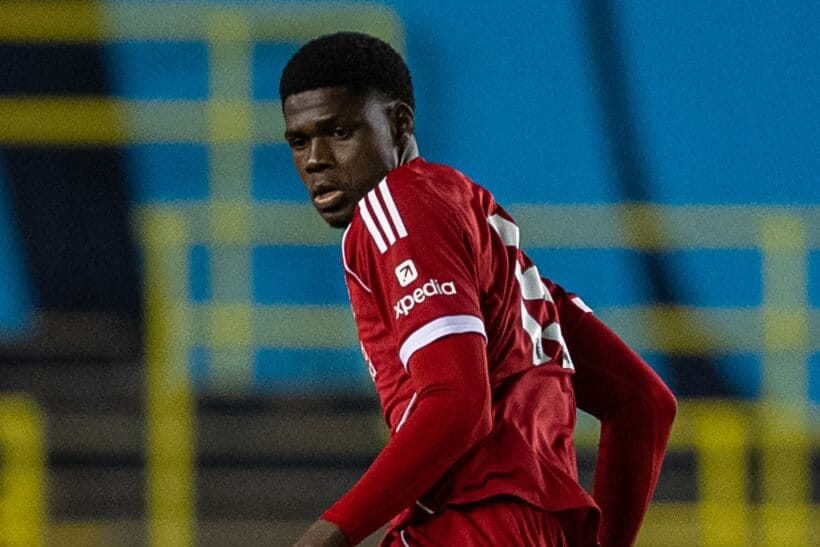
Only weeks after the December capture of Ndukwe, the Reds’ Global Talent Manager - Matt Newberry - had a further recommendation from the U17 World Cup and he just so happened to be another central defender: Senegal’s Mor Talla Ndiaye. A reported £1m fee was quickly agreed with the Demba Ba-owned Amitié FC of the Championnat Professionnel Ligue 2 - Senegal’s second tier - where he had spent much of the last decade honing his craft in their youth system. Over the course of the tournament, Senegal conceded just once and navigated the three group stage matches without conceding a single goal.
Unlike Ndukwe who didn’t turn 18 until March and therefore can’t officially join the club until the summer, Ndiaye blew out the candles of his 18th birthday cake in January and was straight off to the AXA. An initial scan flagged a "minor issue" during the medical so U21s manager Rob Page and the medical staff chose to play it safe, taking him off the pitch for several weeks to properly manage the situation. He returned to full training in March at the Academy before debuting as a second-half substitute away at then PL2 league-leaders Manchester City, replacing Amara Nallo. Following a period of training with the seniors and being named on Premier League benches due to Slot’s injury crisis, the Senegalese CB would return to the youth fold, completing 120 minutes in the PL2 playoff defeat (on penalties) to Crystal Palace.
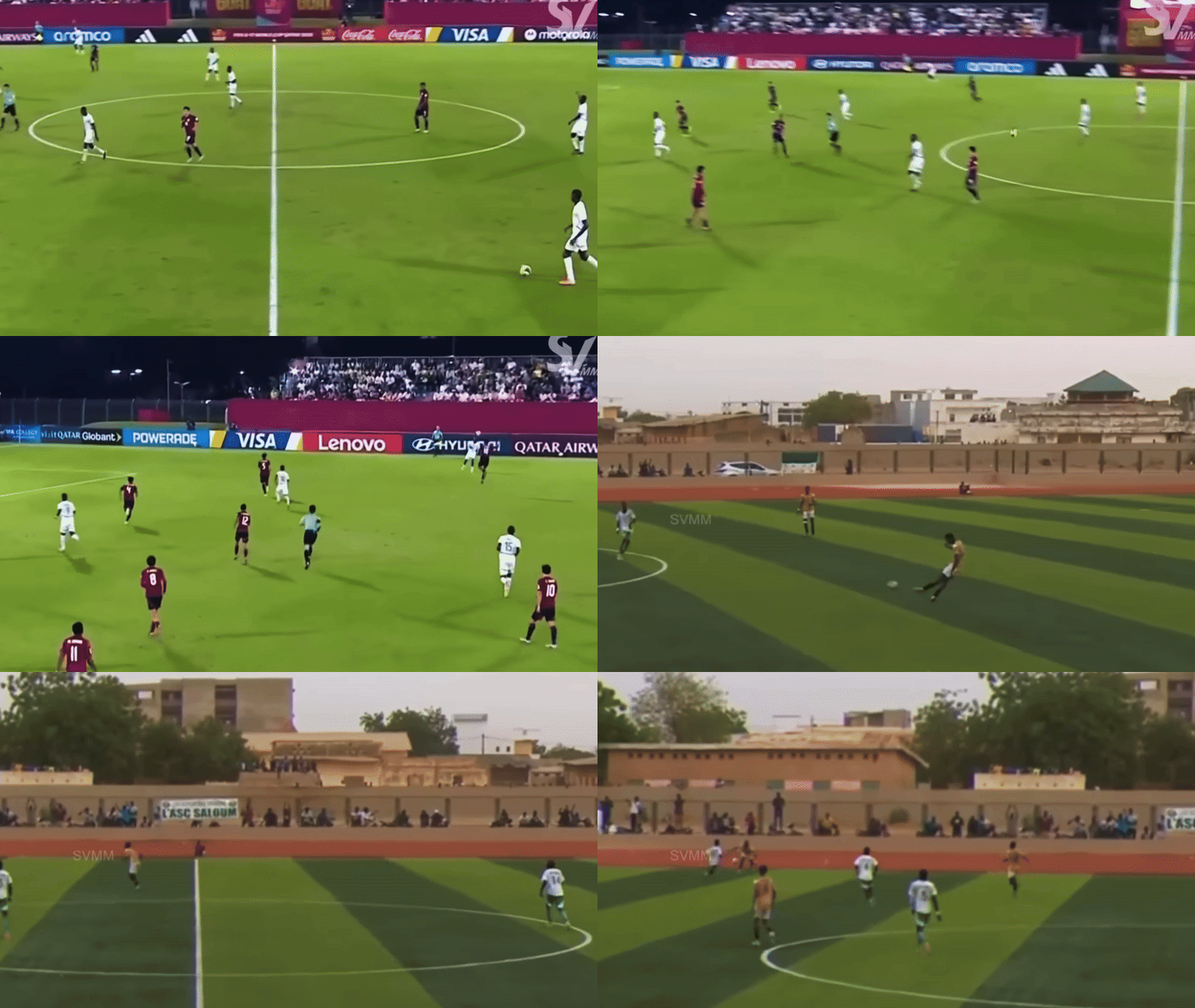
A left‑footed, ball‑playing centre‑back with the kind of profile clubs spend years trying to find, he looked completely unfazed by pressure at the U17 WC, averaging 83 passes per 90 - the most of any centre‑back at the tournament - and completing 91% of them. He wasn’t just recycling possession either. He led all defenders for forward passes (36) and produced an outrageous 17 progressive passes per match, constantly breaking lines and dragging Senegal up the pitch. His long‑range distribution stood out too: eight switches per 90, all hit with real conviction. Watching him on Wyscout, the thing that jumps out is how early he sees pictures. His anticipation of teammates’ movement is sharp, and he’s comfortable playing through, around, or over pressure depending on what the moment demands.
That composure paired with his 6’2” gangly frame is why people reach for the Joel Matip comparison. There’s something Matip‑ish about the way he moves: the long, leverage‑heavy legs, the ability to manipulate space, the slightly awkward but strangely effective stride pattern. When he carries the ball, those big steps give him a huge range of motion, letting him glide past pressure even if the mechanics aren’t perfectly smooth. If he had just a touch more natural fluidity, scouts say you could imagine him developing into a high‑level left‑back. But that isn’t quite his physical profile. As a centre‑back, the limitations show up in small inefficiencies - extra steps, wasted movement, hips that don’t always stabilise his upper body - but nothing that can’t be refined with coaching.
What really elevates him is his lack of angle bias. Most young centre‑backs have a preferred passing lane or body orientation; Ndiaye doesn’t. He can break lines regardless of where pressure comes from or which foot he’s being shown onto. That neutrality lets him dictate tempo rather than react to it, opening or closing the game on his terms. It also means he spots runners early and hits them early, whether it’s a driven diagonal, a clipped ball into the channel, or a disguised pass into midfield. For a 17‑year‑old, that’s not just a nice trait; it’s a structural advantage that changes how a team progresses the ball, and this is exactly why he could potentially profile for Iraola who wants centre‑backs who can play forward quickly, break pressure, and turn defence into attack in one action. His teams press high, squeeze the pitch, and rely on defenders who can step in, play through the first line, and keep the game moving vertically. Ndiaye’s passing range, his comfort receiving under pressure, and his ability to play without directional limitations all fit that model perfectly. He may not be the physical outlier that Ndukwe is, but he’s still a remarkable athlete with the technical ceiling to thrive in a system that rewards bravery, tempo, and front‑foot decision‑making.
Joshua Sonni-Lambie
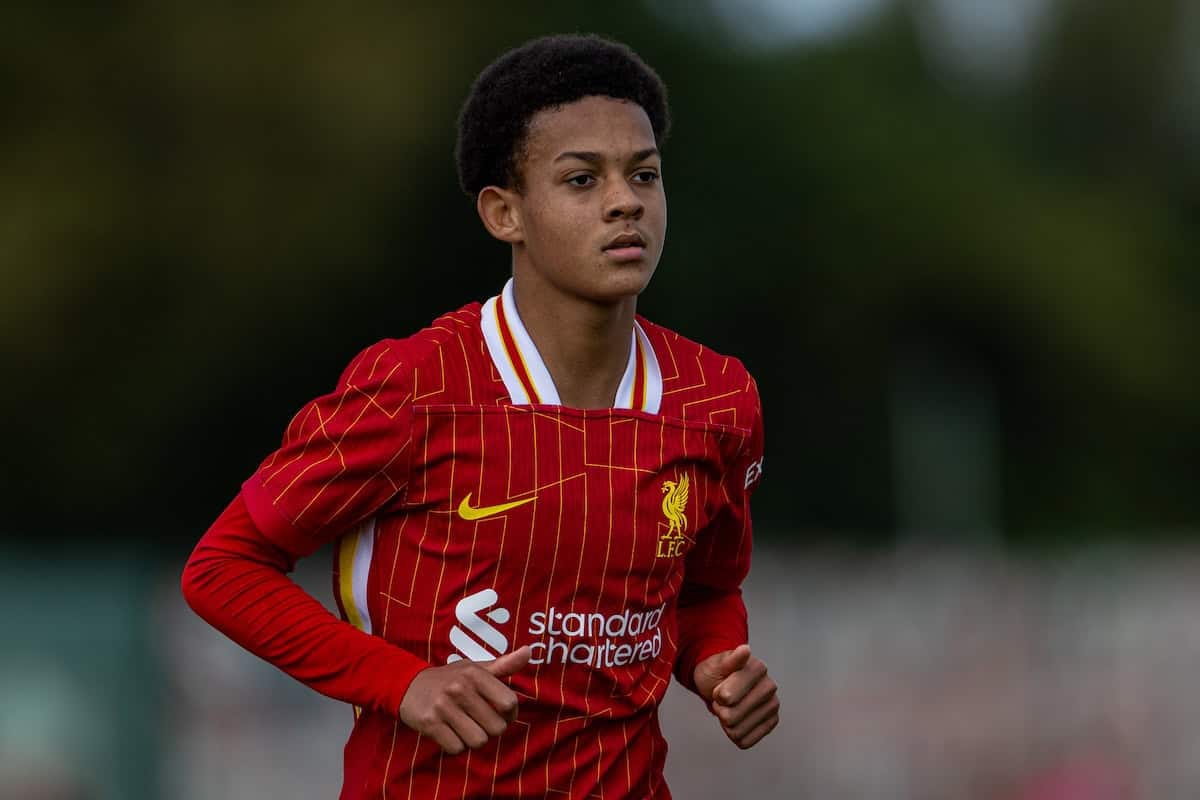
Following a prolific 21-goal campaign and a first call-up for the England U18s, it was unsurprising to see the London-born striker named as one of eight nominees for the U18 Premier League Player of the Season award. That form earned him a deserved step up to the U21s, where Rob Page trusted him enough to start him in EFL Trophy fixtures against professional opposition as well as the PL2 playoff meeting with Crystal Palace. His style has been described as having a “street‑football” edge, that willingness to take players on, improvise, and create something out of nothing — a trait highlighted in a 2025 New York Times profile. Statistically, his output at youth level backs up the eye test. Across 35 matches in the 2025/26 season, he produced 21 goals and six assists, averaging 0.74 goals per 90 and showing he can influence games consistently rather than in streaks. He’s primarily a centre‑forward but has also been used as a roaming second striker or attacking midfielder, drifting into pockets to receive and drive at defenders.
Sonni‑Lambie’s 1v1 ability and unpredictability are central to his game. He’s comfortable taking defenders on, using feints and quick touches to create separation, and that “street‑football” instinct gives him a genuine edge at youth level. His movement and instincts in the box are another strength; many of his goals come from sharp, well‑timed runs rather than sheer physical dominance. He also shows real composure in tight spaces, receiving under pressure, rolling defenders, and linking play effectively. And crucially, he has end product, the numbers speak for themselves: 21 goals in a season at U18 level, and he’s already carried that threat into U21 football.
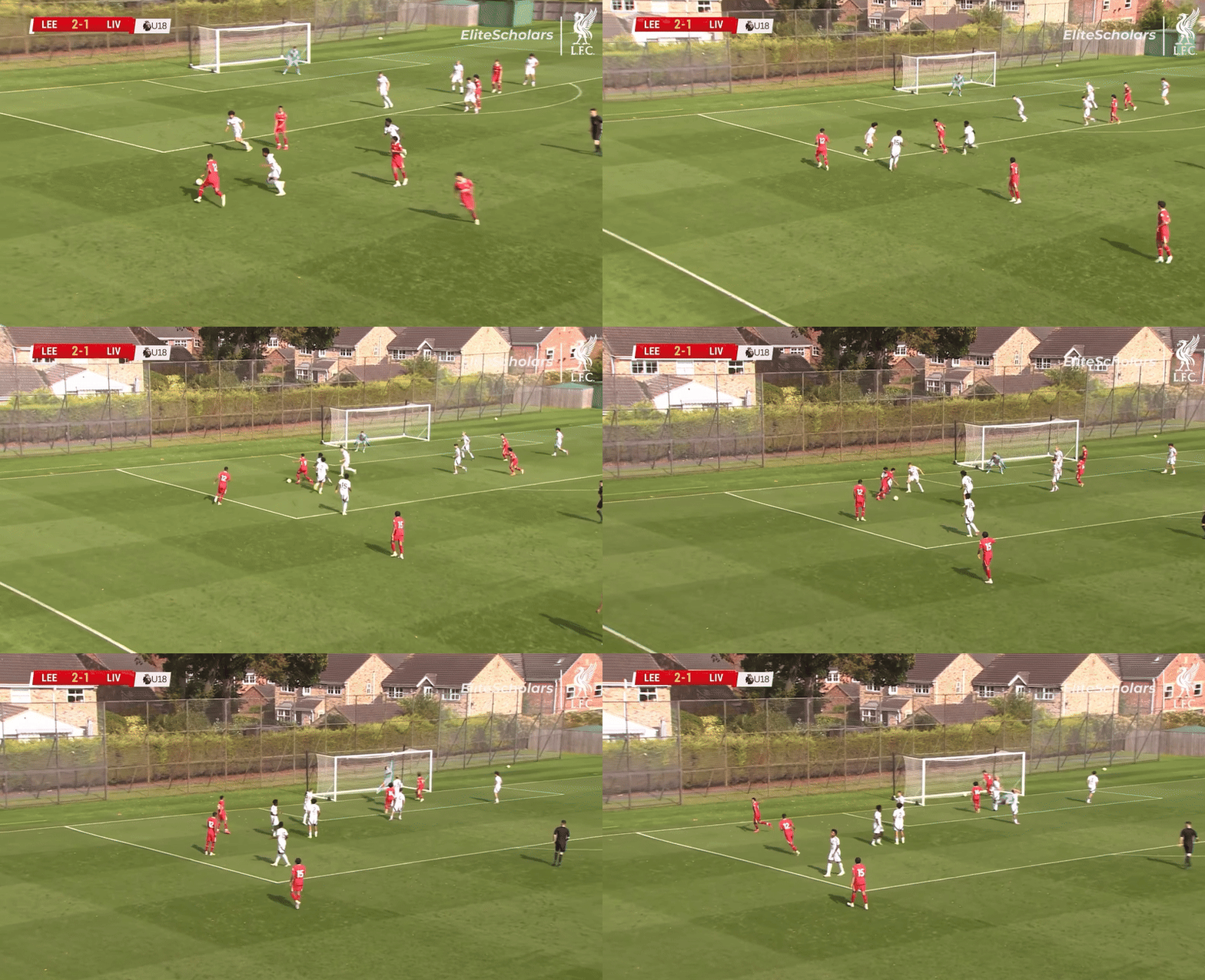
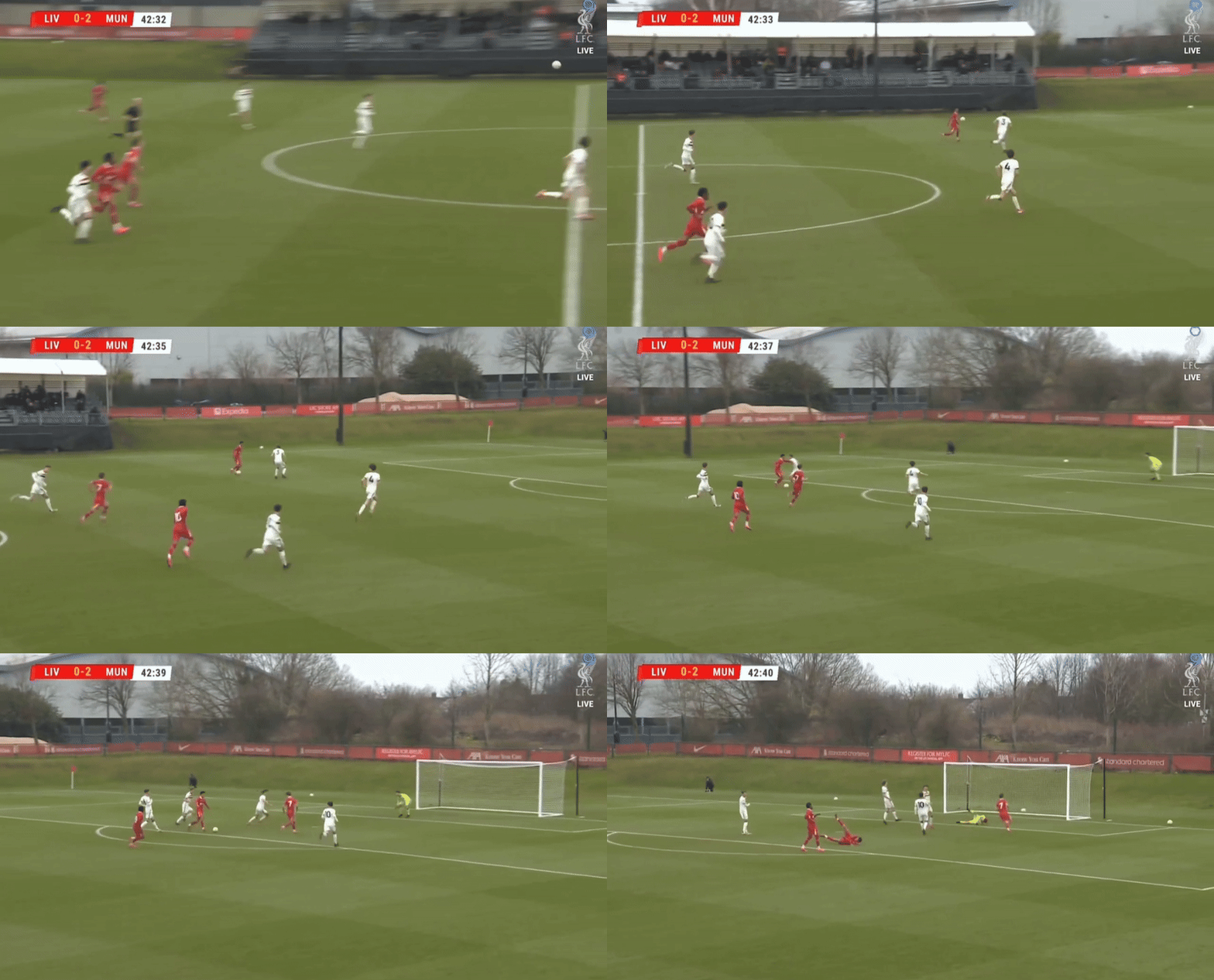
All of that naturally points toward an attacker who fits what Iraola wants from his forwards. His football is built on aggression without the ball and conviction with it: pressing high, attacking space early, and playing forward the moment possession turns over and Sonni‑Lambie already operates in those moments instinctively. He’s comfortable receiving on the half‑turn and immediately driving at defenders, which is exactly the kind of vertical, front‑foot action Iraola uses to break pressure and tilt the pitch. His movement across the line meshes well with the fluid rotations in Iraola’s front three, and that willingness to take players on - to inject a bit of chaos into structured attacks - gives a profile they don’t have many of in the academy. If he adjusts to the physical tempo of PL2 and keeps producing, he’s the type of young forward who could genuinely catch Iraola’s eye on a pre‑season tour: energetic, brave, unpredictable.
Will Wright
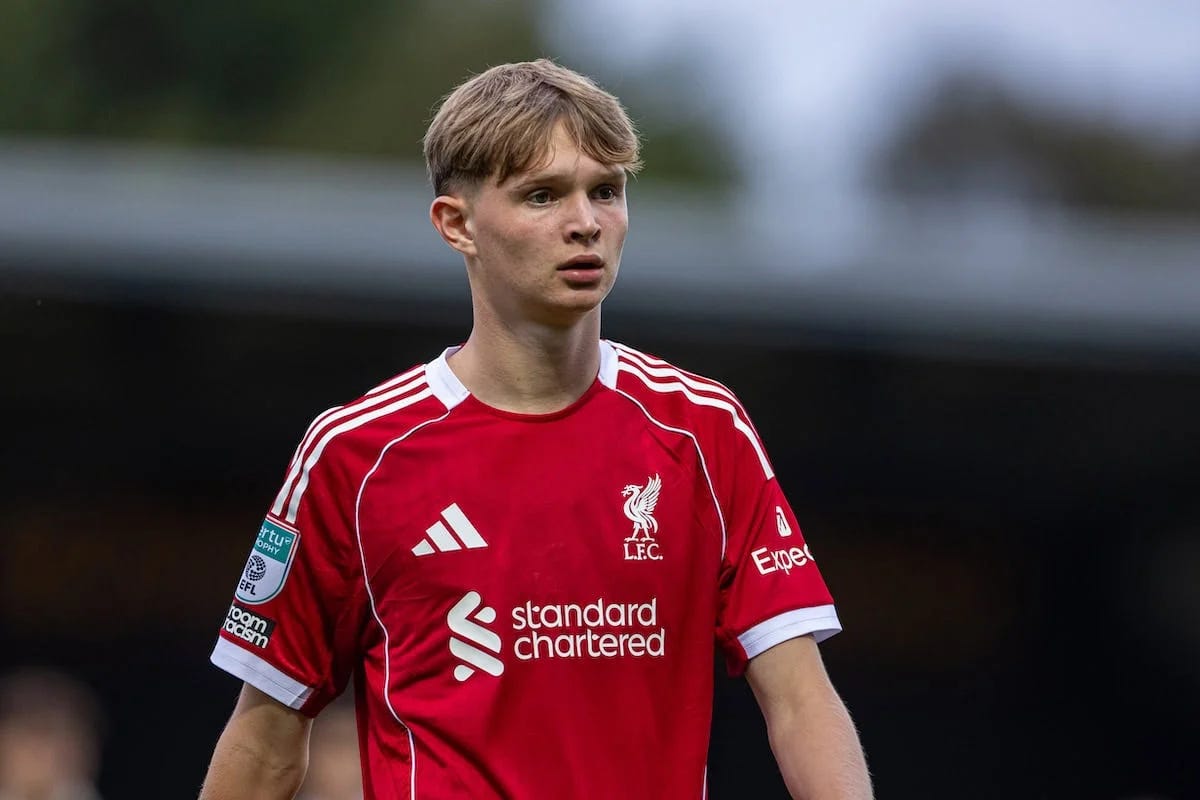
For Will Wright, the last six months have felt like a career being fast‑forwarded. He turned 18 in January, but the acceleration began long before that. His first Premier League matchday squad appearance against Crystal Palace would have been a milestone on its own; the fact he followed it less than 24 hours later with a composed brace for the U21s in their post-season exit only underlined how sharply his trajectory has bent upwards. Six goals and five assists in his last ten games tell the story statistically, but the context makes it even more impressive: this is a player who spent four months on the sidelines with an MCL injury and arrived from a Category 3 environment where the pitches were public parks, far, far from an elite professional environment.
That jump - from Salford City to Liverpool, from youth football to training sessions battling against Virgil van Dijk and Ibrahima Konaté is usually a year‑long adaptation curve. Wright compressed it into weeks. When he returned in the New Year, he didn’t just rejoin the U21 group, instead he immediately became a semi‑regular in Arne Slot’s sessions and, crucially, earned the trust to lead the line for the U21s. That opportunity only widened when Keyrol Figueroa picked up a two‑month injury and Jayden Danns suffered another setback. Wright stepped straight into the vacancy and made the role his own, starting 13 of the 15 U21 matches since January and scoring nine times. Page has been careful to keep the noise around him grounded. Speaking after Wright’s latest performance, he praised the teenager’s physical tools and mentality but made it clear there’s still refinement ahead. Wright’s link play, Page said, is a work in progress, but his attitude makes him a dream to coach: he wants to learn, he absorbs detail, and he thrives in environments that feel “real” rather than sheltered. That last point matters. Wright has already played league football; he understands the physical honesty of senior games, and Page believes that experience is what allows him to drive standards inside a youth setup that can sometimes drift into comfort.
What these last months have really revealed is the type of centre‑forward Wright is becoming. Early in the season - before the injury - he looked like a player still calibrating to the speed and physicality of Category 1 PL2 football but since returning, his game has settled. His movement patterns are more consistent, his use of his frame more deliberate, and his understanding of how to occupy centre‑backs far clearer. The randomness has gone. What’s left is a striker with identifiable, repeatable strengths rather than someone relying on isolated moments. Physically, he’s one of the most distinctive profiles in the age group. Tall, long‑limbed, but coordinated, not the loose, raw type you often get with late‑growth forwards. His stride length is a genuine weapon: once he opens up, he forces defenders to turn and chase earlier than they want to. More importantly, he uses his upper body like a senior striker. He doesn’t just lean; he pins. He creates angles to receive. He manipulates contact rather than initiating it. When he decides to run through a challenge, he stays upright, which is why he’s equally comfortable playing back‑to‑goal or attacking depth. His athletic baseline - acceleration, reach, balance, repeat sprints - is already above the typical youth striker.
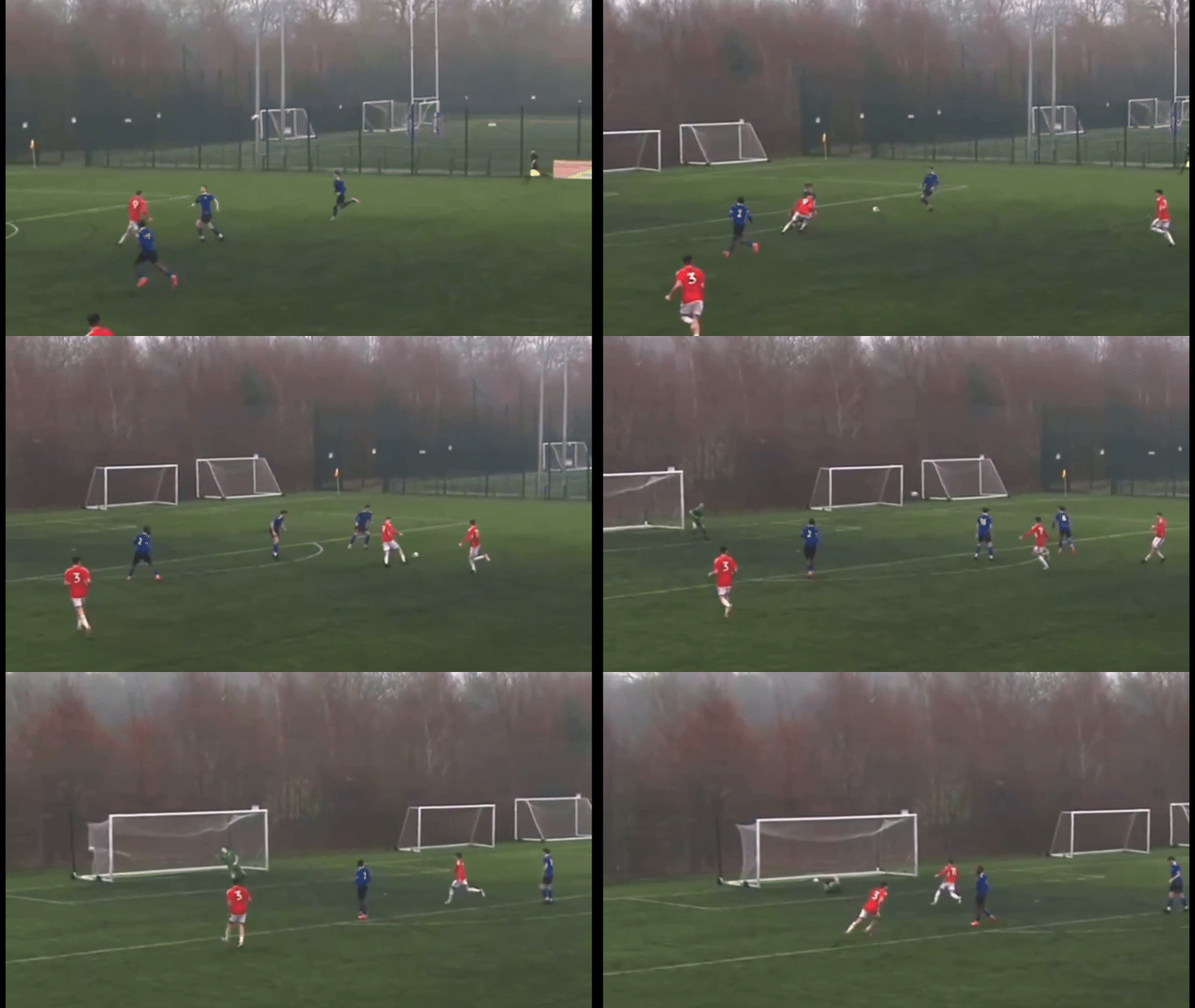
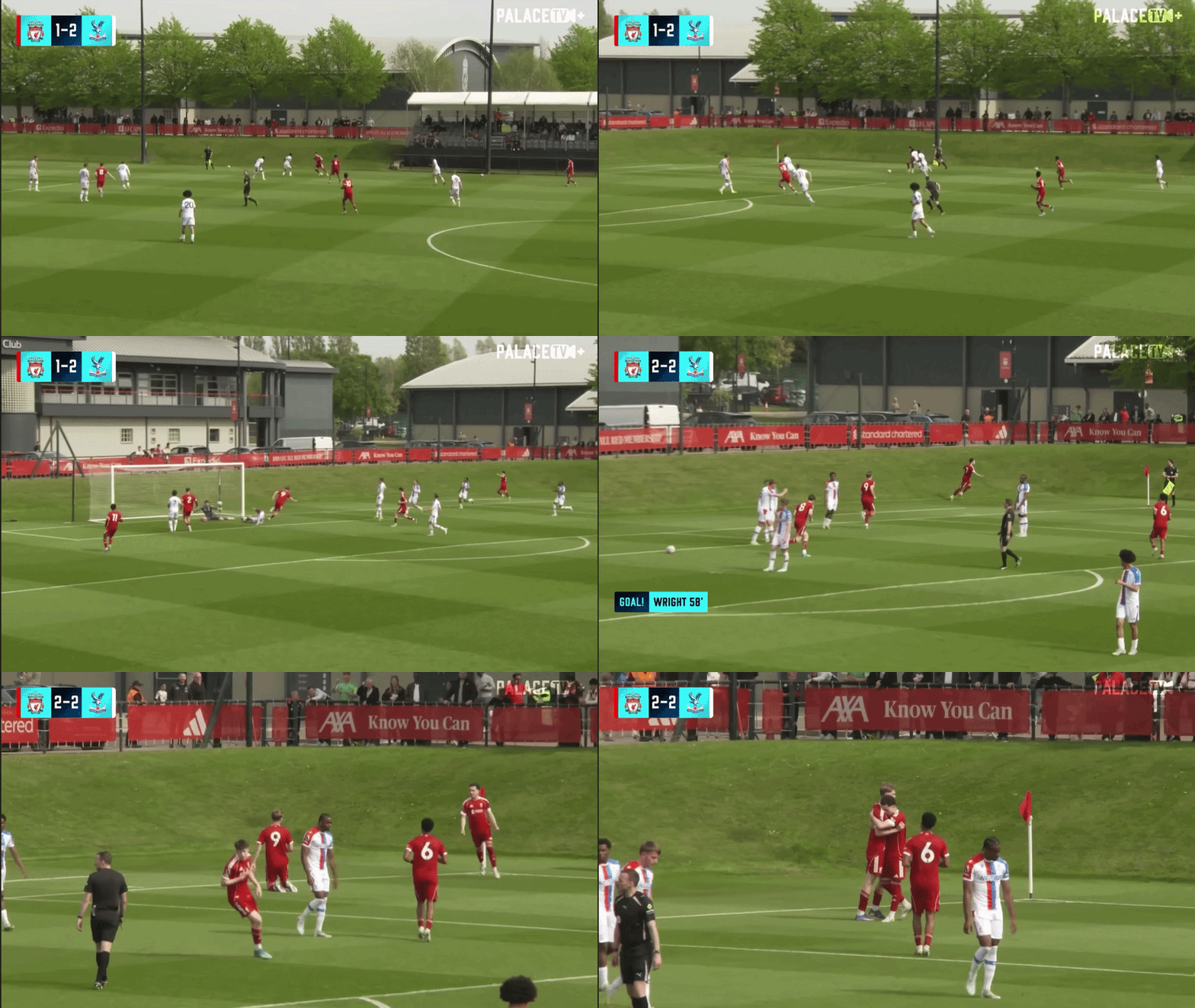
And this is where the Iraola fit becomes impossible to ignore. Wright’s profile aligns with that almost naturally. His ability to run channels with long, aggressive strides suits the way Iraola wants his front line to constantly threaten depth. His strength in contact and comfort receiving under pressure fit the demands of a system that often asks its striker to hold play, bounce passes, and then spin into space. Even his willingness to work without the ball - something Page highlights repeatedly - is a core requirement in Iraola’s pressing structure, where the No. 9 sets the trigger and the tone. Wright isn’t the finished product, and nobody inside the club is pretending otherwise. But the combination of physical tools, mentality, and the way his game has stabilised over the last stretch makes him one of the academy’s most intriguing fits for Iraola’s style. If he continues on this trajectory, he’s not just a promising young striker , he’s a player whose attributes map cleanly onto the demands of a manager who values intensity, verticality, and forwards who consistently turn transitions into chances.
If you enjoy my work, please consider a paid subscription to receive a whole host more analytical and in-depth articles including detailed player profiles/deep dives at both first team and academy level. Alternatively, you could buy me a coffee. Thanks for reading.