

Contract rejections and obscene quoted fees; transfer sagas are back, baby.
Quite simply, when the most electric winger on the worldwide market is hellbent on landing at Liverpool, the financials become secondary. When planks of wood are being flogged for £85m around the division, even from the league below in the case of Mateus Fernandes, you reach a point where you accept the madness, one must embrace the chaos or get left behind with a severely inferior alternative. In a world where the league champions were seemingly prepared to move heaven and earth to acquire a top five footballer on the planet in Vinícius Júnior, prior to yesterday’s blow, it is clear that the Reds’ best course of action involves fighting fire with fire as opposed to ending up with a second-rate option for a third of the price. Say, Brighton’s Yankuba Minteh.
We know first-hand just quickly significant gulfs in valuation can be compromised upon when (a) the player is gagging for the move and shows no willingness to accept contract offers and (b) chasing club are adamant that the player is their number one priority, considering last summer’s Alexander Isak and Florian Wirtz moves. There is probably, genuinely, a sub-zero chance of Liverpool biting at the ludicrous €170m ‘valuation’ towed out from Paris, even if there is some admittedly sound logic there when you look at the Morgan Rogers, Elliot Anderson and Sandro Tonali deals, however it is very clear that the 23-year-old ought to become the club’s third ever £100m+ signing if he is to be holding a red scarf aloft at the AXA Training Centre.
Whether Barcola had initially been the number one target at the beginning of the summer, months before Yan Diomande handed both Liverpool and PSG a polite “no thanks”, is a question that only Richard Hughes and co truly are in possession of the answer to, however it’s clear that the silky, lightweight forward has been on the club’s radar ever since his early days as an exceptionally raw project at Lyon, earmarked for a loan move at Swiss side St Gallen. With exceptionally quick feet, elite balance, ability in tight spaces and frightening quality in 1v1 situations, he’d naturally been flagged as a future star by scouts and data analysts across the continent, despite initial concerns that he lacked the power and composure to ever break into the first team.
Fair to say, those concerns were unmerited with their star, initially brought in from regional side Villeurbanne as an 8-year-old, being sold on for a hefty €45m to the nation’s giant, Paris Saint-Germain in 2023, where he would skyrocket. Those once raw tools were transformed into elite-level assets, translating into, as we will soon see, outrageous output at Champions League level and eye-catching performances on the grandest stage of them all, the World Cup. Crazy to think, the door only slid open for Barcola through an injury to the Cameroonian Karl Toko-Ekambi, whose path has dragged him to three different clubs in Saudi Arabia and one in Qatar since that point.
Barcola, as one would expect at this sum, ticks every box. Fast, penetrative, and endlessly available. He links play cleanly, drifts into pockets with purpose, presses like he’s possessed, and seamlessly adapts a variety of different demands. As evidenced in the World Cup, there’s a cleverness in tight spaces, ruthlessness in open ones, and his off‑ball movement is the sort that drags entire defensive structures out of alignment. This, quite clearly, isn’t some raw project but a fully formed, high‑end attacker who’s already operated inside one of the most volatile ecosystems in Europe. Even while rotating through PSG’s famously murderous carousel of forwards, he still walked out of last season with thirty nine goals and assists across all competitions, before being favoured over the likes of Désiré Doué and Rayan Cherki out in North America.
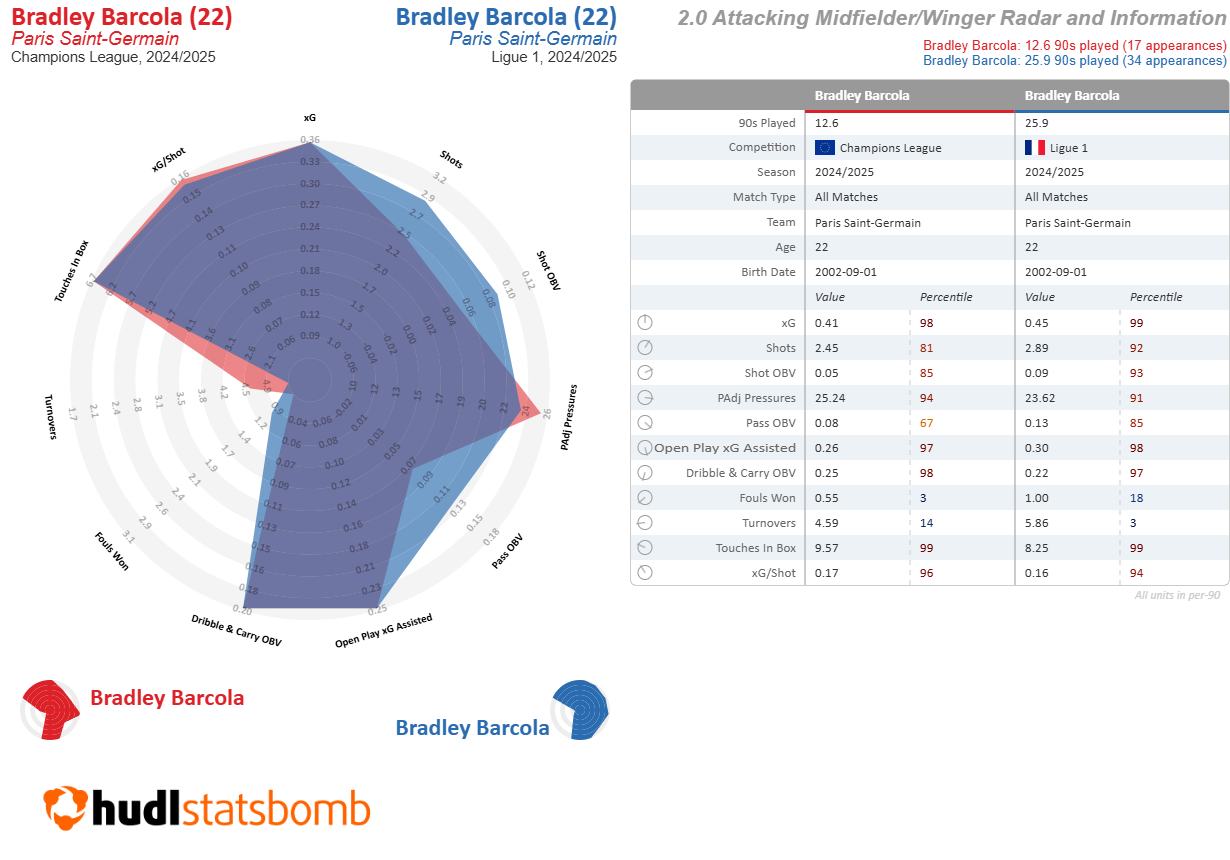
99th percentile xG, 98th percentile open play xG assisted; 97th percentile dribble & carry on-ball value, 99th percentile touches in the box, all replicated in the Champions League. Not bad, eh? The absolute top table of athleticism.
To summarise:
✅ High-end shot quality: Consistently elite xG/shot; he gets into premium shooting zones rather than settling for low-value efforts.
✅ Elite box presence: 99th‑percentile touches in the box in both competitions; he’s constantly arriving in dangerous areas.
✅ Dual-threat creator: Strong open‑play xG assisted and pass value, especially in Ligue 1; he creates as much as he carries.
✅ Ball-carrying impact: Dribbling and carrying value is elite; he adds great value every time he drives forward.
✅ Pressing intensity: High pressure numbers across both positions, working tirelessly. Defensively Barcola is engaged and disciplined enough to handle PSG’s demanding off‑ball structure which is an enormous transformation considering that only three years ago it was a massive concern for him at Lyon.
✅ Higher efficiency in Champions League: Slightly cleaner shot quality and on ball value output; he’s more selective and more dangerous against stronger opposition.
❌ Low fouls won: Surprisingly low fouls won despite heavy carrying; suggests he rides challenges rather than drawing them.
❌ Possession risk: Turnovers are poor percentile-wise, especially domestically; still raw in ball security.
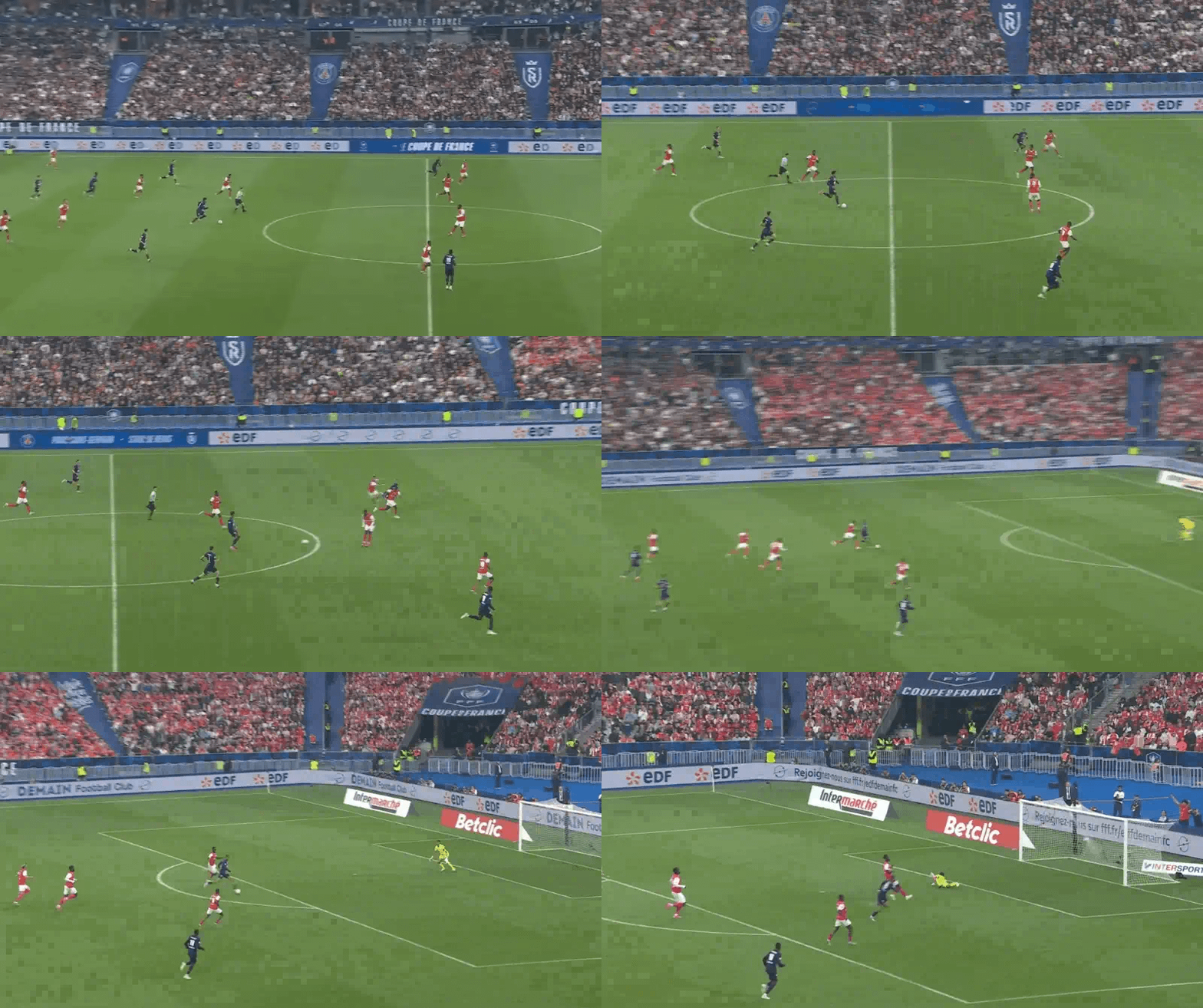
What is particularly striking is his tendency to play with this breezy, almost casual directness that defenders absolutely hate. Over short distances he’s explosive, and once he’s carrying the ball at full tilt, most full‑backs just throw their hands up and start retreating. His dribbling is a bit unorthodox - big, gliding strides, a kind of assertive momentum rather than intricate footwork - and his ball retention isn’t where it should be. Dribble success rate doesn’t mean much in isolation, but 25% is still too low. It felt tactical to me: his job was basically to go, go, go regardless of context, and he’s been more secure in possession in previous seasons. But the chaos he creates is undeniable. Even the failed actions bend games, because defenders never know what’s coming next.
And then, naturally, there’s the playmaking. His passing in the final third, especially cutbacks, low crosses, and those little rolled deliveries into the corridor, is sharp and intentional. Seventeen league assists across two seasons is rather reflective, it’s evidence of someone who sees the picture early and executes cleanly.
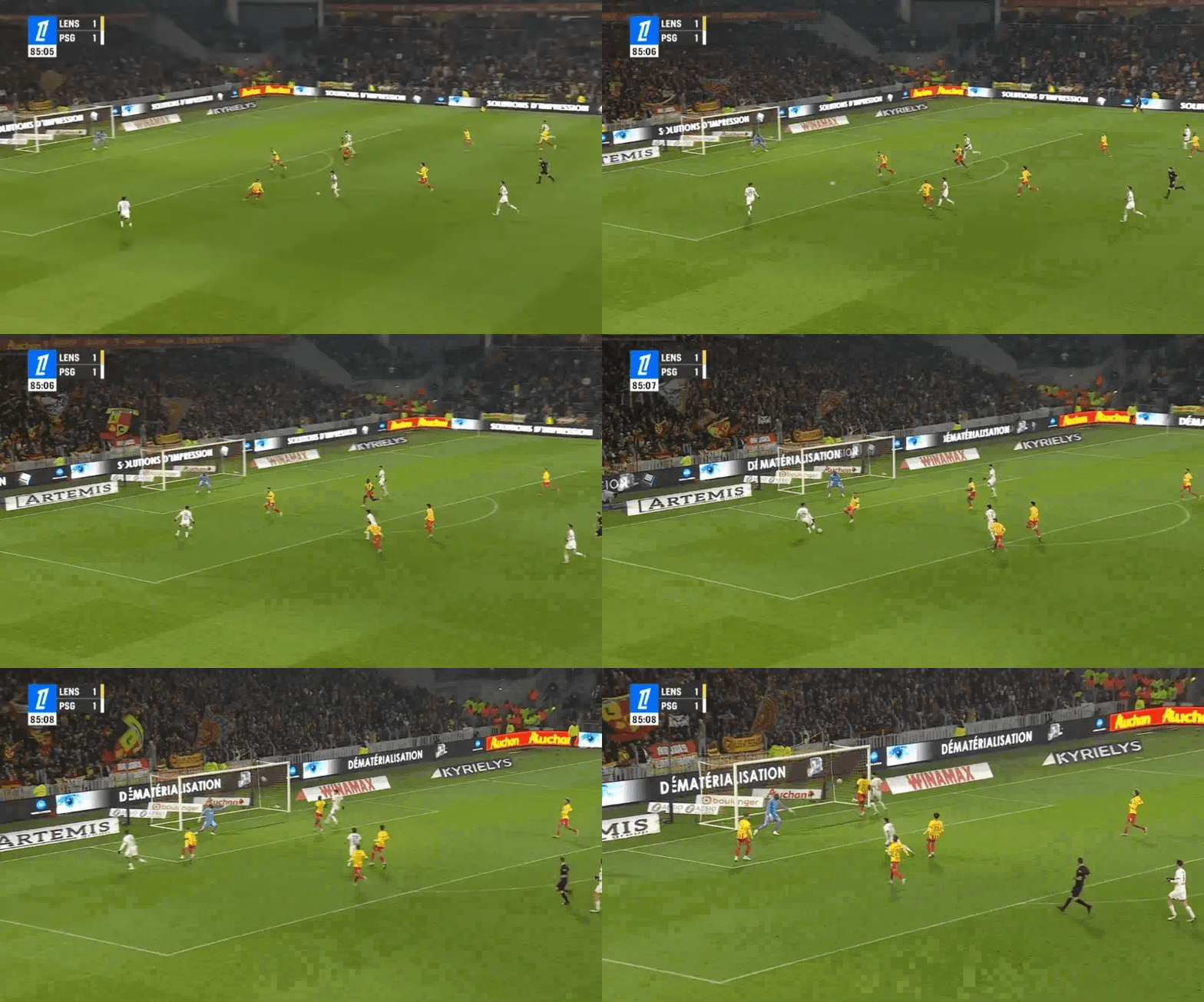
He can theoretically operate across the front line, even as a makeshift stretch‑nine, but his game is obviously at its most dangerous on the flanks. Out on the touchline, he gets the full runway: the isolation, the angles, the space to accelerate, the freedom to bait defenders and then knife inside. That’s where his whole toolset actually breathes. There’s, at 23, still room for refinement - notably sharper dribbling efficiency, more consistent finishing - but the foundation is already elite‑tier. He’s brilliant at pulling defenders wide, then snapping a pass back into central zones with either foot. There’s the odd sloppy touch or rushed release, but the underlying idea is sound: distort the shape, then punish the gap.
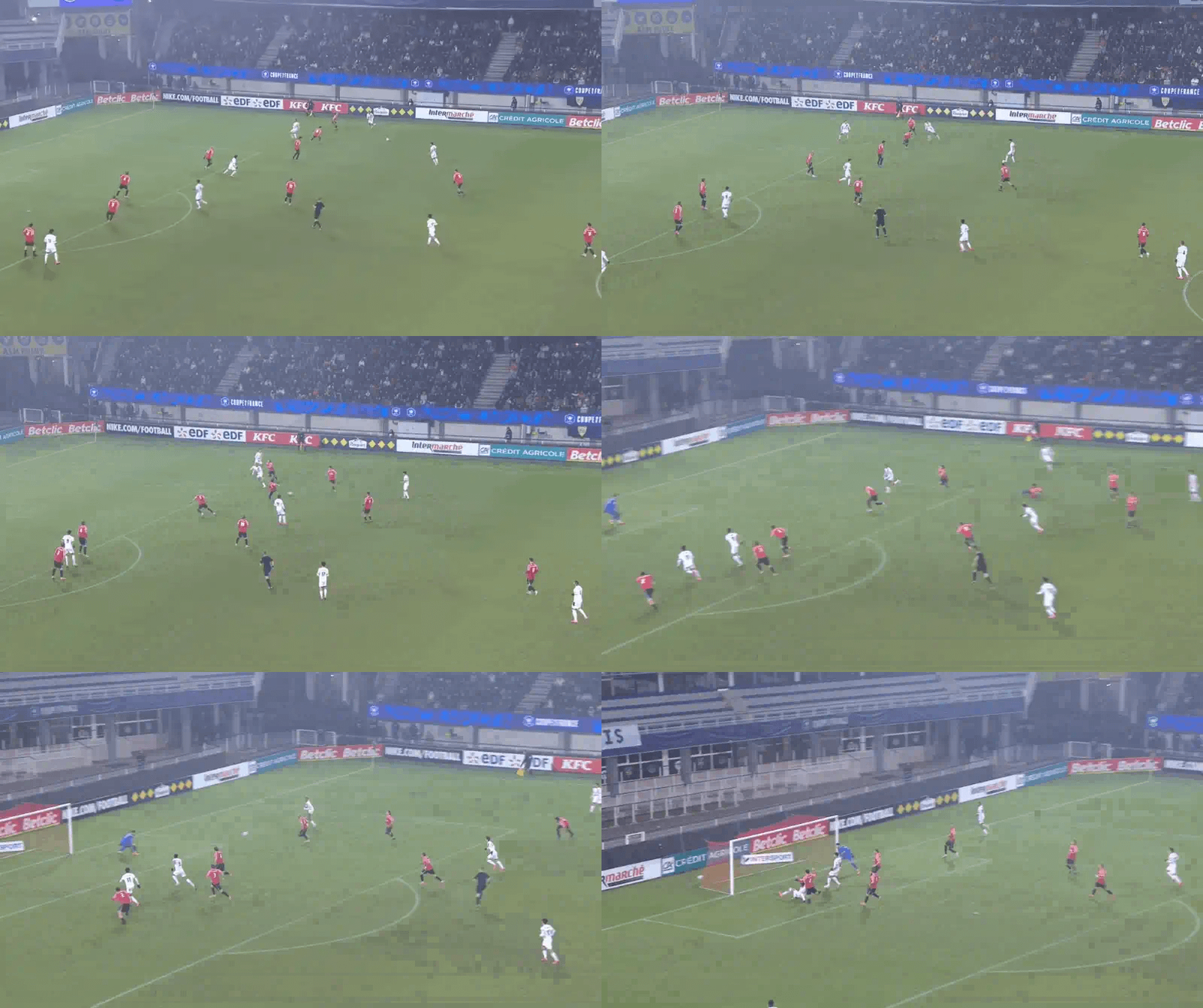
With talents of this level of pedigree it’s not just their work on the ball that’s attractive. This is where he separates himself from the usual 1v1 merchants, he starts wide, stretches the back line, then slices diagonally into half‑spaces or darts behind the defence.
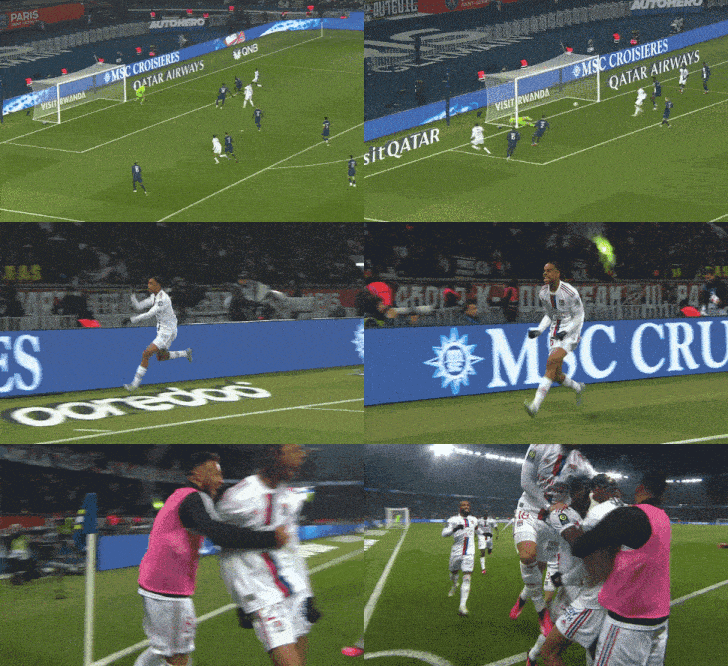
His late arrivals at the far post for cutbacks and crosses are a constant threat, helped by that blend of speed and length (6’1”) with long strides that let him finish first‑time. It’s a profile that works in both structured possession against your deep blocks as well as chaotic transitions. He’s got that “easy power” in his finishing, the kind that looks almost casual, shades of those Thierry Henry side‑netting passes, he generates that pendulum contact naturally but the accuracy can fluctuate, and he leans heavily on his right foot. You’d expect patches of coldness or variance, with misses that feel out of character given his ceiling. He almost never shoots from distance, and I am positive that he has a single Ligue 1 goal from outside the box but still, there’s a swagger to his finishing that suggests more growth is coming.
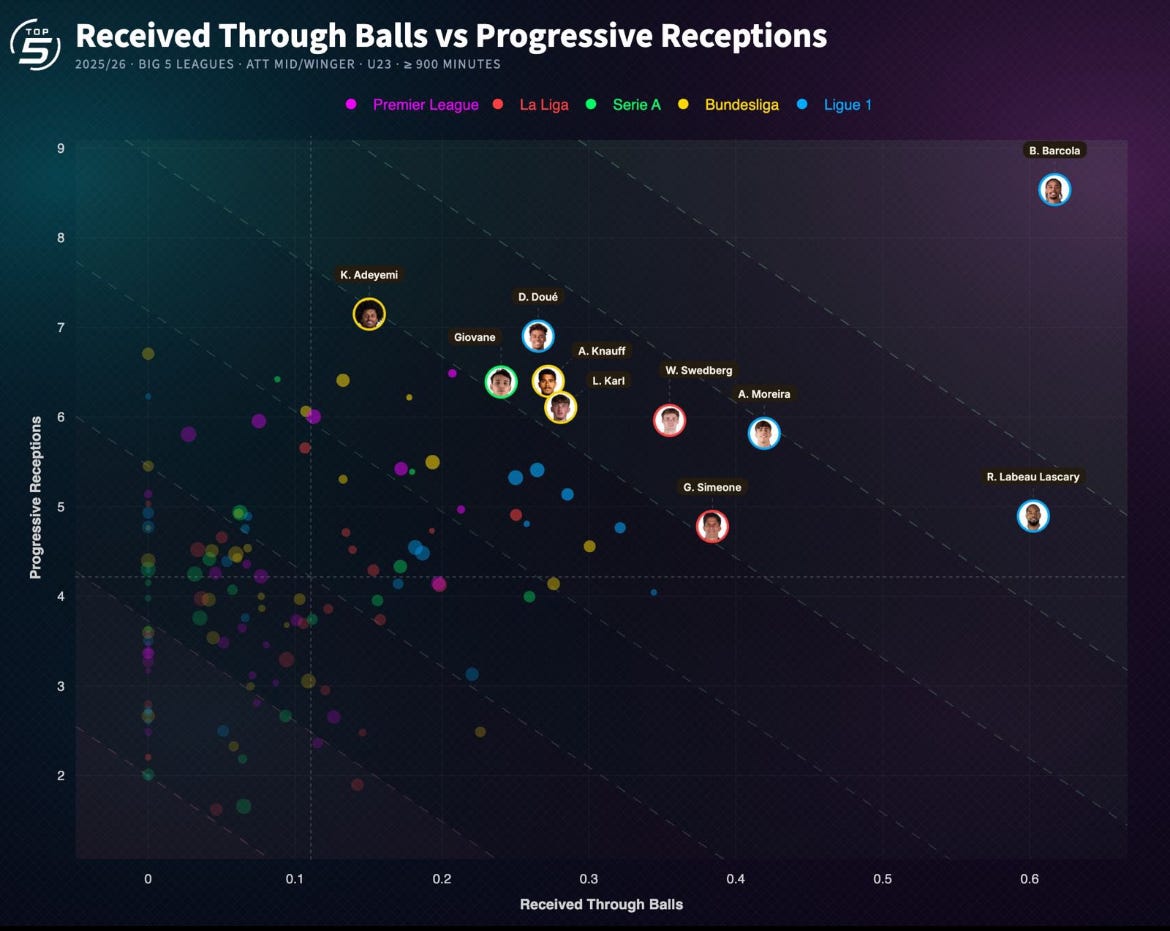
Barcola sits alone in the top‑right corner of this scatter, and that isolation tells you everything about his off‑ball profile. Among all U23 wingers and attacking mids in the Big 5 leagues, he was the only one, at least through a data lens, simultaneously elite at receiving progressive passes and elite at receiving through balls. Everyone else clusters somewhere in the middle or specialises in one axis. He’s the only player who stretches defences horizontally and vertically at an elite rate, which is why he’s on his own island in the data. It’s the statistical signature of a winger who exploits defensive structures before he even touches the ball.
That dual dominance is exactly why he’s the best winger in Europe at stretching defences. Stretching isn’t just hugging the touchline; it’s forcing defenders to constantly adjust their spacing, depth, and angles, so his high progressive receptions show he’s always available between lines, pulling full‑backs out and widening the block. His high through‑ball receptions show he’s constantly threatening depth, forcing centre‑backs to drop and defend space behind. Most wingers only threaten one of these. The result is a defensive line that never gets a stable picture: always expanding, always retreating, always compensating. Midfielders get dragged into emergency coverage, centre‑backs lose compactness, and PSG’s other attackers would consequently receive cleaner touches because Barcola had already exploited the shape. This is stretching in its purest, throwback form - not just width, but structural disruption - and it is clear that, albeit in a slightly weaker league, he’s doing it more than any other young winger in Europe.
This profile is exactly why he looks tailor‑made for Iraola whose system, as we well know, relies on extreme width, immediate verticality, and relentless exploitation of disorganised defensive lines. Barcola naturally provides all three with his wide progressive receptions isolating him 1v1, which is the foundation of Iraola’s attacking structure. His through‑ball threat fits the vertical, fast‑tempo transitions he demands after regains; he accelerates the game the moment the ball is won and his ability to receive both to feet and in behind makes him lethal in the chaotic, shifting defensive states that Iraola’s press produces. He doesn’t need choreographed rotations or heavy pattern play but rather space, triggers, and tempo. Iraola gives him exactly that every phase.
Players who sit top‑right on charts like this usually become primary width anchors, transition engines, and system‑defining attackers. That’s why he feels like the best young defence‑stretcher in Europe, and why he looks so naturally aligned with high‑tempo, high‑press, high‑width football that we became accustomed to with the back-to-back Champions League winners.
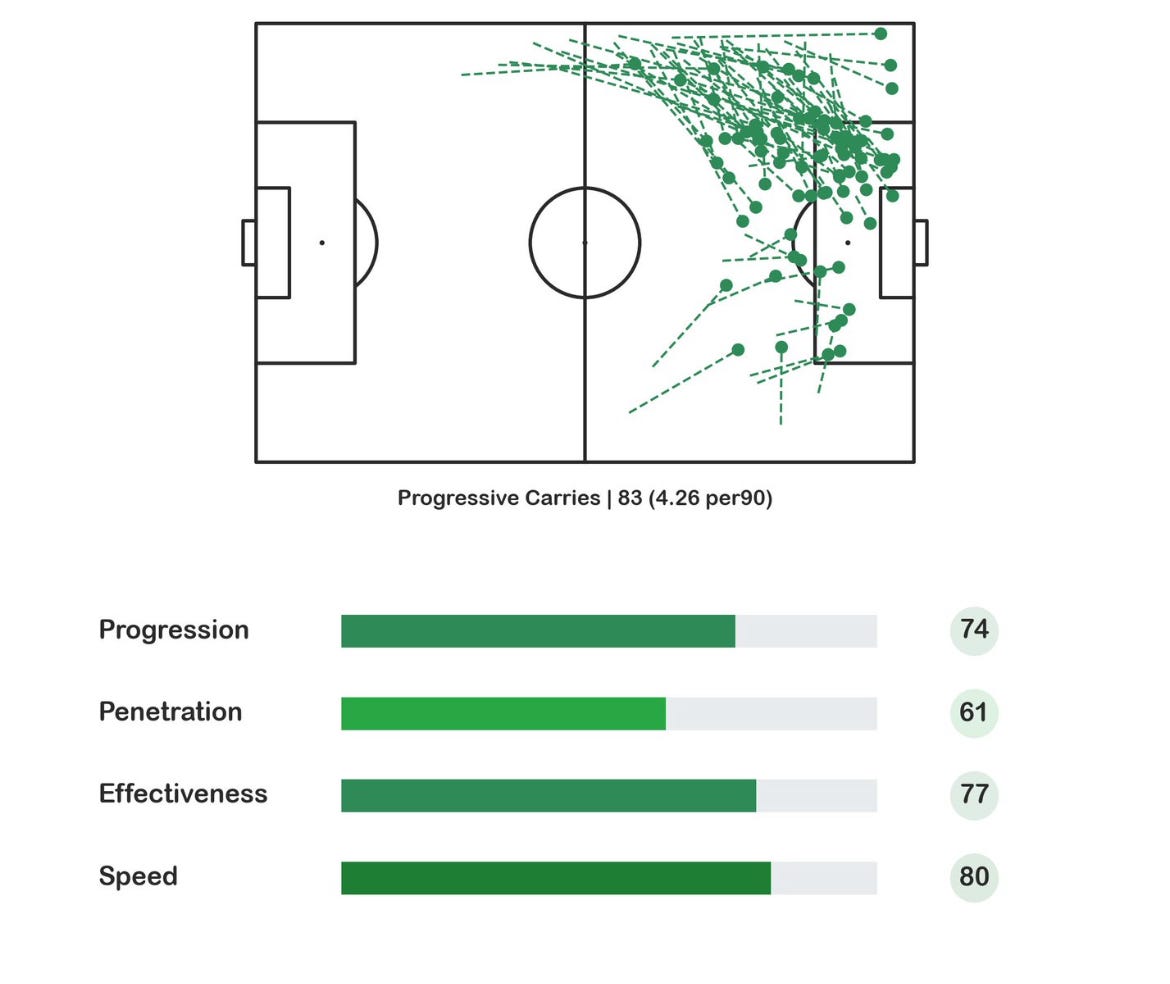
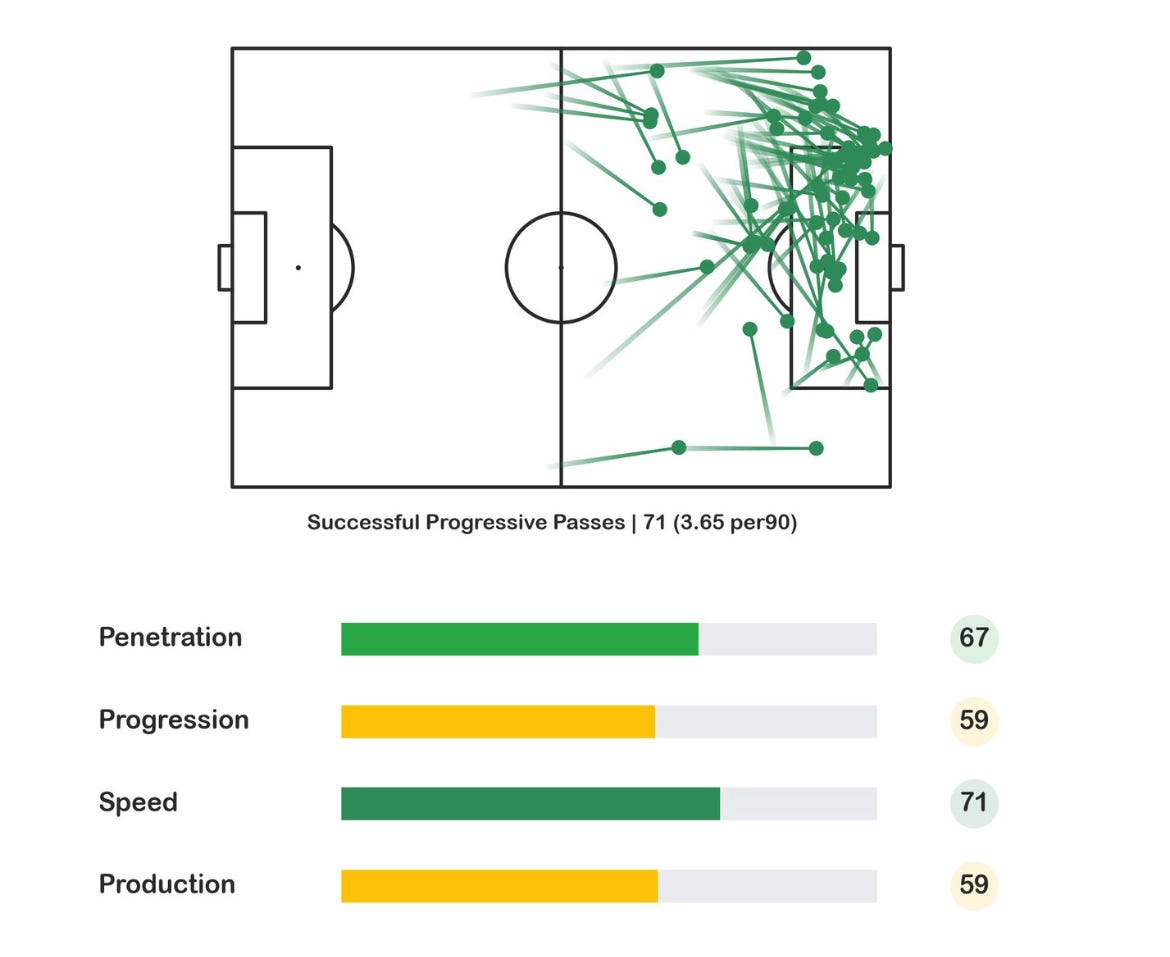
When you look at his ball carrying and passing profiles, a few key points stick out. Barcola is one of the best winger/AM profiles in Europe when it comes to combining passing and carrying and, in my view, he has the right balance of both qualities to function as a natural winger under Iraola. There is great ability in terms of progressing the ball, manipulating defenders and still releasing play quickly enough to fit the tempo the Basque coach will demand.
He tends to take longer carries closer to the touchline, but when you look at his average carry length, it’s actually lower than most top wingers. That contrast is important. It shows that while he can stretch the pitch, he doesn’t rely on long, straight-line carries to be effective. Instead, he thrives in shorter, sharper movements that shift defenders and open passing lanes. His low carry length paired with a high speed rating highlights one thing: he’s extremely effective with those short, manipulative touches, especially when he’s operating closer to the box. This is where he becomes genuinely dangerous with quick shifts, quick releases, and the ability to destabilise a defensive line without needing big space.
He also puts in a solid number of crosses into the box and carries a strong rating for box penetration, both through his carries and his passes. That dual threat matters. It means he’s not just a ball-progressor; he’s someone who consistently turns final-third actions into actual danger. Another thing that stands out is how quickly he releases the ball. With an average and median TTRP (time to release pass) of around three seconds, he moves possession on at a pace that suits a high-tempo attack. He doesn’t dwell, he doesn’t slow the rhythm, he connects phases.
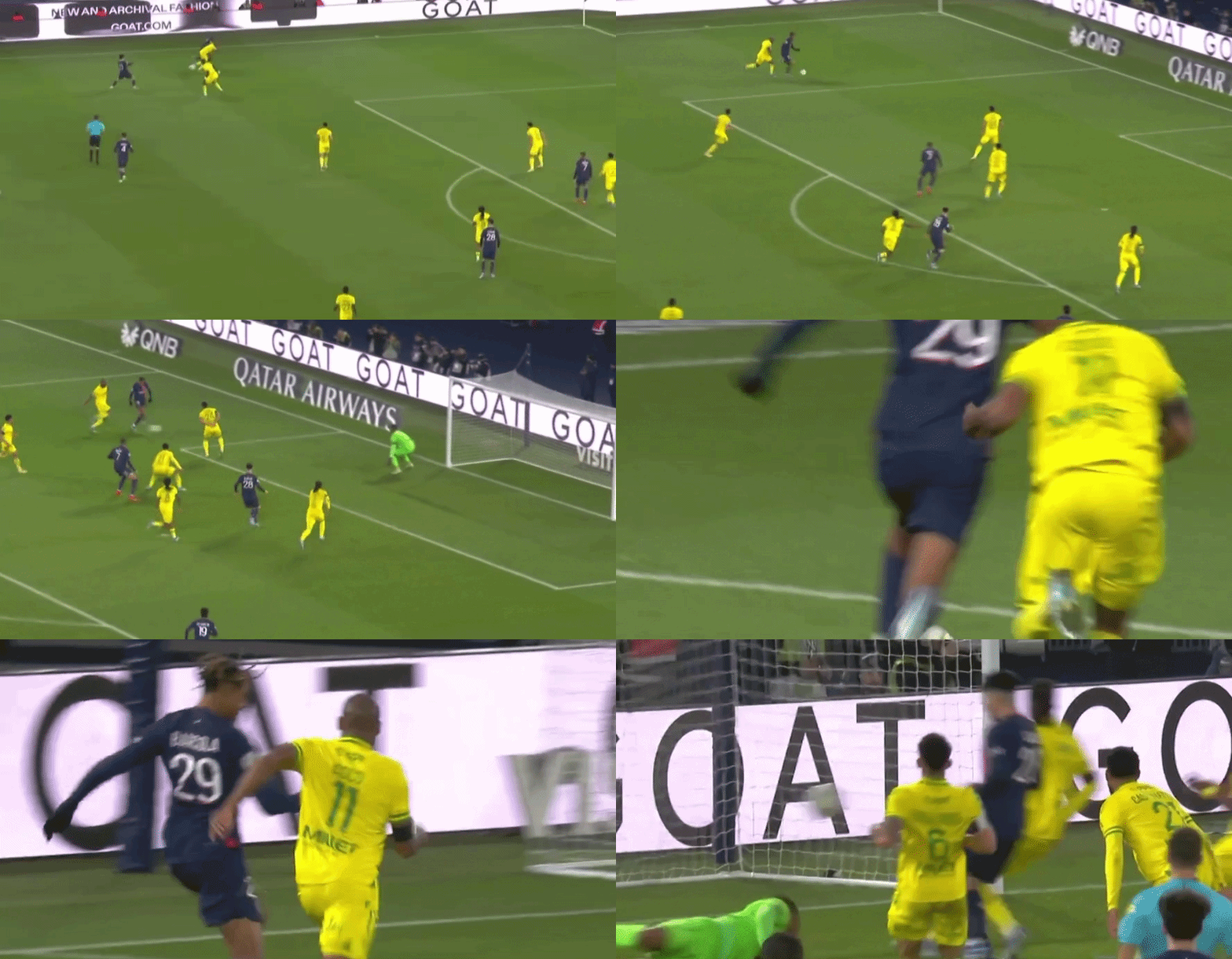
One of my favourite aspects of Barcola’s game is how comfortable he is both out wide and when operating closer to the box. He can isolate a full-back, he can combine in tight spaces, and he can shift between those roles fluidly depending on the state of the attack and that versatility is exactly what makes him such a strong fit.
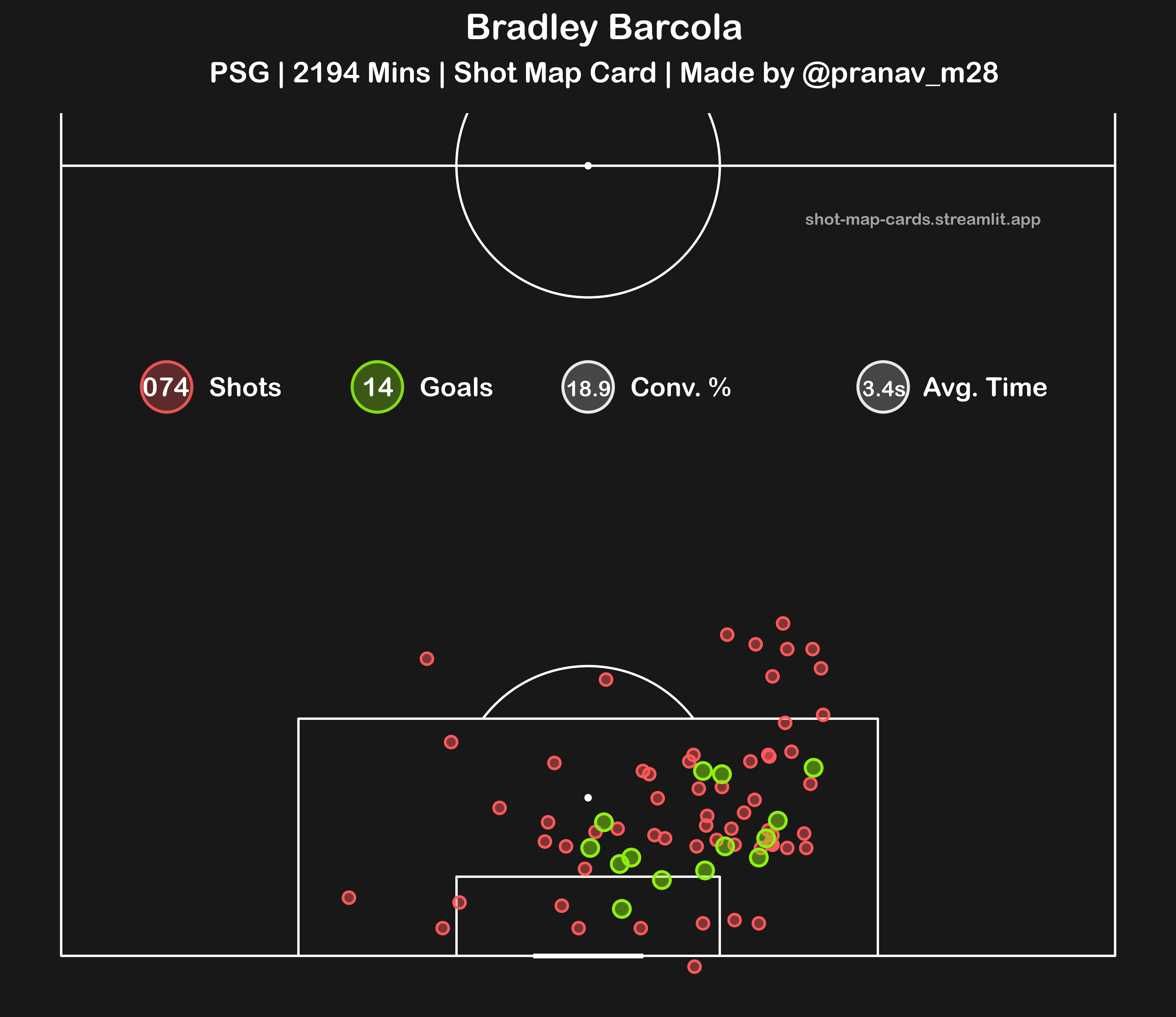
Onto the shooting side. Barcola’s shot map paints a really clear picture of a winger who manufactures chances rather than living off high‑value, close‑range service. His attempts are scattered across the left half‑space and inside‑left channel which fits his game: he likes receiving wide, driving diagonally, and shooting while moving. That spread tells you he’s not a fixed‑position finisher but a creator‑shooter hybrid who generates his own looks and the flip side is obvious too: a lot of his shots come from suboptimal zones, which drags down his efficiency. An 18.9% conversion rate is respectable for a wide forward, but the volume (74 shots, 3.04 per 90) shows he’s still learning when to shoot and when to keep carrying or combining. It, of course, must be factored in that, as the dominant force in Ligue 1, PSG are firing off 25+ shots per game, with Dembele, Ramos and Kvaratskhelia each averaging between 4 and 5.5 per 90.
What stands out is how few of his shots are from the classic “striker” zones. The cluster of efforts just inside the box, slightly left of centre, is where he’s most dangerous, that’s where the green dots concentrate. It matches his trait of attacking the inside shoulder of the full‑back, slipping into the gap between centre‑back and full‑back, and finishing across the keeper as when the Frenchman gets into that corridor, he looks composed and decisive. Outside it, he becomes more speculative. The wide‑left shots, especially those taken from tight angles, show a player who trusts his ability to generate power off the dribble but hasn’t yet developed the ruthless shot selection of elite wide forwards.
His shooting mechanics also come through indirectly. The map suggests he favours quick releases, the “average time” stat reinforces that, he doesn’t need long setups; he shoots in stride, often after beating a man or shifting the ball onto his stronger foot. That’s a valuable trait for a winger who operates in chaos, such as the conditions he would be greeted with under Andoni, it also means some of his attempts come before the picture fully settles. You can see the developmental gap: he’s brilliant at creating the window, but not always brilliant at judging whether the window is worth taking. Overall, you would say that Barcola profiles as a high‑ceiling shooter: dynamic, self‑sufficient, dangerous when cutting inside, but still raw in decision‑making. His map shows a player who will become far more efficient once he trims the low‑value wide‑angle shots and leans harder into the zones where he already converts well.
Refine his timing and his understanding of when to pass versus shoot, he certainly has the tools to become a 20-goal-a-season Premier League winger. This would, clearly, be a major statement and one to get the juices flowing. Would anticipate a shortage of the letters ‘B’ ‘A’ ‘R’ ‘C’ ‘O’ ‘L’ ‘A’ in the mega store within days…
If you enjoy my work, please consider a paid subscription to receive a whole host more analytical and in-depth articles including detailed player profiles/deep dives at both first team and academy level. Alternatively, you could buy me a coffee. Thanks for reading.
What about him playing on the right? We have Gakpo, Rio, Munoz, Wirtz for the left. Barcola will have to play a decent amount on the right…